

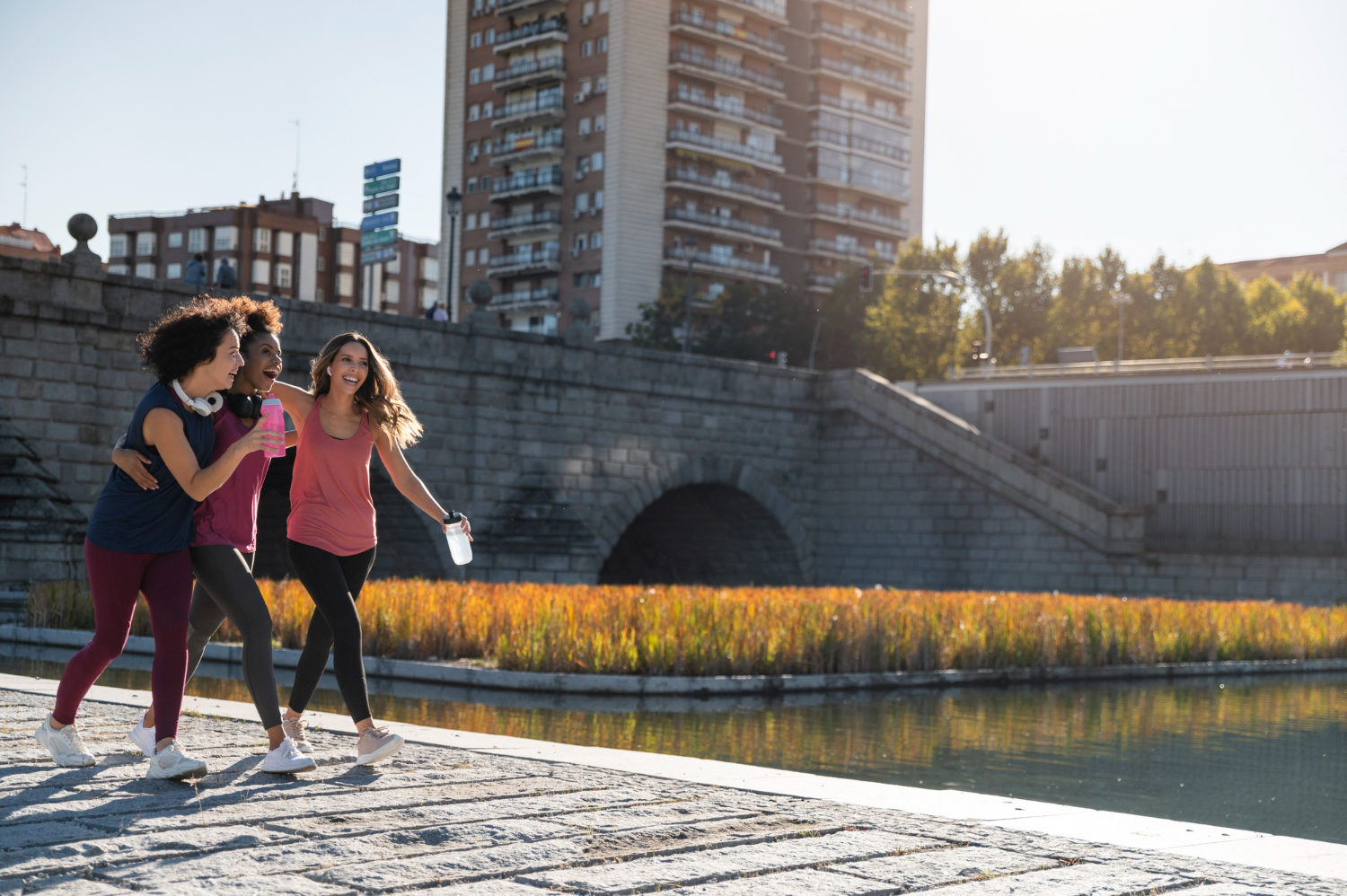
The sidewalk is now the invitation rather than an afterthought in locations like Palm Springs and the wooded outskirts of Georgia. Houses open into community gardens, dog parks, and orchards in addition to the streets. These are structural decisions rather than coincidental benefits.
After sunset, you’ll notice that street lamps are a little lower in Serenbe, giving the area a welcoming warmth. Instead of fences, blueberry bushes border the pathways. Street signs are replaced by tiny works of art. The community seems to be breathing because that is how it was intended to feel.
| Key Focus Area | Description |
|---|---|
| Concept | Suburbs transforming into wellness-focused lifestyle communities |
| Core Elements | Walkability, nature access, agrihoods, community events, active design |
| Leading Examples | Serenbe (Georgia), Miralon (California), Lake Nona (Florida), Agrihood (CA) |
| Driving Forces | Demand for healthier living, social connectivity, sustainable development |
| Design Strategy | Community integration, human-scale layout, wellness embedded in routines |
| External Reference | Blue Zones Project |
Suburban developers have started rearranging their priorities in response to the Blue Zones concept, which looks at the lifestyles of the world’s longest-living populations. The focus has shifted from maximizing square footage to improving quality of life. Post-pandemic behavioral change has markedly accelerated this shift, which is notably intentional.
Nowadays, residents look for more than just garages and yards. They desire access to gardens, trails, and unplanned human contact, particularly that which occurs naturally. Once valued for their sprawl and seclusion, suburbs are being redesigned to promote low-stress living, shared routines, and mobility.
One particularly creative example is Lake Nona, Florida. The development is one of the most comprehensively health-driven suburban ecosystems in the United States thanks to its smart parks, autonomous shuttles, and calendar of more than 1,000 wellness events annually. This is integrating well-being into infrastructure, not just branding.
Finding a pattern in these areas is simple. They make healthy behaviors less difficult. Without being pressured or lectured, locals naturally walk more, eat fresher food, and interact with one another.
Miralon in Palm Springs is a prime example of that type of behavioral nudge. Constructed on an abandoned golf course, the community converted fairways into outdoor trails and olive groves. Miralon gave agricultural space precedence over well-kept lawns that are rarely used, resulting in a landscape that is not only livable but also edible.
Another interesting case study is The Cannery in Davis, California. Every home is located within 300 feet of green space, and solar homes are situated next to a working farm. The farm provides produce, teaches composting, and serves as a backdrop for community building; it is not symbolic.
These modifications also address design integrity in addition to health. Communities are being constructed with wellness at their center rather than adding wellness on top of pre-existing plans. At last, urban planners are realizing that environments have a big impact on behavior, and they are designing accordingly.
When I visited Serenbe last fall, I saw a teenager and an elderly woman conversing at a trail intersection without either of them looking at a screen. It wasn’t staged. It resulted from a design that subtly breaks down age and activity barriers. I remember that little moment more than any official tour.
In these settings, social connectedness—a frequently disregarded component of health—is being actively fostered. Walking clubs, communal dinners, and shared gardens are all essential components of how space is set up, not extras. The U.S. Surgeon General has recognized loneliness as a public health issue that is being discreetly addressed at the local level.
Agrihoods, a developing subset of wellness suburbs that incorporate operational farms right into the residential design, are especially advantageous. In locations such as Harvest Green outside of Houston, residents participate in planting workshops, chickens roam alongside trails, and children assist in harvesting kale. It’s engagement and education, not performance farming.
This movement is particularly potent because of how grounded it feels. This isn’t about 30-day challenges or supplements, unlike fads in wellness. Where a person gets up, walks, shops, and relaxes is all part of the structure. These aren’t extra chores to add to a to-do list; rather, they are opportunities for vitality that are already present.
The process of demystifying wellness is also remarkably effective. It is not restricted by apps or gym memberships. The way mailboxes are grouped together to promote foot traffic is one example. Neighbors pause and wave from benches under shade trees. It’s in bike lanes that lead to practical locations.
Affordability is still an issue despite growing interest. Middle-class families can’t yet access all wellness-focused communities. However, there are indications of scaling. A desire to apply these models across socioeconomic lines is reflected in initiatives like Santa Clara’s Agrihood, which integrates senior and veteran housing around an urban farm.
These suburban experiments provide lessons that go well beyond their confines by incorporating wellness into public infrastructure. They demonstrate that health is a setting rather than a product. When incorporated into everyday life instead of being marketed as a luxury, it can also be surprisingly inexpensive.
Local governments are starting to take notice. Pocket parks, edible medians, and multipurpose greenways are being encouraged to be added to retrofitted suburbs. In order to permit wellness districts that integrate residential, commercial, and agricultural components into pedestrian-friendly centers, some cities are revising their zoning regulations.
Slogans are unnecessary for this movement. It has a subtle yet compelling appeal. It exchanges commotion for conversation, noise for birdsong, and solitude for air.
Communities are asking a different kind of question as they turn to these wellness-centered templates: how to build better, not faster. And that shift, though still in motion, may prove to be one of the most enduring social pivots of our time.