

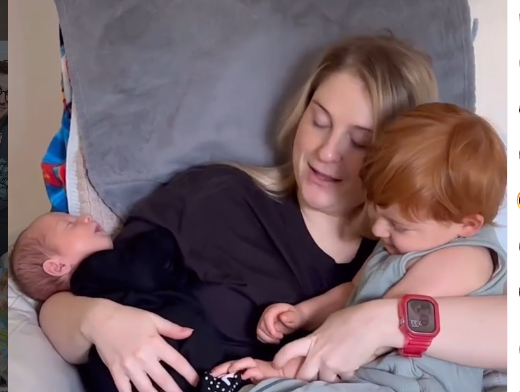
The first photo was pure softness—Mikey Moon Trainor, wrapped in a pastel blanket, framed by the arms of two wide-eyed brothers and a beaming mother. Meghan Trainor’s caption didn’t shout; it thanked. With words like “superwoman,” she handed credit to the woman who carried her third child into the world, a gesture that felt particularly genuine in an era when many prefer polished silence over vulnerability.
Mikey’s arrival symbolized more than the birth of a baby—it reflected a decision taken under pressure, after protracted consultations with doctors and specialists. Actor Daryl Sabara, Trainor’s spouse, wasn’t pursuing fame or trends. They were seeking safety. After two physically and emotionally taxing pregnancies, the decision to pursue surrogacy was not impulsive. It was, by all indication, meticulously considered and anchored in self-preservation.
Meghan Trainor – Surrogacy and Family Journey
| Detail | Information |
|---|---|
| Name | Meghan Trainor |
| Age | 33 (as of 2026) |
| Occupation | Singer, Songwriter, Author |
| Spouse | Daryl Sabara (actor) |
| Children | Riley, Barry, and Mikey Moon Trainor |
| Latest Milestone | Welcomed daughter via surrogate on January 18, 2026 |
| Reason for Surrogacy | Medical safety after past complications |
| Personal Note | Expressed deep gratitude to her surrogate and medical teams |
| Reference |
Trainor had horrifyingly raw experiences during her past births. One she related with sharp detail—a panic episode while alone with her sobbing newborn baby, Barry. Her energy was exhausted and her body felt alien. There was more to that memorable event than just postpartum worry. It was about a threshold being crossed—the silent realization that pushing forward without boundaries might endanger her well-being.
By going to a gestational surrogate, Trainor made what many still consider as a complex option. But her speech destroyed those hesitations with precision. She spoke not just about science, but about trust. Not merely biology, but love. It’s rare to see that mix delivered so plainly. “We are forever grateful,” she said, her words notably grounded, avoiding spectacle. For her, this was a joint effort of family-building, not a secret to hide or an indulgence to flaunt.
Through careful coordination with healthcare specialists and reproductive experts, the Trainor-Sabara family selected a path that many still misunderstand. However, the wording was more noteworthy than the procedure. Meghan emphasized connection over transaction. She mentioned daily check-ins with the surrogate, mutual care, shared joy. That depiction—of a relationship built on open communication and mutual respect—offered a modest but very powerful alternative to cynical representations of surrogacy.
Trainor emphasized something in her most recent interview that many people might overlook: this wasn’t their “first choice,” but it was the correct one. Her candor seemed especially helpful to families at similar crossroads. Stories about surrogacy are far too frequently either highly stigmatized or excessively glamorized. Meghan’s framing—direct, tender, and devoid of defensiveness—provided a blueprint that was both educational and affirming.
She spoke about her surrogate with unbridled adoration. “One of the most selfless, strong and loving people I’ve ever met,” she remarked. These weren’t meaningless praises; rather, they were an expression of the emotional complexity that comes with being a shared mother. For nine months, another woman carried the dreams of the Trainor-Sabara household. That’s worth more than a footnote.
As her words circulated online, so did the reactions. Many replied with cheers and love. Others reopened tired debates about the ethics of surrogacy. But Meghan met that dialogue head-on. She called the procedure “just another beautiful way to build a family.” That sentence—particularly clear and unguarded—didn’t compel assent. It merely pleaded for understanding.
For Trainor, family has always been a central theme. The importance of unity is evident in both her lyrics and her interviews. But what she seems to understand—and what many can relate to—is that love doesn’t always follow a linear path. Sometimes, it takes a network of individuals, skill, and trust to bring a kid into a home.
Her sons, Riley and Barry, were part of that adventure too. She shared that they got to chose their sister’s middle name—a little gesture that demonstrated a genuinely inclusive mentality. Even young children are able to feel the impact of change. It was really considerate to let them take part and influence this event.
Trainor’s story taps a wider cultural nerve in addition to its personal relevance. In recent years, surrogacy has become more prominent, yet continues to generate unpleasant questions. Who gets access? What does equity look like in this space? While Trainor’s experience may not address those wider debates, her openness helps bridge the knowledge gap for those confronting similar considerations.
Critically, she didn’t downplay the seriousness of her past pregnancies. Instead, she related previous suffering to current options, giving her choice greater weight and importance. It was so pleasant to see that openness. It reminded parents—mothers in particular—that taking care of your health does not diminish your maternal qualities. If anything, it increases your awareness of what your family actually needs.
The appreciation she extended—to doctors, nurses, and her surrogate—wasn’t formal. It felt anchored in experience. She recognized each person’s contributions, ranging from emotional support to prenatal care. This ensemble approach to parenting—where love is distributed and care is collective—feels like a model that others could benefit from adopting more often.
Social media, understandably, replied with layers. Both support and criticism arrived quickly. Some called it privileged; others called it brave. But what Meghan brought, above all, was clarity. Surrogacy, as she framed it, was not about opting out. It was about remaining inside—completely, mindfully, and tenderly.
She didn’t have to explain her tale in such depth. However, by doing this, she provided thousands of families who don’t often feel heard a voice. Her version wasn’t sugar-coated. It recognized risk, weariness, and vulnerability. And ultimately, hope.
Mikey Moon didn’t just arrive into a family; she arrived into a story that had already been defined by resilience. That’s what made Trainor’s message so powerful. It wasn’t a declaration—it was an invitation. To learn, to accept, to expand how we think about family.