

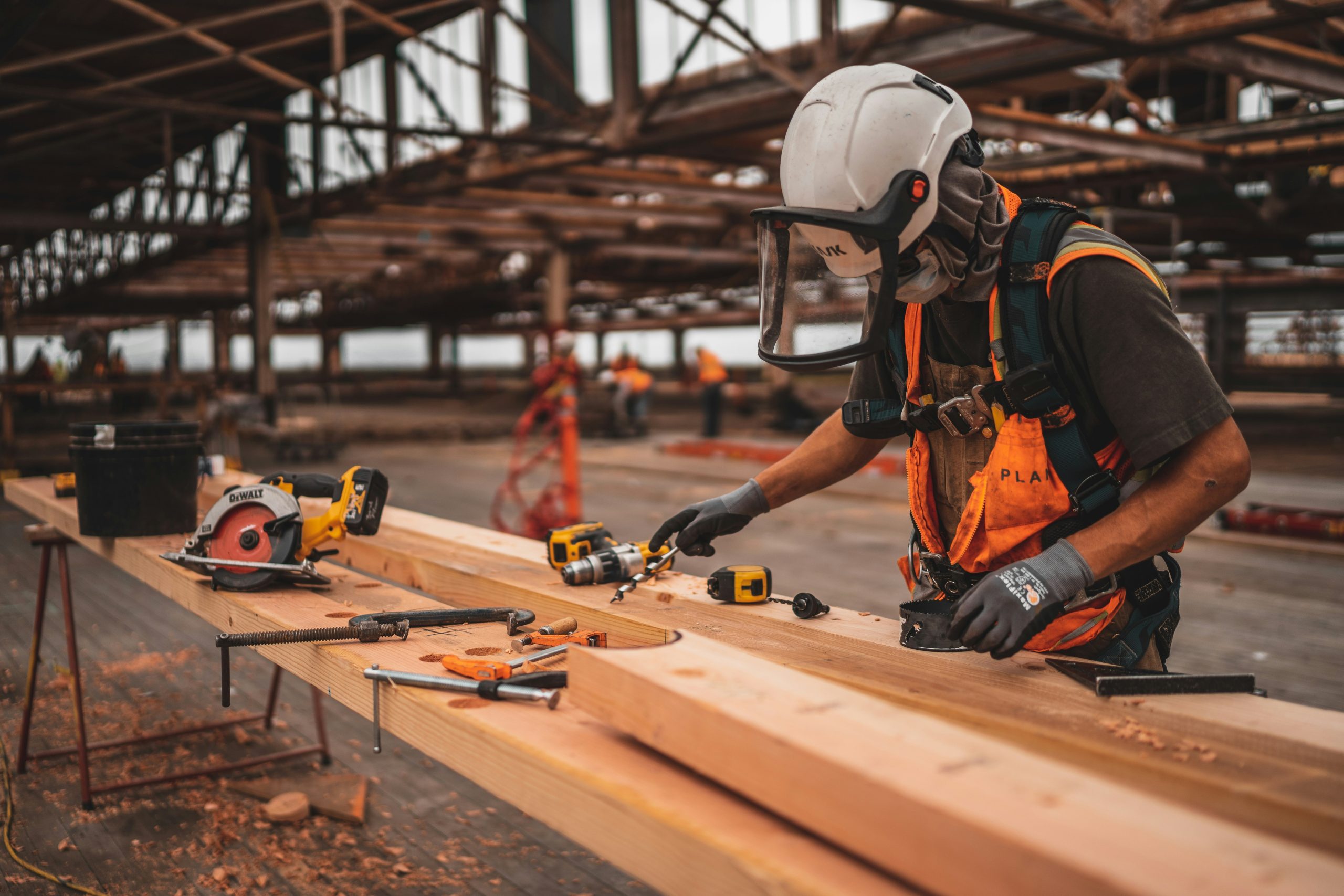
The modern construction site is a very different beast to that of the 20th century. There have been many significant improvements to construction on a wide variety of fronts, from the essential to the beneficial. Site health and safety legislation is a clear, if not so recent, win for construction workers, and modern technological leaps have only made it easier for construction workers to maintain site safety.
Of course, those leaps have simultaneous benefits elsewhere, from the speed and efficiency of construction to the development more advanced building techniques and beyond. It is no small feat that today’s power tools are a major improvement on those of yesteryear; it should not be taken for granted just how much they improve efficiency, safety and output on-site. How did this evolution occur, and what does it mean for the construction site of the future?
The Evolution of Power Tools in Construction
Power tools are the most obvious beneficiaries of technological improvement – at least to those construction workers more readily working on smaller sites and domestic projects. There is much to be said about the vast improvements to larger-scale construction technology, but there’s something powerful about the evolution of handheld tools from wieldy industrial devices to capable, reliable, and easily-wielded equipment of convenience.
In the 20th century, early power tools relied on fossil fuels to run, and early electric power tools were nowhere near as hard-hitting as their gas-guzzling counterparts. This was borne out in consumer construction technology for far longer than one would expect, too. But considerable advancements in electric motor technology made it possible for power tools like drills to deliver more torque – and battery technology changed the game even more.
Why Battery Technology Matters More Than Ever
Really, the technological advances of the modern construction site have battery development to thank. This isn’t a story of better drill bits, sharper blades, or more ergonomic handles; it’s one of batteries, and of the incredible power they are now capable of holding.
In the before-times, so to speak, electric power tools were corded – limiting their reach in a number of ways, and making them unsafe on active sites. With the advent of the cordless tool, flexibility and productivity were able to soar – and all the more so as battery technology continued to progress. The advanced battery technology of FORGE batteries, for instance, enables the delivery of consistent power and performance on demanding sites; the importance of this to workers and site managers is something that cannot be overstated.
What This Means for Site Efficiency and Safety
With better tools and ever improving battery technologies, workers are less in-hock to the mercurial nature of their equipment. Early batteries were quick to discharge and took long to charge; they also frequently lost capacity over time or with part-charging. Today, battery tech development means more uptime for workers, less charging time and less mistakes due to failing equipment. This means smoother workflows, quicker results, and better safety overall.