

Instruments keeping an eye on Pemex’s undersea pipeline close to the Abkatún-Cantarell complex discovered a problem on February 6, 2026. Someone at Pemex was aware of the leak. The data was recorded internally.
Then it remained there—withheld from the general public, withheld from the fishing communities along the coasts of Veracruz and Tabasco, whose livelihoods were on the verge of being destroyed, and withheld while the oil spread across the Gulf of Mexico over weeks of winter weather and current patterns that carried it toward shoreline after shoreline. More than two months had gone by, and the spill had contaminated more than 933 kilometers of Mexican coastline by the time Pemex officially acknowledged the pipeline as the cause on April 16.
| Category | Details |
|---|---|
| Company Responsible | Pemex (Petróleos Mexicanos) — Mexican state oil company |
| Spill Start Date | Early February 2026 |
| Internal Detection Date | February 6, 2026 (withheld from public) |
| Public Admission Date | April 16, 2026 |
| Spill Source | Subsea pipeline near Abkatún-Cantarell complex |
| Initial Government Claim | Natural seeps and unidentified vessel |
| Shoreline Contaminated | Over 933 kilometers (approximately 580 miles) |
| Gulf Coverage | Approximately 373 miles (600 km) of Gulf of Mexico |
| Protected Areas Impacted | 7+, including Veracruz Reef System National Park and Centla Wetlands |
| Wildlife Affected | Endangered sea turtles, dolphins, pelicans; coral reef damage |
| Evidence Source | Greenpeace Mexico satellite imagery; Coral Reef Network crowdsourced mapping; fishing community documentation |
| Officials Terminated | Three high-ranking Pemex officials dismissed following internal investigation |
Mexican officials initially claimed that the slick in the Gulf was caused by natural leaks and perhaps an unidentified vessel. There are natural seeps in the Gulf of Mexico, and officials have a history of exploiting this fact as a first line of defense when oil arrives without an obvious accepted source. This is the kind of claim that seems convincing until you look into it.
The Pemex case is unique because environmental organizations have timestamped satellite imagery that revealed a large slick coming straight from Pemex infrastructure. The analysis was released by Greenpeace Mexico. Evidence that was georeferenced, time-stamped, and publicly available to anyone who wished to check disproved the “natural seep” idea.
The discrepancy between what the satellite photos revealed and what officials were publicly stating is the type of documented disagreement that usually calls for accountability. Three senior executives were ultimately fired in this instance as a result of Pemex’s internal inquiry, which acknowledged that the information suppression was intentional enough to justify personnel repercussions.
Environmental attorneys and advocacy organizations will probably be debating for some time whether those terminations reflect true accountability or a containment tactic that permits the institution to survive with little structural change.
During the weeks when the reaction was delayed, oil was absorbed by seven natural protected areas. Among the affected locations were the Centla Wetlands and the Veracruz Reef System National Park, two ecosystems that are important to Mexico’s Gulf Coast biodiversity.
Oil-covered sea turtles, which are endangered, and dolphins and pelicans, whose population health reflects broader ecosystem conditions, are among the species documented by local observers and environmental organizations. The whole ecological impact of coral reef damage won’t be known for years, and some of it might not be reversible on any practical human timeline, making it more challenging to evaluate and promptly repair.
The response from the fishing community to the official story was the kind of low-tech pushback. Through crowdsourced mapping initiatives run by the Coral Reef Network of the Gulf of Mexico, fishermen who work these waters on a daily basis—whose boats were unable to operate due to the oil, whose catch had vanished, and whose coastlines were clearly contaminated—documented what they saw and submitted it.
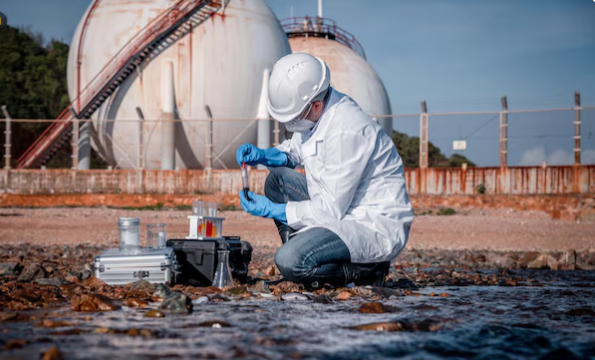
At the precise moments that the administration claimed the spill wasn’t causing significant harm, its records contradicted those claims. The evidence wasn’t unclear. It’s that those with institutional incentives to disregard the evidence were doing so.
This pattern—environmental harm, delayed revelation, official minimization, and eventual partial acceptance under external pressure—has a long history at Pemex. The reaction to the 1979 Ixtoc I blowout, which is still one of the biggest oil spills in history, set a precedent for delayed transparency that has continued through other minor incidents in the decades that followed.
Internal detection, public concealment, implausible alternative reasons, and eventual admission that came only after independent evidence rendered denial unsustainable all fit the timeline of the 2026 Gulf leak with unsettling clarity.
There’s a sense that the tale isn’t quite concluded as environmental organizations monitor continued harm while the cleanup continues. Although the denial chapter was closed by the formal acknowledgment, a serious accountability chapter was not opened. The institutional culture that enabled the concealment is still in place, even though the fired officials have left.
The fishing villages in Tabasco and Veracruz, whose livelihoods were devastated during the months of information withholding, are waiting for rehabilitation, which seldom reaches the extent of the harm. Additionally, the publicly accessible, timestamped, and unambiguous satellite photos that supported the claim remain in the record as proof of what was known and when, accessible to anyone who later attempts to determine the true cost of the suppression.