

In Washington, the story was not widely reported. Analysts who had been quietly observing the gradual increase of oil settlements denominated in yuan during 2025 and early 2026 discovered it through Bloomberg’s Riyadh bureau. The fundamental change had been underway for months by the time the State Department’s Middle East department had something meaningful to brief Capitol Hill on.
There isn’t just one secret paper. No spectacular cable leak. Increasingly, there is a pattern: China and Saudi Arabia are strengthening their defense, technology, and commercial connections at a rate that has caught Washington off guard and is altering the Gulf in ways that no one has explicitly said.
| Saudi Arabia–China Economic Realignment — Key Information | Details |
|---|---|
| Reporting Period | April 2026 |
| Strategic Frameworks | China’s Belt and Road Initiative + Saudi Vision 2030 |
| Saudi Sovereign Wealth Vehicle | Public Investment Fund (PIF) |
| Cumulative Chinese Investment Since 2005 | Over $82 billion |
| 2024 Chinese Investment Growth | Roughly 30% year-on-year |
| Energy Trade Share | China imports about 42% of its crude from the Middle East |
| Currency Shift | Increasing settlement in yuan for oil transactions |
| Infrastructure Partner | Huawei (5G, cloud, NEOM smart city) |
| Defense Cooperation | Armed drones, air defense systems from Chinese firms |
| 2024 Saudi World Defense Show | Over 30 Chinese defense firms attended |
| Joint Investment MoU | $50 billion PIF agreement with six Chinese banks |
| Diplomatic Milestone | China brokered 2023 Saudi-Iran restoration |
| Comparable U.S. Reference | U.S. State Department Middle East policy desk |
| Strategic Outcome | Multipolar realignment of Gulf economic gravity |
When compared against one another, the data provide a more compelling narrative than any press release. Since 2005, Saudi Arabia has received about $82 billion in Chinese investment, making it China’s top receiver in the region. Chinese investment in the nation increased by around 30% in 2024 alone.
Huawei’s influence can be seen in the deployment of 5G, cloud architecture, and NEOM smart city development—the kind of infrastructure footprint that cannot be undone once it is in place. Saudi Arabia is a major supplier to Beijing, which imports over 42% of its crude oil from the Middle East. The partnership is no longer transactional. It is structural.
The economic aspect isn’t really what worries American lawmakers the most. The energy trade is becoming more and more resolved in yuan instead of dollars. One of the unseen cornerstones of American financial domination for many years was the petrodollar system, which priced and sold Saudi oil in US dollars. The Gulf states, under the leadership of Riyadh, have begun looking into other options. This includes some hedging.
Leverage is a part of it. Some of it originates from a genuine belief that the international economy is shifting toward multipolar settlement systems and that the nation with the most strategically important oil reserves shouldn’t be totally dependent on the currency of a single foreign power. The extent of the de-dollarization is still unknown. However, there is no longer any question about the directional shift.
The friction becomes more intense at the defense piece. Ten years ago, it would have been politically unimaginable for Saudi Arabia to purchase Chinese air defense systems and armed drones. More than thirty Chinese defense companies set up booths and conducted procurement talks at the 2024 Saudi World Defense Show.
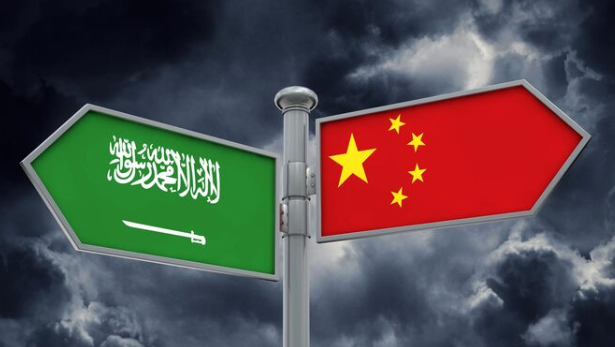
According to those familiar with the floor, the Pentagon would have been uncomfortable if such talks had been recorded. According to reports surfacing in 2026, U.S. officials are now concerned that recently authorized F-35 sales to the kingdom could pave the way for advanced American technology to be observed by Chinese partners operating elsewhere on Saudi soil—not through a single act of espionage, but rather through the gradual blending of supply chains and maintenance ecosystems.
In typical fashion, Crown Prince Mohammed bin Salman has neither acknowledged nor disputed the strategic divergence. He is not need to. Vision 2030 requires funding, infrastructure know-how, and patient building partners. China provides all three without the congressional opposition and human rights criticism associated with US collaborations.
Walking around Riyadh’s diplomatic district gives the impression that Saudi authorities are now portraying their relationship with Beijing as a parallel pillar rather than a hedge. In hindsight, the reestablishment of diplomatic ties between Saudi Arabia and Iran in 2023, mediated by China, was the turning point that validated this for those who were still watching the trend.
Although the $50 billion pact between the Public Investment Fund and six Chinese banks predates 2026, it has been progressively activated in ways that most Western press hasn’t closely monitored. joint ventures for investments. co-financing of infrastructure. cross-border tech collaborations in which there are no American middlemen involved at any stage of the transaction. This type of building takes a long time to construct and is very difficult to disassemble once it is in place.
The open question is what Washington does next. American officials have started visiting Riyadh more frequently, making more pointed phone calls, and crafting more nuanced remarks about common interests. The next eighteen months will likely show whether any of that slows the trajectory or just controls the appearance of a realignment that has already occurred. As this develops, it seems as though the Gulf is no longer having to choose between two superpowers. By making no decisions at all, it is subtly gaining leverage.