

The Grand Duchy of Luxembourg is one of those European nations whose economic and constitutional importance is radically out of proportion to its size, but which most foreigners find difficult to locate on a map. There are about 650,000 residents. Compared to Rhode Island, the nation is smaller. For reasons based in centuries of dynastic accident, it has generated the world’s last surviving grand duchy and stands at the political and economic intersection of Belgium, France, and Germany.
Grand Duke Guillaume ascended to the throne on October 3, 2025, following the abdication of his father, Grand Duke Henri. There was little fanfare associated with British or Spanish royal transfers; instead, the succession was calm, ceremonial, and concluded. In a tiny way, it was also a generational change in how the smallest monarchy in Europe portrays itself to the outside world.
| Grand Duke Guillaume of Luxembourg — Key Information | Details |
|---|---|
| Full Title | His Royal Highness Grand Duke Guillaume |
| Date of Birth | 11 November 1981 |
| Birthplace | Maternité Grande-Duchesse Charlotte, Luxembourg |
| Accession Date | 3 October 2025 |
| Father | Grand Duke Henri |
| Mother | Grand Duchess Maria Teresa |
| Country | Grand Duchy of Luxembourg |
| Constitutional Article (Head of State) | Article 44 (1) |
| Joint Power | Exercised with the Government |
| Status | Inviolable; not legally or politically accountable |
| Counterpart | Ministerial accountability via countersignature |
| Royal House Resource | Cour Grand-Ducale |
| Constitutional Power | Enacts laws (Article 49) |
| Foreign Policy Role | Negotiates treaties, represents the state abroad |
| EU Resource | European Union |
Guillaume was born on November 11, 1981, at the Maternité Grande-Duchesse Charlotte in Luxembourg. He is the eldest son of Henri, the then-Hereditary Grand Duke, and Maria Teresa Mestre, the Cuban-born Grand Duchess who has been one of Europe’s most prominent royal personalities for many years.
The new Grand Duke was educated in Switzerland, at the Royal Military Academy Sandhurst in the United Kingdom, and at universities in Paris and London while growing up under the constitutional framework he now leads. The training has resulted in a head of state who takes office with the level of calm preparedness that successors in European constitutional monarchy are often expected to exhibit.
The Grand Duke’s status, as outlined in Article 44 of the Luxembourgish Constitution, is actually uncommon for most Americans. The head of state is him. He is the nation’s representative overseas. He represents the solidarity and independence of the country. According to the constitution, his person is “inviolable,” which means that no court may try him or hold him responsible for his acts in civil or political proceedings.
A member of the government must countersign whatever measure the Grand Duke adopts in the exercise of his constitutional powers, taking full responsibility for it. This stringent counterpart goes hand in hand with the non-accountability. Although the structure appears peculiar on paper, it has the practical consequence of keeping European constitutional monarchies stable for two centuries: the elected government is nonetheless responsible for actual policy, while the head of state remains above the political battle.
The ceremonial moments are more evident than the day-to-day workings of Luxembourg’s monarchy. The Grand Duke is empowered by Article 49 of the Constitution to create laws, implement European Union legal acts, and issue administrative orders and regulations for the enforcement of laws and treaties. He is in charge of the armed forces, but the government is ultimately responsible for carrying out that command. He negotiates accords and represents Luxembourg overseas.
Although he is unable to participate in court proceedings, justice is administered in his name. The formal list of abilities seems more impressive than how they are actually used. It has long been customary for the Grand Duke to select just the Prime Minister, who then forms a government that can secure parliamentary backing. The choreography dates back hundreds of years.
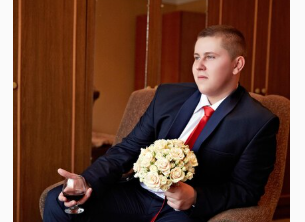
The aspect of Guillaume’s transformation that merits a quick discussion is its cultural texture. The cautious reserve that characterizes Luxembourgish public life was evident at the October 3 ceremony in the Grand Ducal Palace in Luxembourg City, which was followed by the constitutional oath in the Chamber of Deputies. Massive parades did not take place.
The official communications reflected the nation’s trilingualism (French, German, and Luxembourgish). After 25 years on the throne, Henri abdicated with the same elegance that European kings have learned to emulate in recent decades. In contrast to the British monarchy’s more conventional method, the sequence—first Spain, then Belgium, then the Netherlands, and now Luxembourg—has resulted in a quiet trend of generational handoffs.
Observing how Luxembourg has handled this change, one gets the impression that the nation has done something subtly admirable in demonstrating how a constitutional monarchy may revitalize itself without political turmoil. Guillaume takes on a role that comes with actual ceremonial obligations, true constitutional authority, and an economic kingdom that punches far above its size—Luxembourg’s per capita GDP is still among the highest in the world.
In reality, the Grand Duke’s executive responsibilities are largely symbolic and are carried out by the countersignature requirement, which holds ministers politically accountable for state actions. Still, the position is important. With the kind of preparation that suggests Luxembourg’s monarchy will continue to operate in the same manner as it has—quietly, cautiously, and much below the international spotlight that accompanies larger European royal houses—the new Grand Duke begins his reign.
Luxembourgish politics tends to take a long time to respond to questions like whether such silence will eventually result in significant changes in the office’s representation of the nation over the next 10 years. The initial months point to continuity. We still need to write the lengthier arc.