

The latest language model from Mistral AI, a system based on French data, hosted on European infrastructure, and managed by a European company, is being reviewed by representatives of France’s AI office at a government facility in Paris. Japan’s policy forums around the globe are discussing how soon the nation can create independent systems that don’t rely on Chinese or American technology for their fundamental intelligence.
These discussions are taking place concurrently in Ottawa, New Delhi, Seoul, and Riyadh. The particulars are different. The fundamental fear is the same: countries without control over their AI may someday discover that outsiders have some influence over them. The term “arms race” doesn’t fully capture the speed at which this anxiety is changing how countries allocate funds, formulate industrial policy, and consider military readiness.
| Category | Details |
|---|---|
| Concept | Sovereign AI — a nation’s capacity to develop, own, and control its own AI models, data, and computing infrastructure |
| US AI Investment (2025) | $471 billion — the largest national AI investment figure globally |
| China AI Investment (2025) | $119 billion — placing China second globally, with accelerating military AI development |
| European Position | Mistral AI (France) leads Europe’s sovereign AI push — CEO Arthur Mensch argues indigenous AI is essential for military and economic independence |
| Military Technology Focus | Lethal Autonomous Weapons Systems (LAWS) — AI systems capable of selecting and engaging targets without human intervention |
| Key Risk Term | “Mutually Automated Destruction” — AI systems engaging at speeds that remove the window for human diplomatic intervention |
| Market Concentration | US and China control over 70% of global AI investment and approximately 80% of breakthrough research |
| “Black Box” Problem | AI systems handling defense and surveillance often cannot explain their own decisions — creating accountability gaps at state level |
| Infrastructure Requirements | Sovereign AI requires domestic data centers, cloud infrastructure, semiconductor supply chains, and specialist talent pools |
| Policy Context | No binding international treaty on AI weapons systems exists — governance gap compared to nuclear non-proliferation frameworks at UN NPT |
The competition is made visible by the 2025 investment figures in ways that are not possible with abstract policy rhetoric. That year, the US invested $471 billion in AI. $119 billion was deployed by China. These numbers provide an idea of the scope and direction of the commitment, but they don’t account for everything, such as research collaborations, military black budgets, and state-directed industry investment that isn’t shown on a single balance sheet.
Together, the two nations generate around 80% of innovative research output and over 70% of worldwide AI investment. By most accounts, everyone else is vying for a place in the remaining space. Arthur Mensch of Mistral AI has stated unequivocally that a country’s military loses sovereignty in the absence of domestic AI capabilities; depending on foreign models for battlefield intelligence is equivalent to outsourcing the decisions such models inform.
The nuclear parallel becomes more than just rhetorical when it comes to the military aspect of sovereign AI. In terms of defense strategy, Lethal Autonomous Weapons Systems, or LAWS, are AI systems that can recognize and engage targets without a human making the ultimate decision. These systems are being advanced by China. The US is stepping up its defense AI initiatives.
The issue with autonomous weapons operating at AI speed, which an increasing number of observers have begun referring to as “mutually automated destruction,” is structural: during a crisis, a diplomat’s window of opportunity to pick up the phone and defuse the situation lasts seconds rather than hours. The hesitancy that kept the chilly War chilly has been intentionally eliminated by systems built to respond more quickly than human oversight can. That risk isn’t hypothetical. Many countries are actively incorporating this element into their military architecture.
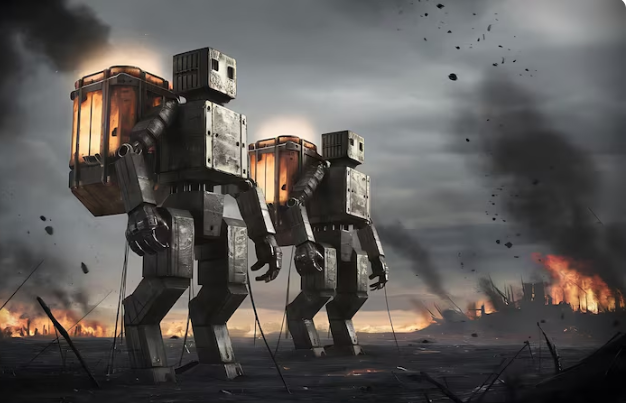
Similar to how uranium enrichment facilities were once considered strategic resources, sovereign AI likewise needs physical assets. The physical underpinnings of an AI capability include data centers, semiconductor manufacturing facilities, cloud computing infrastructure, and concentrations of specialized engineering talent.
These resources are limited, unevenly distributed, and increasingly vulnerable to political competition and export restrictions. Under the guise of trade policy, the US’s continuous and growing chip limitations on China are an AI arms race. They are all aware of who they are.
Despite all of its risks, the nuclear era ultimately led to the creation of the Non-Proliferation Treaty, an imperfect but useful framework for international consensus on the management of an existential technology. For AI weapons systems, there is no comparable framework.
From Washington to Singapore, the discussions take place in think tanks, academic conferences, and the United Nations. However, there is a sense that the gap between what is being constructed and what is being governed is still growing rather than narrowing as those discussions proceed at the pace of diplomacy while technology advances at the pace of compute budgets.