

A certain type of political figure eventually discovers that the person with the loudest voice in the room is rarely the one that people remember. It appears that Mark Kelly discovered this sooner than most. He speaks like a pilot reading a checklist, whether you’re watching him at a town hall in Arizona or standing outside a federal courthouse in Washington. steady. Almost bored. not giving a performance for anyone. Nevertheless, Kelly is at the center of a conflict that the Pentagon is now embroiled in that it didn’t fully anticipate.
Depending on how you count, the fight began with a brief video. Six Democrats with experience in the military or intelligence services are reminding service members that they are already aware that they are not required to follow illegal orders. It was nothing new. For many years, this has been stated in the Uniform Code of Military Justice. However, in late 2025, everything turned out differently in terms of timing, messengers, and tone. The Pentagon, now known as the Department of War, declared within days that it was looking into “serious allegations of misconduct” against Kelly. Never one to hold back, the president referred to the video as “seditious behavior, punishable by death.”
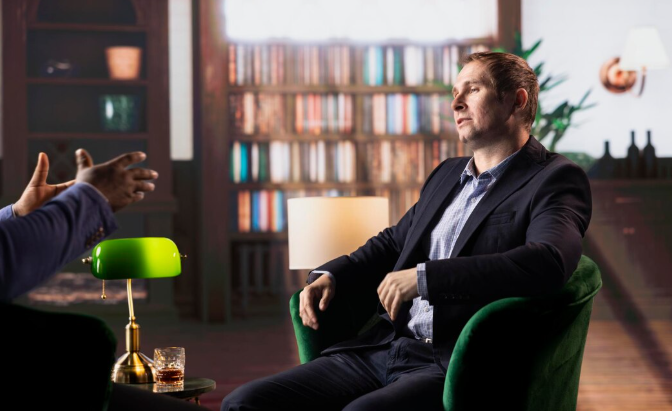
Most senators would have gone into a defensive crouch at that sentence, which carries a death sentence. Kelly turned away. He filed a lawsuit. He continued to appear. He continued to do interviews in that same apartment, even registering, and he occasionally used profanity, such as when he told a CNN reporter over fried chicken in Atlanta, “I’m a fucking US senator.” It had an almost disarming quality. A press release does not easily intimidate a retired Navy captain who flew combat missions in the Gulf and then traveled to space four times.
The intriguing thing is that, at least thus far, the threats have backfired. Kelly’s fan base on social media has grown significantly. In airports, he is stopped by strangers. Attendees at a state Senate campaign event in Forsyth, Georgia, applauded him before he had spoken, more for his refusal to back down than for his policy stances. As this develops, there is a sense that the administration made a grave mistake by selecting a critic whose biography is virtually indisputable and whose life story—his wife Gabby Giffords surviving an assassination attempt in 2011—gives him a moral standing that no opposition research can undermine.
Kelly’s fighting style is also noteworthy. Unlike some of his colleagues, he does not race from green room to green room on the cable news circuit. Committee hearings, technical briefings, and the gradual gathering of information are his favorites. The majority of viewers find his work on the Senate Armed Services Committee boring, which could be the exact reason it fails. He’s not acting outraged when he questions Pentagon leadership. In a tone that implies he has already read the response, he is posing precise queries and referencing particular statutes.
The Pentagon’s accusations against him are constantly changing. Early in May, government attorneys contended that Kelly had given troops a “wink and a nudge” to disobey legal orders, which was the exact opposite of what he said in the video. This type of argument tends to make the prosecution appear weaker than the defendant by forcing viewers to ignore what they clearly saw.
It is still genuinely unclear if any of this will result in a presidential run, as suggested by the conversations at the airport. Kelly hasn’t stated anything. He seems to be someone who keeps his calculations to himself. It’s more obvious that something has changed. Reluctantly, the most credible critic of the Pentagon today is a senator whose reputation was built on his dry competence. He didn’t shout to get there. He didn’t flinch to get there.