

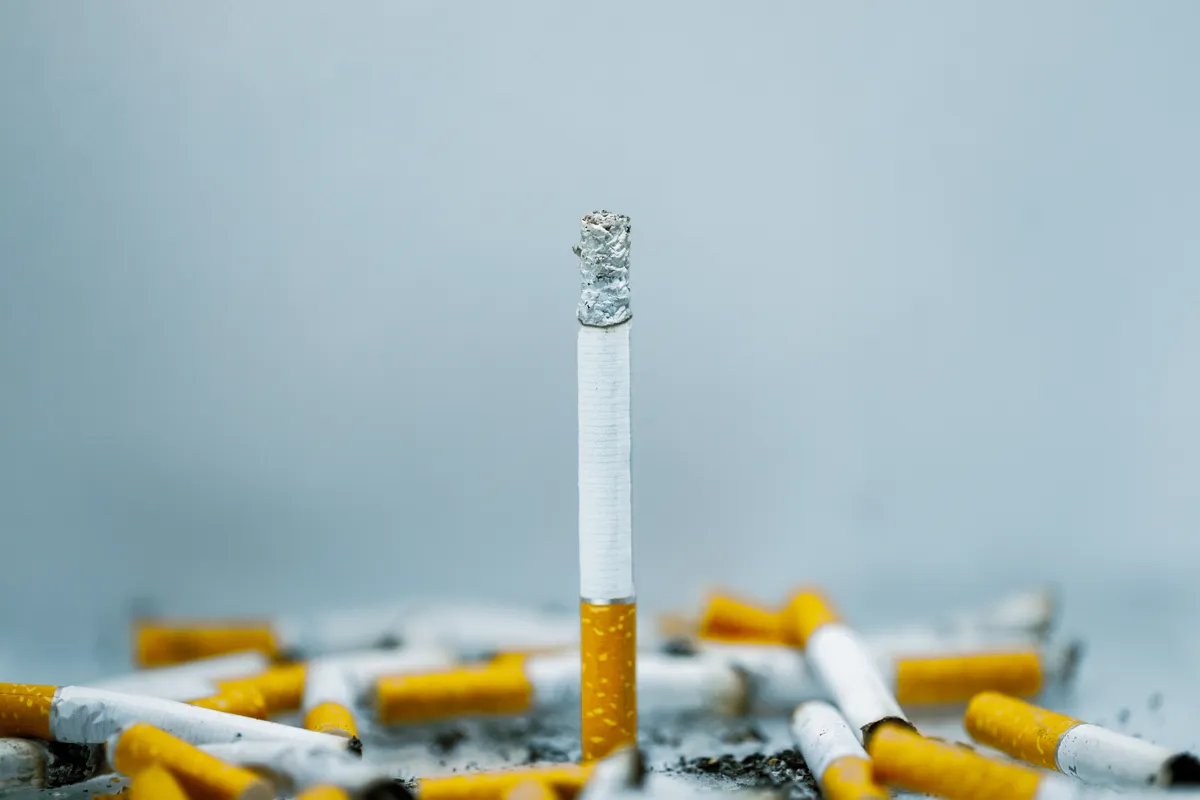
The Gen Z smoking comeback has a cultural momentum behind it that the statistics struggle to match, and for families who have watched a parent suffocate in an oxygen mask, the revival lands as something more than a trend piece.
Leslie Vooris, writing in Business Insider, describes watching her father die slowly from lung cancer, a disease she traces directly to his cigarette habit. He was first diagnosed when she was 4. His cancer returned when she was 12, and he spent his final years tethered to an oxygen tank, every breath a struggle. She never smoked.
The Gen Z Smoking Comeback by the Numbers
The cultural signals are real enough. Newsweek has reported on a self-styled ‘cigarette renaissance’ among the generation, driven partly by social media aesthetics. Pinterest searches for the term ‘smoking pose’ rose 70% year-on-year among users aged 18 to 24 in the US as of November 2025, according to data shared by Style Analytics, an Instagram account covering the fashion industry.
Yet the public health picture runs in the opposite direction. CDC and FDA analysis of the 2024 National Youth Tobacco Survey found that only 1.4% of middle and high school students reported current cigarette use in 2024, the lowest level ever recorded by the survey. Total youth tobacco use also fell, from 2.80 million students in 2023 to 2.25 million in 2024, with the decline driven largely by a drop in e-cigarette use.
The University of Michigan’s Monitoring the Future survey, published in December 2024, added further context: 67% of 12th graders had abstained from alcohol, marijuana, and nicotine products in the previous 30 days, up from 53% in 2017, according to Newsweek’s reporting on the research.
Cigarette smoking among young adults aged 18 to 25 has fallen from nearly 30% four decades ago to less than 10% in 2024, according to ConsumerAffairs. The American Lung Association puts the high school smoking rate at less than 3% today, compared with roughly one-third of high school students in the mid- to late-1990s, as Fox News Health reported.
For now, vaping remains the larger concern: approximately 8.3 million people aged 18 to 25 reported vaping nicotine in the previous month in 2024, more than twice the estimated number who smoked cigarettes in that age group, according to ConsumerAffairs.
What Lung Cancer Actually Does to a Family
The gap between the aesthetic and the outcome is where Vooris’s account sits. Lung cancer is the leading cause of cancer-related death in the United States, with about 75% of patients dying within five years of diagnosis, according to NIH research. Current smokers face a 68% higher death rate from the disease than patients who have never smoked; former smokers face a 26% higher rate.
Quitting after diagnosis does improve survival odds. An IARC-sponsored study of 517 early-stage non-small-cell lung cancer patients found that those who quit smoking after diagnosis had an estimated 75% three-year survival rate, compared with 66% for those who continued, and 61% versus 49% at five years, according to the National Cancer Institute. The improvement held regardless of prior smoking intensity or treatment received.
The counterargument to the cultural moment, then, is not primarily statistical. It is that the numbers describe populations while families live through individual cases, and the Gen Z smoking comeback is spreading images that researchers say carry their own risks. Multiple studies show that adolescents and young adults who watch smoking-related content are more likely to begin using tobacco products, with those risks amplified when the content arrives through social media, according to Fox News Health’s reporting on the research.
Vooris herself, at 23, was handed a cigarette on a film set and found she could not hold it without being flooded by memories of her father coughing up blood. The coolness she saw in old Hollywood films had always been inseparable, in her mind, from the oxygen tank that followed her family everywhere.
The public health data suggest the Gen Z smoking revival is, at least for now, more aesthetic than epidemic. Whether it stays that way may depend on how long the pose remains more visible than the prognosis.