

A hands-on TCL Nxtpaper tablet review reveals a device that outperforms its price bracket for students, light-work professionals, and avid readers who want one piece of hardware to cover all three roles.
TCL announced US availability on 3 August 2026, with the tablet sold through TCL’s US store and Amazon. The bundle of tablet, stylus, and flip case carries a launch price of $299.99, reduced from a full MSRP of $399.99, according to the TCL press release. The original ZDNET review cited a $280 bundle price; TCL’s own announcement gives the figure as $299.99.
What the Nxtpaper Display Actually Does
The 12.2-inch, 2.4K panel sits in a 3:2 aspect ratio, which is wider than the 16:10 format used by most Android tablets and better suited to document work and extended reading. In standard mode it reproduces rich, vivid colour at up to 120Hz. At the press of a button it shifts into a paper-like matte finish that mimics the look of ink on e-paper, useful for long reading sessions or hours spent in word processors where a conventional backlit screen causes eye strain.
TCL has developed Nxtpaper technology since its first release in 2021. The Tab A1 Plus Nxtpaper introduces an upgraded VersaView feature: selected apps can remain in full colour while the rest of the display simultaneously holds the paper-like mode. In practice, a video call or streaming app runs in vivid colour while a notes window beside it looks like ink on paper.
Blue light reduction and anti-flicker technology are built into the display. Peak brightness sits at 500 nits, which is adequate indoors but may limit visibility in direct sunlight. For students moving between classrooms and libraries rather than working outdoors, that trade-off will rarely be a problem.
TCL Nxtpaper Tablet Review: Specs and Battery Life
The metal unibody chassis carries an IP54 splash and dust resistance rating. Inside, a Qualcomm Snapdragon 4 Gen 2 processor, built on a 4 nm node with a Kryo CPU clocking up to 2.3 GHz, handles processing duties alongside 6 GB of RAM. Storage starts at 256 GB and expands via microSD by up to 2 TB. The integrated Snapdragon X61 modem supports peak download speeds up to 2.5 Gbps on compatible 5G networks.
The 10,000 mAh battery charges at 33W over USB-C. TCL states the tablet can run for up to 65 days in flight mode, a figure that reflects how efficiently the Nxtpaper panel draws power compared with a conventional LCD. The predecessor Tab A1 Plus used an 8,000 mAh battery with a slower 20W charging ceiling, as NotebookCheck reported, so both the capacity and the charging speed have stepped up on this model.
The device ships with Android 16 and is upgradable to Android 17, with three years of security updates committed by TCL. Built-in AI tools include Google Gemini, Circle to Search, Writing Assist, Text Assist, Smart Translator, and Smart Voice Memo. The tablet weighs 556 g and measures 6.70 mm thin, with 8 MP cameras front and rear.
Everyday Use: Work, Study, and Entertainment
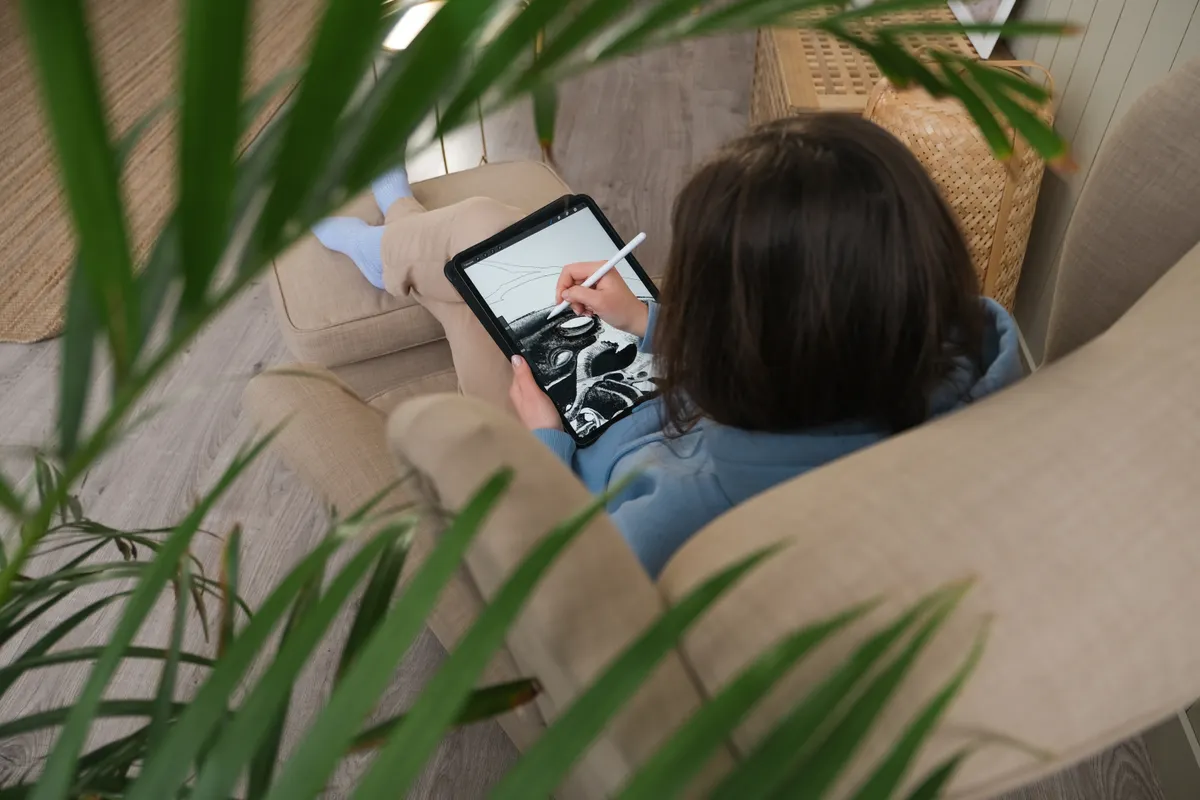
Sustained daily use is where any TCL Nxtpaper tablet review gets meaningful data, and the findings here point to a device that genuinely holds its own across work and play. Writing, notetaking, transcriptions, image editing, and graphic design all ran without meaningful lag. The matte texture and bundled stylus made graphic work feel natural rather than slippery, and the 12.2-inch display gave enough room for split-screen multitasking.
For entertainment, the colour-rich panel handled streaming and mobile gaming well, with smooth rendering in Minecraft. Switching into ink-paper mode for the Kindle app at the end of the day removes almost all sense of using a backlit tablet; it reads more like a large-format e-reader.
Adding a Bluetooth keyboard to the $299.99 bundle turns the setup into a functional laptop substitute: document writing, research, reading, and light creative work are all within reach without carrying a separate machine.
The variable to watch is whether the $100 launch discount holds beyond back-to-school season. If the price reverts to the $399.99 MSRP, the competitive picture shifts and mid-range rivals from Samsung and Lenovo become harder to set aside.