

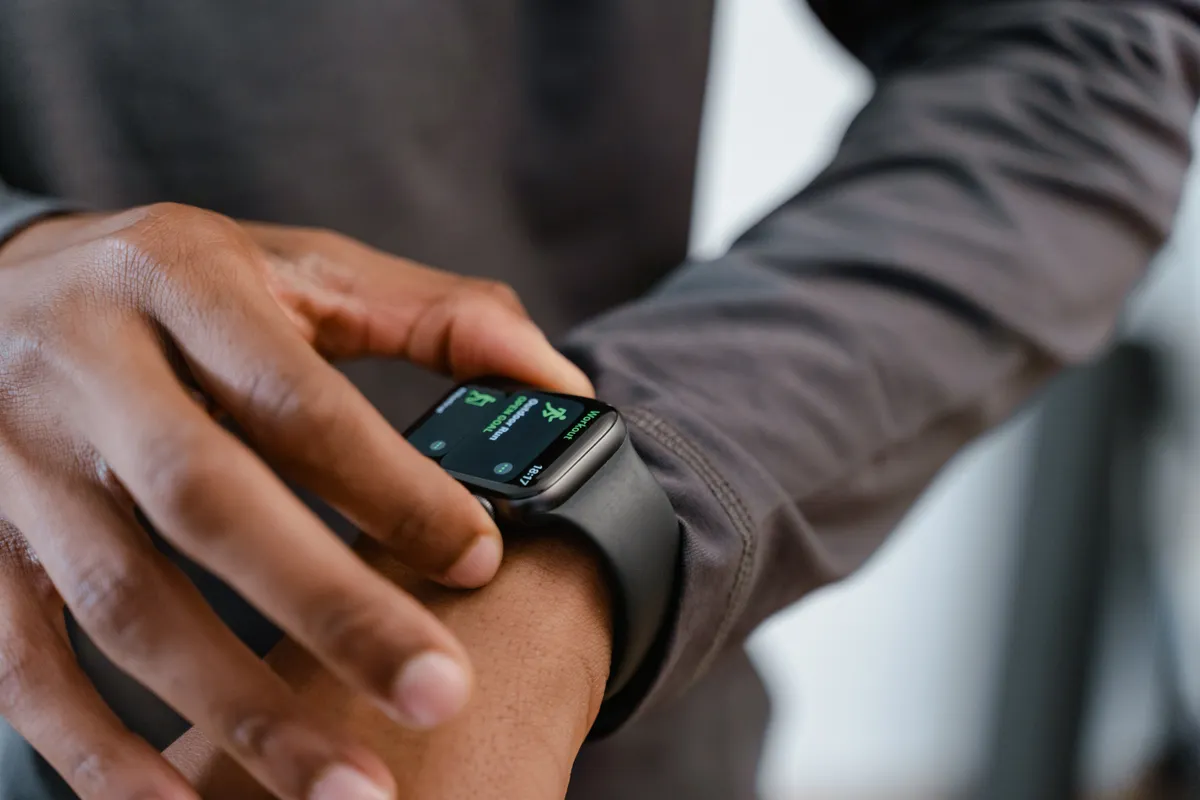
Pixel Watch 5 GPS accuracy has emerged as one of the most-discussed claims in the smartwatch market this year, after Google said its new watch outperforms the Garmin Fenix 8 Pro for route tracking. Independent testing by ZDNET’s Matthew Miller, carried out over several weeks of running, walking, and cycling sessions, found Google’s claim holds up, at least in the urban environments where the difference was most visible.
How Google built a GPS edge in cities
Google says it validated the Pixel Watch 5’s positioning through 4,000 miles of real-world testing, according to the Google engineering blog. The watch achieves what Google describes as 2x greater GPS route-tracking accuracy compared with earlier Pixel Watch generations in the toughest environments, combining 3D environmental modelling, AI-driven optimisations, and atmospheric corrections, as the official Pixel Watch 5 announcement explains.
To preserve battery life, the watch compresses raw GPS data and processes it externally rather than running heavy computation on the device itself.
Google’s internal comparison study, conducted in July 2026 using pre-production Pixel Watch 5 devices, evaluated route-map accuracy across outdoor running, walking, and biking workouts in challenging urban environments, with sessions capped at three hours and carried out under good network conditions, according to Google’s product blog. Those caveats matter: the advantage the Pixel Watch 5 demonstrated is most pronounced in cities, where tall buildings bounce satellite signals and create multipath errors.
Miller’s real-world runs in downtown Seattle confirmed the gap. The Pixel Watch 5 tracked his route along actual pavements and streets with clear fidelity, while the Fenix 8 Pro showed erratic traces in the same urban corridors. Overall distance, ascent, and step counts were comparable between the two watches; it was the granular path accuracy that separated them.
What the Fenix 8 Pro still does better
Away from city-centre running, the Fenix 8 Pro reasserts itself. The $1,049 Garmin watch (the Pixel Watch 5 starts at $399 for the 41mm and $429 for the 45mm, per Google’s official pricing page, which supersedes earlier listed figures of $400 and $529) is built for a different kind of athlete. Note that the report originally listed the Pixel Watch 5 at $400 in the introduction and $529 in the spec table; Google’s own site puts the starting price at $399, and this article uses those official figures.
The Fenix 8 Pro carries built-in inReach satellite messaging, a titanium bezel, metal sensor guard, leakproof metal buttons, a dive-rated build, preloaded TopoActive maps, and dynamic round-trip routing. Its MicroLED display variant uses more than 400,000 individual LEDs to reach up to 4,500 nits, which Garmin describes as the brightest output ever built into a smartwatch.
For off-grid athletes, the two-way satellite messaging capability is a material advantage over the Pixel Watch 5, whose satellite connection is limited to emergency SOS. Garmin’s inReach subscription costs $7.99 per month at the entry level, which also includes unlimited LTE cellular service.
The Fenix 8 Pro also tracks running power, a metric the Pixel Watch 5 does not support. Running power has grown in popularity among endurance athletes because it accounts for gradient and delivers an instant measure of mechanical effort, unlike heart rate, which lags exertion. And with battery life of up to 15 days with the always-on display switched off (27 days with it on, according to Garmin’s published specifications), the Fenix 8 Pro is a practical choice for multi-day trips where charging is inconvenient.
Pixel Watch 5 GPS accuracy and the safety case
Google has made safety features a defining characteristic of the Pixel Watch line. The Pixel Watch 5 adds breathing emergency detection to an existing suite that includes fall detection, crash detection, emergency sharing, and Safety Check, the last of which operates without a cellular subscription. A pulse detection feature, introduced last year, rounds out the package.
For everyday urban athletes who run or cycle in built-up areas, the Pixel Watch 5 GPS accuracy advantage is a genuine differentiator. For trail runners, anglers, and hikers who regularly leave cellular coverage, the Fenix 8 Pro’s satellite messaging, extended battery, and built-in flashlight remain compelling reasons to pay the premium.
Miller’s conclusion: no single watch does everything, and he continues to wear one on each wrist. The Pixel Watch 5 sets a new benchmark for urban GPS precision; whether that benchmark matters more than two-way off-grid communication and multi-week battery life depends entirely on where you train.
The practical test that will sharpen the picture is trail running outside urban canyons, where satellite signal obstruction is less severe and the Fenix 8 Pro’s traditional GPS strength faces less interference. That result could reshape which watch leads overall.