

Contributed content: this article was written by a third-party contributor and does not necessarily reflect the views of News Anyway. Editorial and Advertising Policy
Ahead of his October 9 poster presentation at the American College of Artificial Intelligence and Medicine, the Mosaic Health Solutions founder explains why his team interviewed clinicians before building the model.
Watch a clinician work through an electronic health record and a familiar reflex shows up. An alert fires, the screen pauses, and a hand moves to dismiss it before the eyes finish reading. Most of the time the dismissal is not carelessness. The alert arrived at the wrong moment, asked for too much, or delivered a warning with nothing to do about it.
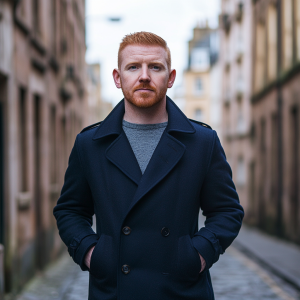
For Nihit Gurram, that reflex is the real design problem in clinical AI. Gurram, a medical student at the Kansas College of Osteopathic Medicine who holds a Master of Science in Health Informatics, founded Mosaic Health Solutions to build clinical decision support for medication safety in older adults. On October 9, he presents research at the 2nd Annual Scientific Session of the American College of Artificial Intelligence and Medicine in Chicago that starts from an unusual premise: before building a tool to catch a dangerous prescribing pattern, ask the people who would have to use it what would make them stop ignoring it.
"There is a version of this work where you build the model, validate the accuracy, and then go looking for clinicians to adopt it," Gurram says. "We did it in the other order. A prediction can be completely right and still fail at the moment it reaches a clinician, because it shows up in a form they cannot act on in the time they have."
A Quiet Source of Harm
The research focuses on prescribing cascades. A cascade begins when a side effect from one medication is read as a new condition and treated with another drug. The second prescription can bring side effects of its own, and the pattern repeats. In older adults, who are more likely to be managing several conditions and several medications at once, cascades contribute to falls, delirium, and hospitalization.
Decision support alerts designed to catch these situations already exist. The problem, as the abstract for Gurram’s poster describes it, is that they are frequently overridden because they do not match how clinicians actually work.
"Nobody writes a cascade on purpose," Gurram says. "Each prescription is a reasonable decision on its own. That is exactly why it is hard to see, and why the tool meant to catch it has to be something a busy clinician will trust in the moment rather than click past."
Asking Before Building
The poster, titled "From Prediction to Action: Clinician-Elicited Design Requirements for AI Cascade Detection in Geriatric Polypharmacy," was co-authored with Evans D. Pope III, PharmD, MS, of the USC Mann School of Pharmacy and Pharmaceutical Sciences, and Christina Eldredge, MD, PhD, of the Morsani College of Medicine at the University of South Florida.
The team conducted six iterative semi-structured interviews spanning four clinical role classes: primary care physicians in internal medicine, family medicine, and geriatrics; specialists in neurology and hospital medicine; clinical pharmacists; and clinical informatics faculty. They tested canonical cases against two synthetic patients, observed pharmacist workflow directly inside the health record, and compared answers across roles to separate the requirements clinicians shared from the ones they disputed.
Gurram says the cross-role comparison mattered as much as any single interview. "A pharmacist and a hospitalist are looking at the same patient through different windows," he says. "If you only talk to one group, you build a tool for one window. Comparing across roles told us which requirements were universal and which depended on who was sitting at the screen."
What Clinicians Asked For
Six themes converged, and several of them cut against the way clinical AI is often presented.
Clinicians rejected numeric risk scores. They wanted categorical tiers instead, a clear signal of how concerned to be rather than a percentage to interpret. They set tight limits on time and effort: roughly five seconds and two clicks depending on role, and about ten seconds at the bedside. They asked for the three most important risks, ranked, rather than an exhaustive list. They wanted alerts gated by the patient’s chief complaint, so a warning appears when it is relevant to the visit. And they refused any alert that did not arrive with a substitutable alternative medication.
"That last one came through clearly," Gurram says. "An alert that tells you something is wrong without telling you what to do instead just hands the clinician more work. If the tool cannot point to a safer option, it has not finished its job."
Auditable reasoning was treated as a precondition for adoption, not an extra. Clinicians wanted to see why the tool reached its conclusion. The interviews also drew a line around judgment. Physicians preferred to assess social determinants of health themselves, while they were comfortable letting the tool handle renal, cardiac, and metabolic weighting.
"That split tells you a lot about where clinicians want help and where they want to keep the call," Gurram says. "They will hand off the calculation. They do not want to hand off their read on the person in front of them."
The Question That Did Not Resolve
Not every question produced agreement. Where in the workflow the alert should appear did not converge across roles and appears to depend on the care setting. The authors report that finding directly rather than presenting a single answer.
"It would have been easy to pick the majority view and move on," Gurram says. "But a hospital floor and a primary care visit are different environments. Reporting that placement is setting-dependent is the more useful result, because it tells the next team what they will have to solve locally."
A Design That Changed Before It Was Built
The most concrete outcome was a change to the tool itself. According to the published abstract, doing the elicitation work first replaced a single-domain burden score with a comorbidity-weighted, setting-adaptive engine that returns an action rather than a prediction. Prospective validation across multiple clinics is the next step.
Gurram sees that shift as the central lesson for health AI more broadly. As a technologist now training in medicine, he has come to view accuracy and usefulness as separate problems that each need their own evidence.
"Accuracy is something you can measure on a dataset," he says. "Usefulness only shows up in the clinic. The field has gotten very good at the first and is still learning how to test for the second. Our work is an attempt to treat usefulness as a design requirement from the start, instead of an adoption problem you discover later."
Gurram presents the poster on October 9 at the McCormick Place Convention Center in Chicago, as part of the American College of Artificial Intelligence and Medicine Scientific Session.