

Contributed content: this article was written by a third-party contributor and does not necessarily reflect the views of News Anyway. Editorial and Advertising Policy
Recognised in Venice, the Amazônia Fund Alliance Program is connecting international philanthropy with rainforest conservation and Indigenous communities in Brazil.
For the Huni Kuī people of the Brazilian Amazon, the rainforest is home, cultural inheritance and the foundation of community life. Protecting it means safeguarding the relationship between a people and the territory that sustains them, a relationship with consequences for the planet.
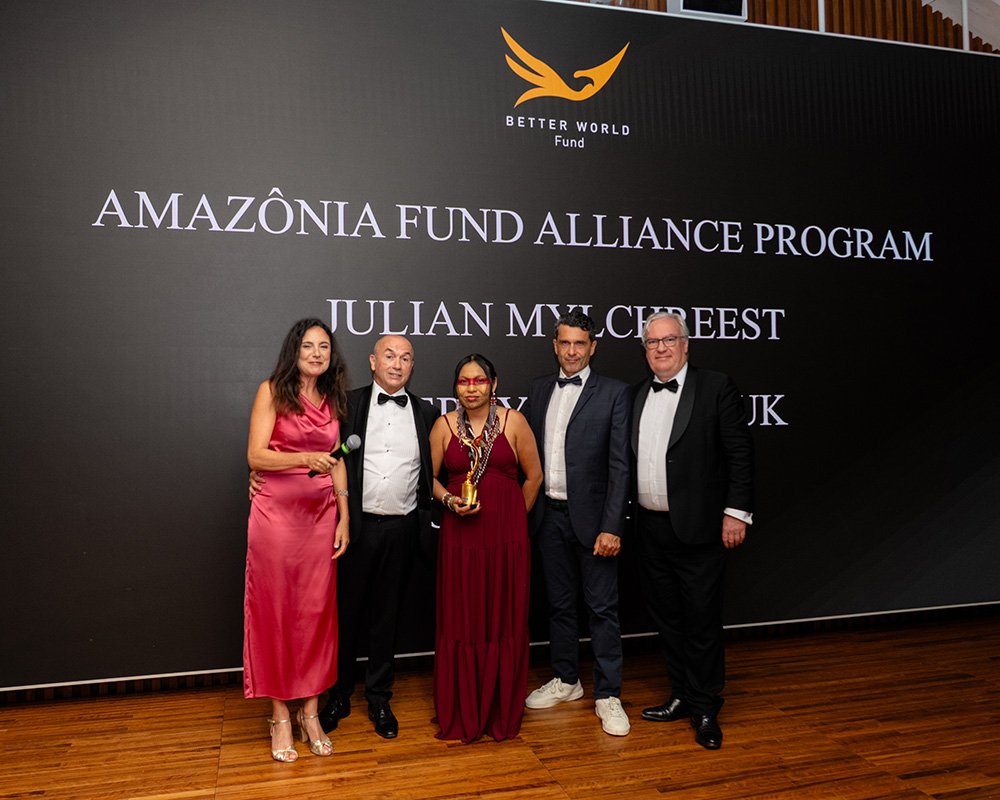
That connection was at the centre of the Amazônia Fund Alliance Program’s recognition at the Better World Fund Venice 2026 Gala. As the organisation’s founders took to the stage, a performance by Txira Huni Kuī drew a standing ovation, giving those gathered an opportunity to encounter the living culture behind a cause often discussed through statistics.
The evening recognised three years of work linking international supporters with conservation and Indigenous community projects in the Brazilian Amazon. Among the results reported by the Alliance is a land-protection initiative in Acre, in western Brazil. According to the programme, a €500,000 donation from one of its benefactors enabled its partner, Mothers of the Amazon, to acquire and preserve 20,501 hectares of rainforest in 2026, returning the land to the Huni Kuī people.
The significance of that work reaches beyond the area of forest protected. Access to ancestral territory can help communities sustain cultural practices, pass knowledge between generations and shape the future of the places to which they belong. It also places Indigenous people’s relationship with the forest at the centre of its protection.
“We need organizations like the Amazônia Fund Alliance Program, because their support is essential to helping Indigenous communities reclaim their ancestral territories and, in doing so, protect the forests that sustain us all,” said Bane Saleh, founder and executive director of Mothers of the Amazon, in a statement.
The environmental case for supporting Indigenous stewardship is compelling. Research highlighted by NASA found that, between 2001 and 2021, forests in the Amazon managed by Indigenous peoples and other communities absorbed more carbon than they released. Forests outside that management were, on average, net sources of carbon emissions.
These findings help explain why Indigenous rights and climate action are so closely connected. Keeping forests standing preserves carbon stored in trees, while supporting the communities who care for those forests helps sustain the knowledge and commitment on which their protection depends.
Founded by Thierry Klemeniuk and Julian Mylchreest and directed by Soraya Chaar, the Amazônia Fund Alliance Program launched during the Cannes Film Festival in 2023. It brings together non-profit organisations and sustainability-focused companies, working with the Brazilian Federation of UNESCO Clubs and Associations to help finance projects in the Amazon.
Its work also extends to film. The Alliance has helped mobilise funding for Raoni, filmmaker Alexandre Bouchet’s documentary about the Kayapó leader Chief Raoni. Alongside direct conservation support, such projects offer a way to bring Indigenous experiences and the defence of the rainforest to wider audiences.
“What matters most is that this support has translated into tangible impact on the ground, protecting forests, strengthening Indigenous communities and helping important projects move forward,” Klemeniuk said in a statement.
In Venice, Txira Huni Kuī brought a human presence to that work through her performance. Its longer-term significance will be felt in Acre, where the Alliance reports that international giving has helped return forest to the people whose lives are bound to it. The enduring promise of that support lies in what it enables communities to carry forward: their knowledge, their culture and their care for the forest.