

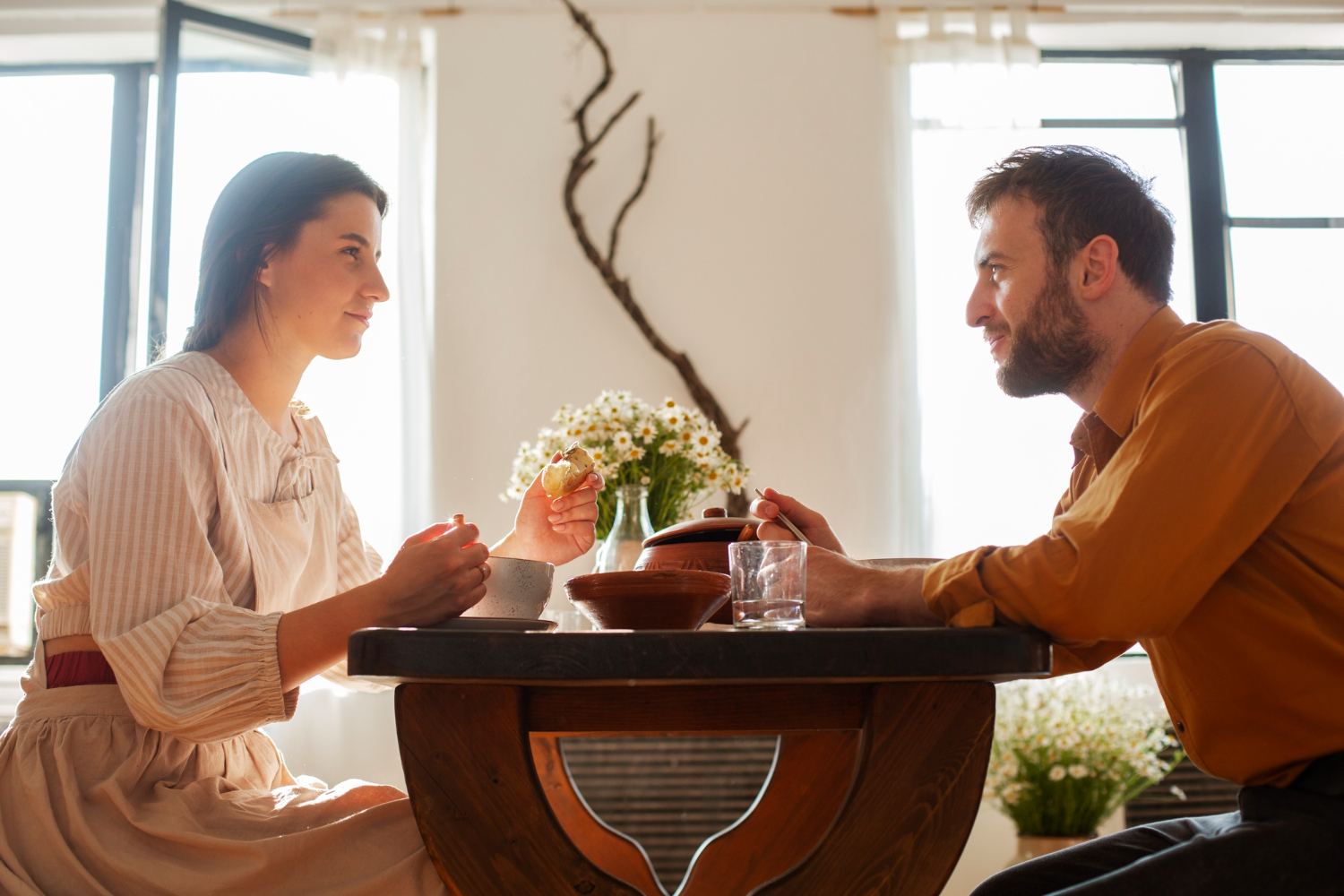
When you look at a minimalist couple’s house, the first thing you notice is the intention rather than the emptiness. Every corner provides breathing room, and every object has a story to tell. No cluttered evidence of previous purchases, no shouting of style. Rather, a silent call to be present is made.
Shared minimalism has been remarkably successful in changing how couples define comfort, success, and togetherness over the last ten years. When financial realities and emotional clarity collide during engagement, it frequently starts. Nowadays, many opt to forego the elaborate ceremony in favor of something remarkably similar to their life philosophy: straightforward, honest, and close-knit.
| Core Element | Impact of Shared Minimalism on Modern Couples |
|---|---|
| Financial Transparency | Joint priorities and spending habits lead to reduced tension |
| Smaller, Intentional Weddings | Emotionally meaningful ceremonies with lower financial strain |
| Clutter-Free Homes | Daily calm, better focus, and improved communication |
| Experiences Over Things | Travel, rituals, and bonding over memory-making |
| Time and Attention | Stronger emotional intimacy with fewer digital distractions |
| Environmental Mindfulness | Sustainable habits adopted together in shared routines |
| Redefined Gift-Giving | Traditions replaced with time-based, creative gestures |
| Shared Purpose | Alignment on lifestyle leads to a deeply resilient bond |
These couples have redefined what it means to build a life together by rejecting the accumulation of material possessions. I was informed by one Austin couple that their wedding cost less than $2,000. There will be no white dress or registry, just an outdoor ceremony in a public park followed by a potluck and handwritten vows. It felt “like us,” they claimed.
That sense—of introspection and understanding—is especially helpful. It affects everyday life and goes beyond aesthetics. Emotional accessibility is just as important as aesthetic appeal in a minimalist home. Conversations become surprisingly rich and leisurely when there are fewer things to distract from the conversation.
This change quickened during the pandemic. The stress of commuting was lessened by remote work, and shared living areas gained new significance. Couples started to notice how emotional disarray was subtly reflected in physical clutter. In response, many canceled subscriptions, donated unused items, and established shared tech boundaries. The outcomes? Significantly better communication and a more steady emotional bond.
They have developed patterns that are very effective at maintaining presence by incorporating basic rituals like tech-free dinners or quiet morning coffee routines. Like savings deposits in a long-term account, these build up value even though they aren’t grand declarations of love.
This way of life may seem austere to some. However, this minimalism is very adaptable; it’s not about owning less for the sake of it, but rather making thoughtful decisions. One woman talked about how she and her partner took a three-month vacation to travel across the United States in a van with just a cooler and two backpacks. The simplicity made room for growth, laughter, and frustration—as well as the kind of memory that routine doesn’t stifle or distort.
For these couples, intimacy is created rather than replaced by experiences.
Giving gifts has also changed. Many now give in emotionally charged ways, such as time, handwritten notes, recipes, playlists, or even shared journaling, in place of unexpected purchases. According to one man, he writes a letter on his anniversary summarizing the year’s poignant moments and surprising difficulties. It is referred to as their “annual weather report” by his partner.
The purpose of these rituals is very obvious. They are affirmations of shared alignment rather than performative gestures.
Instead of ignoring conflict, shared minimalism brings it to light early on. Two people must unavoidably face different attachments when deciding what to keep. While one may be attached to technology, the other may be attached to sentimental furniture. However, through that negotiation, they physically—rather than merely intellectually—learn each other’s values. Although these discussions can be awkward, they foster intimacy that is remarkably long-lasting.
Many couples report feeling much quicker when making decisions together by streamlining both shared goals and possessions. The mutual practice of deliberation becomes muscle memory in everything from parenting styles to career changes.
This way of life is also surprisingly inexpensive. A couple in Berlin told me that they lived for a year with just a mattress and two chairs in order to save money for a down payment. They chuckled and said, “Our space felt totally ours, but it looked bare to others.” They are now able to raise their child and work part-time thanks to their financial cushion.
This simplicity offers more than just aesthetics in the face of growing rent, digital distraction, and environmental stress—it offers agency. And that feels like love redefined to many.
These couples are right-sizing their priorities rather than cutting back on their lives by prioritizing presence over material belongings. They are improving complexity rather than avoiding it. Their homes show what they have decided to become together, not just who they are.
Perhaps the most obvious benefit of shared minimalism is that it promises not only a cleaner environment but also a more meaningful and intentional collaboration that is subtly intended to endure.