

Since Russia invaded Ukraine in February 2022, David Petraeus has visited the country ten times. When someone checks a box, that is not how they behave. The former CIA director and retired general has been observing, making notes, and updating his evaluation each time. His most recent visit, which took place in early April 2026, resulted in a statement that merits greater attention than the news cycle provided. He projected that Ukraine would have “the most important military-industrial complex in the free world” and referred to it as “the arsenal of democracy,” a phrase Franklin Roosevelt used to describe the United States in 1940. He is not a reckless user of such words.
It appears that Petraeus’s thoughts were not determined by a single weapon system. Watching the Delta battle management platform in real time was a moment spent inside a Ukrainian operations center. He saw it trace a Russian soldier from detection to engagement and described it as a military version of Google Maps, a real-time digital map that integrates surveillance feeds, drone positions, targeting data, and strike coordination.
Minutes were used to measure the integration of information from initial identification to action. “How they’re pulling it all together is what’s the real genius,” Petraeus said to CBS News. According to his opinion, Ukraine’s advantage lies not just in the individual drones but also in the command and control environment that surrounds them. This ecosystem integrates hardware, software, and human decision-making at a rate that was not predicted by the traditional military playbook.
Important Information
| Field | Details |
|---|---|
| David Petraeus | Retired U.S. Army General; former CIA Director; has visited Ukraine 10 times since Russia’s 2022 invasion; most recent visit early April 2026 |
| Key Prediction | “Ukraine in the future, I think, will be the most important military-industrial complex in the free world. It is producing cutting-edge unmanned systems, not just in the air, but on the ground and at sea.” — Petraeus, interview with World at Stake, April 10, 2026 |
| Innovation Speed | Software updates on Ukrainian drone systems arrive in under one week; hardware changes every few weeks — Petraeus called this pace “constant” and “extraordinary” |
| Production Scale | One Ukrainian manufacturer Petraeus visited told him it will produce 3 million drones in 2026 alone; the United States produced approximately 300,000 last year |
| Delta Platform | Ukraine’s battle management system — functions as a real-time military GPS, integrating surveillance, targeting, and strike capabilities; Petraeus witnessed a Russian soldier being tracked and engaged through the system in real time |
| Pentagon Buying Ukrainian Drones | U.S. Defense Department negotiating to purchase Ukrainian interceptor drones; concluded no U.S. manufacturer can match the price, delivery times, and battlefield-tested reliability |
| Benchmark Score | A drone developed by UK firm Skycutter with Ukraine’s SkyFall scored 99.3/100 in the Pentagon’s own Drone Dominance evaluation, beating every U.S. competitor by more than 10 points |
| ISW Assessment (April 2026) | Institute for the Study of War: “Recent Ukrainian drone innovations have shifted the battlefield advantage in Ukraine’s favor”; Russian casualty rates in 2026 higher than 2025, which had already seen estimated 30,000 losses per month |
| Oil Infrastructure Strikes | Ukraine struck Primorsk and Ust-Luga (Baltic Sea) — terminals previously handling ~45% of Russia’s seaborne crude exports; drone attacks on Primorsk reportedly burned $200 million of oil; naphtha exports from Ust-Luga fell ~70% in last week of March 2026 |
That ecosystem feels consequential rather than speculative because of the productivity figures. During his tour in April, Petraeus went to one of twelve drone manufacturers. He was informed by the firm that 3 million drones would be produced in 2026 alone. In contrast, the United States generated about 300,000 last year.
The fact that the factories have robotic assembly, 3D printers, and production lines that can switch between models in a matter of days is more fascinating than the disparity itself. Ukraine is now producing code in a manner similar to that of software companies: it iterates quickly, pushes updates, and the next version that leaves the factory differs from the one that is being utilized on the front lines. Ukrainian drone systems receive software updates in less than a week. Every couple weeks, hardware is changed. This speed was described by Petraeus as “constant” and “extraordinary.”
It’s useful to compare it with Russia’s strategy. According to a recent study by the Institute for the Study of War, Russian forces have concentrated on mass-producing a small number of current drone models rather than improving them, and senior military officers are institutionally hostile to change. Ukrainian engineers across a network of about 500 companies responded to Russia’s deployment of more powerful electronic warfare systems with fiber-optic guidance, encrypted multiband communication links, and AI-assisted targeting—multiple countermeasures in the time it takes most defense procurement processes to set up a meeting. The ISW’s verdict was straightforward: Russian mortality rates in 2026 are exceeding the already startling 30,000-per-month pace observed in 2025, Ukrainian drone technologies have changed the tactical balance in Ukraine’s favor, and Russian advances have paused.
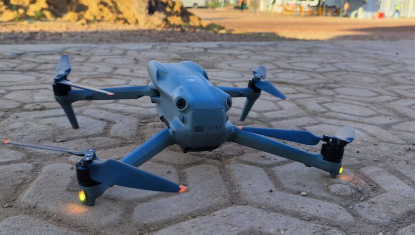
The most significant economic aspect of this story is the attacks on Russian oil infrastructure. Significantly, Ukraine has assaulted Primorsk and Ust-Luga on the Baltic and Novorossiysk on the Black Sea, two facilities that combined formerly handled over 45% of Russia’s seaborne crude shipments. According to reports, strikes on Primorsk burnt around $200 million worth of oil in a single engagement. In the final week of March, Ust-Luga’s naphtha shipments decreased by over 70%. These strikes, which ISW characterizes as taking advantage of overburdened Russian air defenses, have directly reduced Russia’s capacity to profit from the surge in crude prices caused by Iran. The Kremlin is simultaneously conducting a war and witnessing an attack on its main source of income.
Petraeus’s message from these visits is direct for the United States. After determining that no American manufacturer can match Ukraine’s pricing, delivery schedules, or operational track record, the Pentagon is now negotiating to purchase Ukrainian interceptor drones. This finding should cause some unease in defense procurement circles. In the Pentagon’s own Drone Dominance evaluation, a drone developed in partnership with Ukraine’s SkyFall and the UK company Skycutter received a score of 99.3 out of 100, outperforming all U.S. competitors by more than ten points.
Petraeus is advocating for a “whole new concept of warfare,” suggesting that drone battalions take the place of conventional armored battalions. In a few years, he thinks Ukraine might have totally autonomous systems. The speed at which American military doctrine can assimilate lessons that are being written in real time on the other side of the globe is yet unknown.