

Looking west from their kitchen window on April 13, 2026, a Palm Springs resident would have seen something that, in California, usually indicates that an outdoor layout has to be reevaluated. The air was now tawny. Not the gray-white smoke of wildfires, which most Californians can recognize at a glance by now.
Over the San Jacinto Mountains, something more earthly and ochre settled, filtering the afternoon light in a manner more akin to a filter than a sky. It was dust. Earlier that morning, the Coachella Valley was under a dangerous particulate pollution air quality advisory from the National Weather Service. Trees that had burned were not the source of the particle pollution in question. It was coming from the desert floor, picked up by wind, and redistributed into the lungs of everyone outside.
| Category | Detail |
|---|---|
| Primary Cause | Windblown desert dust producing hazardous levels of PM2.5 particulate matter — not wildfire smoke; affecting South Coast AQMD region including Coachella Valley and eastern California desert communities |
| Dates & Locations | April 1, 2026 — initial EPA “emergency conditions” declaration in central California; April 10, 2026 — Coachella Valley alert during music festival; April 13 — Palm Springs alert; April 17 — Owens Valley and eastern California desert emergency declaration |
| Severity Level | AQI between 301 and 500 — the “hazardous” category, the most severe on the federal Air Quality Index; triggers EPA “emergency conditions” warning and advice for everyone to avoid all outdoor physical activity |
| What PM2.5 Actually Is | Fine particulate matter 2.5 micrometres or smaller — can penetrate deep into lungs and enter the bloodstream; EPA classifies it as one of the most dangerous forms of air pollution |
| Non-Wildfire Sources | Windblown dust from unpaved desert areas; agricultural dust from Imperial and Central valleys; construction-related particulate; vehicle emissions; industrial and power plant emissions — all can produce the same measured PM2.5 readings as wildfire smoke |
| Coachella Valley Context | The April 10 alert coincided with the opening weekend of the Coachella music festival, with tens of thousands of attendees outdoors during elevated dust pollution levels |
| Sensitive Groups | Elderly, children, pregnant people, and those with existing respiratory or cardiovascular conditions advised to remain indoors; PM2.5 exposure linked to asthma, heart disease, and long-term cardiovascular impacts |
| Further Reference | Real-time air quality data at California Air Resources Board |
Residents of California, who have spent the last ten years learning to equate “emergency conditions” alerts with wildfire season, are perplexed by the pattern of air quality emergencies in April 2026. The EPA’s AirNow system issued its strongest category of alert on April 1 after detecting dangerous PM2.5 levels in central California.
On the first day of the music festival, April 10, an alert was sent out for the Coachella Valley. Owens Valley and the desert areas of eastern California were placed under emergency conditions on April 17. Wildfire was not the main cause in any of these situations. The culprit in each instance was fine particulate matter, or PM2.5, which was carried hundreds of kilometers by wind events that lifted it off parched lakebeds, agricultural fields, and unpaved desert surfaces.
Here, the particular geography is important. Due to Los Angeles’s early 20th-century diversion of water from Owens Lake, which left a dry lakebed capable of producing truly massive dust storms under the correct wind conditions, the Owens Valley has been a well-documented source of dust pollution for decades.
The dynamics of the Coachella Valley and Imperial Valley are similar, but they are compounded by agricultural activities, the Salton Sea’s shrinkage, and the desert’s topography, which directs wind into particular corridors during particular seasons. The dust becomes airborne in amounts sufficient to drive PM2.5 concentrations into the same dangerous ranges that wildfire smoke usually creates when the wind picks up, as it has done many times in April 2026.
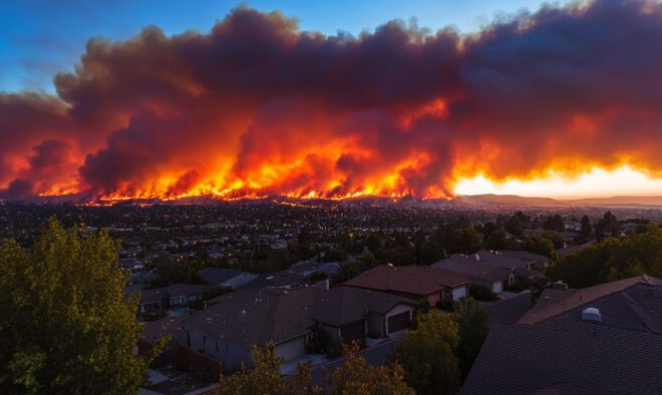
The source has no bearing on the public health outcome. Whether the particle matter came from a dry lakebed or a burning forest, the EPA’s emergency conditions warning is still applicable. By definition, PM2.5 particles are 2.5 micrometers or smaller, which allows them to enter the bloodstream and deeply penetrate lung tissue.
Cardiovascular stress, asthma flare-ups, and long-term harm that builds up from repeated exposures are all associated with sustained exposure. An emergency-level dust event poses the same urgent health danger as an emergency-level smoke event for elderly inhabitants, children, pregnant individuals, and anybody with pre-existing respiratory or cardiac disorders. The advice is the same: stay inside, shut windows, use air purifiers if they are available, and refrain from physical activity.
Following these developments through April gives the impression that the public discourse about California’s air quality has subtly transcended its connection to fire season. Due to population increase, agricultural practices, water management decisions made over a century ago, and climate change, the state can now face dangerous air quality situations during spring desert dust storms just as easily as during summer and fall fire events.
That could not be a reassuring finding, and there’s a chance that more incidents of both types will occur in the upcoming months. On some afternoons, the window outside Palm Springs would still turn brown. On others, the particle count will keep rising. Regardless of the specifics of the atmosphere on any given day, the warnings are valid.