

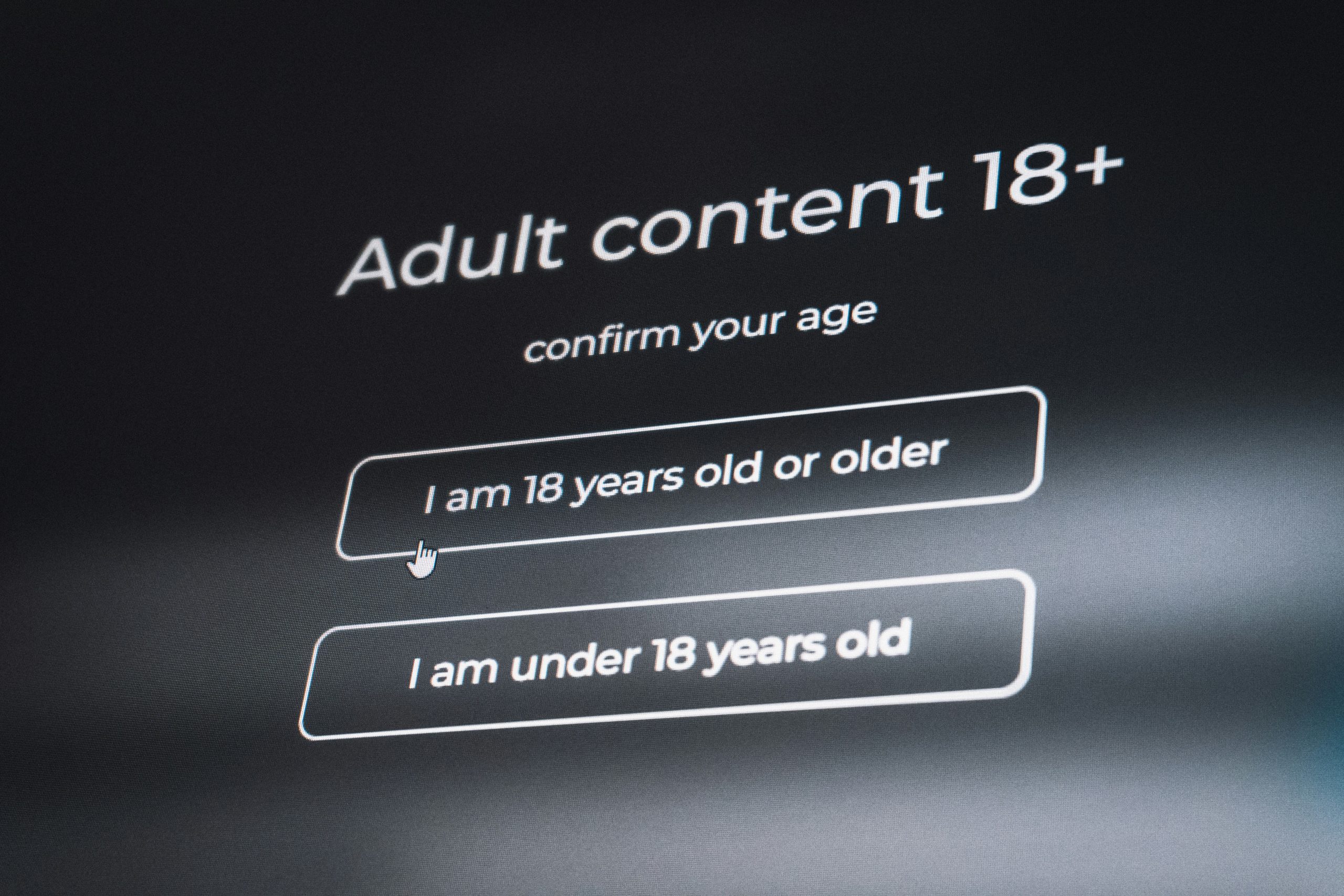
On July 1st, West Virginia becomes the 26th American state to require age verification before anyone can access adult content online. Not a checkbox asking your birthday. Actual ID.
Half the country now operates under some form of age-restriction law for digital platforms.
The shift accelerated after a single Supreme Court decision last year. In Free Speech Coalition v. Paxton, justices ruled that Texas could legally require websites hosting significant amounts of sexually explicit material to verify users are adults before granting access. The Court found the law permissible because it advanced the state’s interest in shielding minors from explicit content.
That ruling cracked open the legislative dam. What began as targeted legislation to block children from pornography sites has metastasised into something far broader—encompassing social media, AI chatbots, online gambling platforms, and algorithmic content feeds.
During the 2025 legislative session alone, 18 states introduced nearly 30 bills seeking to impose age verification or related restrictions. By early 2026, the rules extended beyond adult material into the architecture of social platforms themselves. California and New York moved to restrict “addictive feeds” for younger users without parental approval. Nebraska passed a law demanding social media companies verify ages and secure parental consent for anyone under 18, with fines reaching $2,500 per violation. New York’s SAFE For Kids Act carries penalties up to $5,000 per breach.
The global picture mirrors the American trajectory. The UK’s Online Safety Act took effect in July 2025. Australia enacted legislation limiting social media for under-16s in December 2025, then rolled out age verification requirements by March 2026.
For two decades, the internet operated on an honour system.
Since 1998, the Children’s Online Privacy Protection Act required parental consent on child-directed platforms. Enforcement remained patchy. Loopholes yawned wide. Self-reported ages went unchallenged. A 12-year-old could claim to be 35 with three keystrokes, and most sites never questioned it.
That informality is ending—not gradually, but in a legislative avalanche. Regulators started drawing connections between unrestricted access and measurable harm: minors viewing pornography, mental health deterioration linked to algorithmic feeds, predatory practices in online gaming.
What platforms must do now depends on jurisdiction, but common threads emerge across the patchwork.
First, age-gating. Confirm a user meets the minimum age before granting access to certain content or features. That threshold sits at 18 for adult material. For social media in various states, it drops to 16, or 13 with verified parental permission.
Second, parental consent workflows. Some laws don’t ban underage users outright—they permit access only after proper verification by a parent or guardian. Tennessee’s Protecting Kids From Social Media Act mandates that platforms use third-party verification to ensure children under 14 aren’t creating accounts. If someone under 18 attempts to access an existing account, the platform has 14 days to obtain parental consent.
Third, design restrictions. Beyond simple access control, several states now regulate how platforms interact with minor users. Rules prohibit push notifications during school hours or late at night, limit autoplay features, and require parental approval before content recommendation algorithms can operate.
Fourth, AI chatbot compliance. Idaho, Oregon, and Washington enacted laws governing companion chatbots used by minors. Operators must avoid suggesting the chatbot possesses sentience, prevent sexual communication with minors, and implement safeguards when users express self-harm ideation. The legal framework is sprinting to catch up with the technology.
Verifying age in theory is straightforward. Doing it at scale without destroying user experience or creating security nightmares is another matter entirely.
Self-declaration—typing in a birthdate—fails every serious compliance standard. Minors circumvent it effortlessly. Regulators no longer consider it adequate.
Credit card validation uses payment data as a proxy for adulthood. Adults typically hold registered credit cards. The method offers reasonable reliability with minimal friction, but excludes users paying through alternative methods or those without cards.
Government ID verification requires users to photograph a passport, driver’s licence, or national ID card, then upload it for automated analysis. This approach delivers the highest accuracy—modern systems routinely exceed 98%—and leading providers process verification in under 30 seconds using AI-powered document analysis. It’s also becoming legally mandatory for high-risk content platforms.
Facial age estimation involves AI models analysing a real-time selfie to estimate the user’s age without storing identity documents. Because it produces a probability rather than confirming an actual identity, regulators sometimes classify this as “age estimation” rather than “age verification.” For lower-risk use cases, it offers a privacy-preserving alternative that several jurisdictions accept.
Electronic identity verification (eIDV) matches a user’s name, birthdate, and address against government or commercial identity databases. The process runs seamlessly in the background and is already widespread on financial platforms. In February 2026, the Federal Trade Commission issued a policy statement indicating it wouldn’t pursue enforcement action against operators collecting minimal data solely for age verification purposes—a clear signal that lighter-touch electronic methods satisfy compliance requirements.
The method chosen increasingly depends on content risk level, jurisdictional mandates, and a platform’s tolerance for user friction that could crater conversion rates.
Here’s the trap: proving someone isn’t a minor requires collecting data proving who they are.
Government IDs, biometric data, payment details—precisely the sensitive information that privacy regulations like GDPR and the California Consumer Privacy Act were designed to protect. Critics argue age verification laws create an impossible contradiction. Measures promoted as “online safety” protections for children simultaneously infringe free speech rights for minors and adults, erect barriers to internet access, and threaten the privacy, anonymity, and security of all users.
The data security threat is tangible. Any system collecting ID documents at scale becomes a target. A compromised age verification database doesn’t just expose emails and passwords—it reveals government identification, facial images, and potentially medical data inferred from verification context.
Civil liberties organisations have mobilised in response. The Electronic Frontier Foundation argues age verification isn’t a safety tool but rather the foundation for a new surveillance layer embedded in the internet’s architecture.
Zero-knowledge verification methods offer the most promising technological solution—systems capable of confirming “this person is over 18” without storing or sharing the underlying identity information used to make that determination. These approaches haven’t reached full maturity. But they represent the direction privacy-conscious compliance will eventually travel.
For any business operating an account-based platform, compliance has become a different calculation entirely.
Age verification is no longer a niche concern affecting a handful of jurisdictions. It’s an operational reality with immediate implications. The challenge isn’t understanding what’s required—it’s building a system satisfying multiple, conflicting legal frameworks simultaneously.
A site complying with Louisiana’s adult content law might violate California’s social media regulations. The parental consent process acceptable in Tennessee might fall short in New York. What works in one state’s product design and onboarding flow could be noncompliant elsewhere.
Enforcement has moved beyond theoretical. Civil penalties under COPPA reach $53,088 per violation. For major platforms, pre-settlement penalties climb orders of magnitude higher due to millions of affected users. In certain states, criminal penalties for knowingly or recklessly breaching children’s data privacy laws may extend past corporations to individual officers and directors.
Legal experts increasingly frame age verification as a cross-functional responsibility rather than a legal checkbox. It impacts product architecture, user experience, and security posture—not merely legal risk. Companies must align legal, privacy, cybersecurity, and product teams, then document compliance choices and risk assessments as standards continue evolving.
The compliance calendar is filling up fast, and penalties for getting it wrong are climbing quarterly.
What began as a focused effort to shield minors from adult websites has evolved into a sweeping regulatory push touching social media design, app store policies, and AI-powered chatbots. Federal legislation in the United States has been discussed for years—a single framework that would replace the state-by-state patchwork. Until that arrives, each state keeps adding requirements.
Internationally, the EU’s Digital Services Act pressures platforms with accountability standards. The UK is actively enforcing the Online Safety Act. Australia, Canada, and several Asian markets are running experiments that other countries are monitoring closely.
Requiring ID to access parts of the internet will become more common, not less. For businesses, the cost of non-compliance—legally, reputationally, and technically—is rising every quarter.
For the internet as a whole, the central question remains unresolved: how to verify identity reliably and securely without constructing a surveillance apparatus that monitors everyone, everywhere, all the time.
The internet that was once open and anonymous is entering a new phase—one demanding authenticated identity as the price of access. How that transition unfolds, and how much personal data gets collected and retained along the way, will shape the internet everyone ends up using for decades to come.