

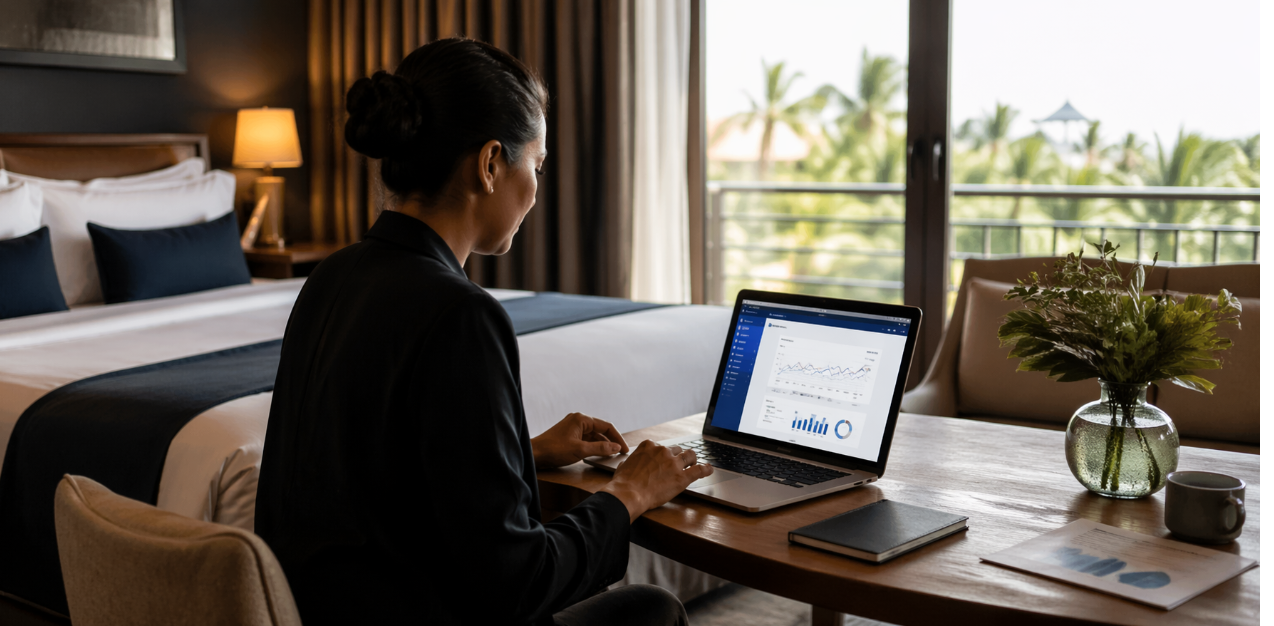
For many operators, the starting question is what PMS systems are for small hotels, especially at a time when guest expectations are rising, margins are tightening, and independent properties are being asked to deliver the kind of consistency once associated only with major brands. That question matters not just to technology buyers but to anyone in hospitality trying to understand how smaller hotels can protect service standards while building a more resilient business model.
- In today’s hospitality environment, a property management system is no longer simply a back-office tool.
- It has become part of the guest journey, the staff workflow, and the owner’s decision-making process.
- For readers of NewsAnyway, this is less a software story and more a business story about adaptation, service, and long-term control.
Why PMS Decisions Matter More Than Ever for Small Hotels
Small hotels have always operated with a different rhythm from large chains. They tend to rely on leaner teams, closer owner involvement, and a more personal guest experience. That can be a strength. It can also create pressure as the business grows, as occupancy becomes less predictable, or as staff must manage reservations, housekeeping, billing, and guest requests with limited time and fewer layers of support.
A modern PMS for small hotel operations helps turn that pressure into structure. It centralizes daily activity so the front desk is not working from memory, housekeeping is not waiting for verbal updates, and managers are not piecing together yesterday’s performance from separate spreadsheets and messages. In practical terms, that means fewer avoidable errors, faster communication, and a better ability to maintain standards even during busy periods.
- Owners often underestimate how much operational friction comes from disconnected processes.
- Small mistakes, repeated every day, quietly affect labor costs, guest satisfaction, and online reputation.
- A strong PMS does not replace hospitality; it gives teams more room to deliver it.
The Real Role of a PMS in the Guest Experience
Guests rarely think about the system behind the stay, but they notice its effects immediately. A smooth check-in, a clean, on-time-ready room, clear billing, accurate room status, and a fast response to special requests all reflect operational discipline. When that discipline is missing, guests experience the opposite: delays, confusion, inconsistent service, and frustration.
Service Quality Is Often an Operations Issue First
In luxury and boutique hospitality, experience is everything. Yet experience is not created by design alone. Beautiful interiors, strong branding, and premium amenities can lose impact if service delivery feels disorganized. This is where hotel technology becomes quietly strategic. A PMS supports consistency, one of the least glamorous yet most valuable assets in hospitality.
For smaller hotels, consistency is especially important because teams are often cross-functional. The same employee may support reception in the morning, guest requests in the afternoon, and coordination with housekeeping later in the day. When information is clearly organized in one place, an employee can work with confidence instead of guesswork.
- Room status must be reliable, not approximate.
- Reservation details must be visible, not buried in email chains.
- Guest preferences should be remembered, not rediscovered during every stay.
Growth Changes the Technology Conversation
A single-property hotel can sometimes operate with makeshift processes longer than it should. But the moment growth enters the picture, those workarounds begin to fail. Growth may mean more rooms, more distribution channels, more reporting needs, or the addition of a second or third property. At that stage, the discussion shifts from simple property control to scale.
This is where multi-property management for hotels becomes a critical topic. Owners who expand often discover that running multiple hotels is not just a larger version of running one hotel. It requires visibility across locations, comparable performance data, standardized processes, and sufficient flexibility to accommodate different markets and guest profiles.
- A city boutique hotel and a resort property may not operate the same way.
- But ownership still needs a consolidated view of occupancy, revenue patterns, staffing pressure, and service issues.
- Without a connected system, growth can increase complexity faster than it increases returns.
From Independent Hotel to Small Group: The Hidden Transition
Many hospitality businesses do not set out to become a “group.” They open one successful property, then add another in a nearby destination or under a related brand concept. The challenge is that this transition often occurs before internal systems are ready.
Standardization Without Losing Character
One of the biggest fears among independent hoteliers is that better systems will make the business feel generic. That concern is understandable, especially in luxury and lifestyle segments where identity matters. But good technology should support brand character, not flatten it. Standardization is most useful when it applies to the invisible mechanics of the operation: reservation flow, room inventory logic, housekeeping updates, user permissions, and financial reporting.
That distinction is important. Guests want personality in the experience, but they also expect professionalism in delivery. No guest values inconsistency simply because a hotel is independent.
A well-chosen multi-property PMS for hotel chains can help owners establish common operating foundations while allowing each property to preserve its own tone, service rituals, and positioning. In other words, technology can create order behind the scenes without making the guest experience feel scripted.
- Shared reporting does not mean identical service styles.
- Central oversight does not need to erase local decision-making.
- Strong systems make it easier to protect quality as a portfolio grows.
What Small Hotel Owners Should Actually Evaluate
Hotel owners are often told to look at features, integrations, dashboards, and automation. Those matters, but they should not be the first lens. The first question is simpler: what kind of business are you trying to run in two to five years?
A property that wants to remain a single boutique hotel may prioritize ease of use, operational clarity, and team adoption. A business planning to expand may need stronger group-level controls, cross-property reporting, and more scalable workflows. In both cases, the right system should reduce reliance on manual processes and support better decision-making without creating unnecessary complexity.
The Most Useful Questions Are Operational, Not Technical
Before evaluating software, owners should ask:
- Where do service breakdowns happen most often?
- Which tasks depend too heavily on one experienced employee?
- How quickly can management see the true state of the business?
- Can the current setup support another property without doubling the confusion?
These questions bring the conversation back to reality. Technology should be judged by operational outcomes: clearer communication, better visibility, fewer errors, more consistent service, and stronger control across the business.
Why This Matters to the Wider Hospitality Conversation
For a publication like NewsAnyway, the relevance of this topic goes beyond hotel operations. Small hotels, boutique brands, and growing regional groups are part of a broader economic and cultural shift in hospitality. Travelers increasingly value individuality, local character, and curated service. At the same time, those businesses are under pressure to become more disciplined, data-aware, and operationally agile.
That tension is shaping the future of the sector. Hotels that combine personality with process are more likely to protect margins, retain staff confidence, and meet guest expectations sustainably. Those who rely too long on fragmented workflows may find that service quality becomes harder to maintain just as competition becomes sharper.
In that sense, the PMS conversation is really about maturity. It is about how a hotel moves from reactive daily management to intentional operational leadership.
Final Thoughts
The most successful small hotels are not trying to become faceless corporations. They are trying to become stronger versions of themselves. That requires systems that support people, not systems that overshadow them. Whether the business is a single luxury property or an emerging multi-site portfolio, the goal is the same: create clarity behind the scenes so excellence can be felt on the guest side.
- Better structure supports better service.
- Better visibility supports better decisions.
- Better systems give independent hospitality a stronger future.
For hotel owners, the PMS question matters now more than ever.