

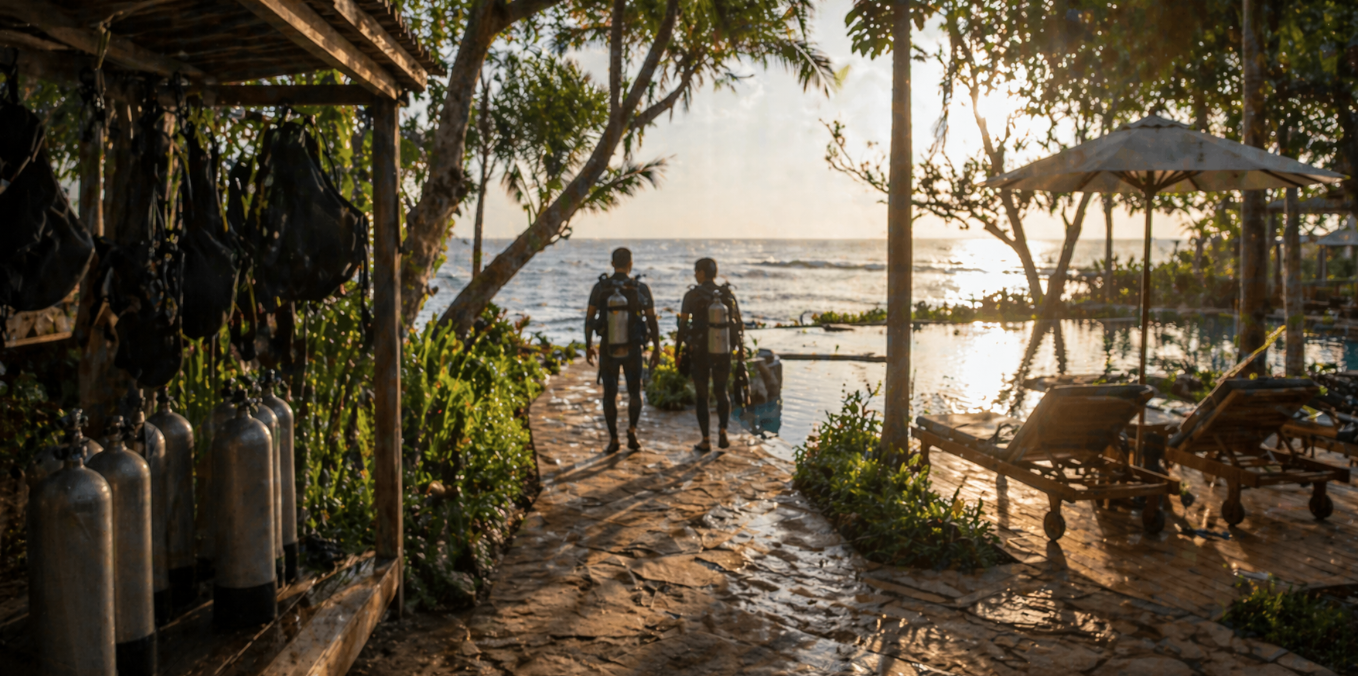
For travelers, resort owners, and dive operators alike, scuba diving in Bali, Indonesia, is more than a holiday activity; it is part of a wider hospitality ecosystem that connects marine tourism, local communities, guest experience, and the long-term value of Indonesia’s coastal destinations.
Why Diving Still Defines Bali’s Coastal Appeal
Bali is often described by its temples, rice terraces, beach clubs, and wellness retreats, but beneath the surface lies another story. The island’s dive culture has quietly become one of its strongest tourism assets. For many international visitors, Bali scuba diving offers an accessible introduction to Indonesia’s underwater world without requiring remote travel or expedition-style planning.
This matters for hospitality businesses. Guests who come for diving often stay longer, travel across multiple regions, and spend on accommodation, transport, dining, equipment rental, training, and guided experiences. A well-managed dive guest is rarely just buying one activity. They are investing in a complete island journey.
- Diving supports resorts, restaurants, transport providers, guides, and local communities.
- Marine tourism helps diversify Bali beyond traditional beach and nightlife markets.
- Responsible underwater experiences can strengthen Indonesia’s reputation as a premium nature destination.
The Modern Dive Guest Has Changed
Fifteen years ago, many dive guests in Bali were either certified divers traveling with their own gear or backpackers looking for affordable courses. Today, the market is broader and more sophisticated. Bali now welcomes first-time divers, families, luxury travelers, photographers, wellness guests, digital nomads, and experienced divers combining Bali with Komodo, Raja Ampat, or North Sulawesi.
This shift has raised expectations. Guests want professional safety standards, clear communication, reliable transport, comfortable facilities, and honest advice. They also want experiences that feel personal rather than mass-produced.
What Guests Now Expect from Dive Centers
A modern dive center is not only judged by the dive itself. Guests notice the entire service chain, from the first inquiry to the final drop-off.
Important expectations include:
- Quick and clear pre-arrival communication
- Transparent pricing and realistic dive briefings
- Well-maintained equipment
- Professional multilingual staff
- Respect for safety limits and ocean conditions
- Flexible support for beginners, families, and nervous guests
Dive centers that understand hospitality, not just diving, usually create stronger loyalty.
Bali’s Dive Regions Each Tell a Different Story
One of Bali’s advantages is variety. The island offers different underwater environments within a relatively compact destination. This makes it easier for resorts and dive operators to design experiences for different guest profiles.
Some travelers want easy shore dives. Others want wrecks, macro life, reefs, or manta encounters nearby. Some are not ready to dive at all and prefer the best snorkeling in Bali as a softer entry point into marine tourism.
- Beginner divers often value calm conditions and patient instruction.
- Certified divers may seek wrecks, walls, drift dives, or photography opportunities.
- Families may combine snorkeling, beach time, and cultural excursions.
- Luxury guests often prioritize comfort, privacy, and seamless planning.
For hospitality operators, this variety is a commercial advantage. It allows Bali to serve multiple segments without losing its identity.
The Importance of Amed in Bali’s Dive Landscape
Among Bali’s coastal areas, Amed has developed a distinctive position. Scuba diving in Amed, Bali, appeals to travelers seeking a slower, more intimate experience. The area is known for black-sand beaches, relaxed villages, shore dives, reefs, and access to nearby dive sites suitable for both beginners and experienced guests.
Amed is not trying to be Seminyak or Canggu. Its strength lies in the atmosphere. It feels connected to the sea in a practical, everyday way. For many visitors, that authenticity is part of the appeal.
Why Amed Works for Dive-Focused Hospitality
Amed’s hospitality potential comes from the relationship between accommodation and diving. Guests often stay close to the water, walk to dive centers, and structure their day around the ocean. This creates a natural rhythm that resorts and guesthouses can support.
Properties in areas like Amed can add value by offering:
- Early breakfast options for morning dives
- Drying areas for swimwear and light gear
- Clear local transport arrangements
- Staff who understand dive schedules
- Quiet recovery spaces after long water days
- Partnerships with responsible dive professionals
These small details can have a major impact on guest satisfaction.
Scuba Diving in Bali as a Hospitality Strategy
For Indonesian resorts, scuba diving in Bali should not be treated as an add-on brochure item. It can be part of a broader positioning strategy. A resort that understands dive guests can build packages, improve the length of stay, and attract repeat visitors.
However, this should be done carefully. Not every resort needs to become a dive resort. Some will benefit more from strategic partnerships with trusted operators. Others may invest in their own dive facilities if the location, staff, and market demand support it.
Questions Resorts Should Ask Before Promoting Diving
Before building dive-related offers, hotel managers should consider:
- Are nearby dive sites suitable for the resort’s guest profile?
- Is there a reliable, licensed, and safety-conscious dive partner?
- Can the resort handle early departures and changing sea conditions?
- Are staff trained to explain basic dive logistics accurately?
- Does the guest journey feel smooth from booking to return?
The goal is not to oversell the ocean. The goal is to match the right guest with the right experience.
Snorkeling Is Not a Secondary Product
Many hospitality businesses underestimate snorkeling. In reality, snorkeling can be one of the most inclusive marine experiences in Bali. It attracts families, older travelers, non-certified guests, and people curious about the underwater world but not ready for scuba diving.
For resorts, snorkeling is often easier to integrate into the guest journey than diving. It requires less time, less training, and less psychological commitment. When managed responsibly, it can also serve as a pathway to future dive experiences.
- Snorkeling gently introduces guests to marine life.
- It works well for mixed groups where not everyone dives.
- It can extend the appeal of coastal resorts beyond beach relaxation.
- It encourages guests to value reef protection and ocean awareness.
Responsible Marine Tourism Is Now a Business Requirement
Bali’s underwater appeal depends on healthy reefs, clean beaches, professional operators, and respectful guest behavior. This makes sustainability more than a marketing phrase. It is a business requirement.
Dive centers and resorts both have a role to play. Guests should be briefed not to touch coral, chase marine life, stand on reefs, or leave waste behind. Operators should manage group sizes, properly maintain equipment, and avoid pressuring staff or guests into unsafe decisions.
Practical Responsibility Builds Trust
Responsible hospitality need not feel preachy. It can be practical, calm, and guest-friendly.
Examples include:
- Providing refillable water options
- Explaining reef-safe behavior before trips
- Using trained local guides
- Supporting beach and underwater clean-up initiatives
- Avoiding unrealistic wildlife guarantees
- Encouraging guests to respect village life and local customs
These actions create trust and protect the destination’s long-term value.
The Business Opportunity Ahead
Indonesia has some of the world’s most impressive marine environments, and Bali remains one of the easiest gateways into that world. For dive centers, the opportunity lies in combining technical competence with warm hospitality. For resorts, the opportunity is to understand marine tourism as part of the guest journey, not merely as a list of activities.
The future belongs to operators who can balance safety, service, sustainability, and storytelling. Guests remember beautiful reefs, but they also remember how they were treated before and after entering the water.
A Smarter Future for Bali’s Dive Hospitality
Bali’s dive industry has matured. It no longer needs to compete only on price or volume. Its strongest path forward is thoughtful experience design: honest guidance, careful partnerships, better staff training, and deeper respect for the island’s marine assets.
For NewsAnyway readers watching global hospitality trends, Bali offers a clear lesson. The most resilient destinations are not built on scenery alone. They are built on the ability to turn natural beauty into responsible, well-managed, human-centered experiences.
In that sense, Bali’s underwater world is not just a tourism product. It is a living part of the island’s hospitality identity, and one of Indonesia’s most valuable invitations to the world.