

When I passed a closed vertical farm in an industrial park outside a mid-sized American city last winter, I was immediately struck by how unremarkable the structure appeared. No futuristic signage, no shiny glass. Just a chain over the loading dock and a warehouse with a faded logo. This same site was presented to investors as part of the food industry’s future a few years ago. It was now a parking lot for a logistics company in need of inexpensive space.
You can learn nearly everything about what happened to vertical farming from that image, which is silently repeated throughout Europe, North America, and portions of Asia. It wasn’t a loud collapse. A layoff here, a discreet bankruptcy filing there, and a press release that was revised three times before it was released on a Friday afternoon were all part of it. Once supported by glossy magazine covers and TED-style optimism, the hype simply ran out of money and patience at about the same time.
| Field | Detail |
|---|---|
| Sector | Controlled Environment Agriculture (CEA) |
| Peak Global Investment | $10 billion before sharp decline |
| Investment Drop (2024) | 53% year-over-year |
| Primary Cost Pressure | Energy bills, capital expenditure, debt servicing |
| Common Crops | Leafy greens, herbs, microgreens, strawberries |
| Notable Boom Years | 2018 to 2022 |
| Notable Bust Years | 2023 to 2026 |
| Key Failure Reasons | High energy costs, weak unit economics, “tech-first” mindset |
| Key Survivor Trait | Modular growth, automation, diversified margins |
| Outlook | Slower, leaner, profitability-first second wave |
Almost all of these businesses had cheap money as an unspoken co-founder. Investors were prepared to finance ambitious projects with ten-year payback periods when interest rates were close to zero. In essence, a vertical farm is a structure filled with pricey machinery that aims to produce lettuce profitably. When the cost of capital triples in eighteen months, the math becomes significantly different. All of a sudden, the lights were not only extremely costly, but also financially hazardous.
Speaking with those who experienced it, it seems that the industry thought it was a software company. Founders from the tech industry believed they could scale through iteration, just like a SaaS product might. But updates are not shipped by plants. They require steady inputs, whose costs skyrocketed during the European energy crisis, and they grow at their own pace. According to a former operations lead I spoke with, it was like “trying to run a Series B startup inside a greenhouse during a heatwave.” The metaphor stuck even though it wasn’t flattering.
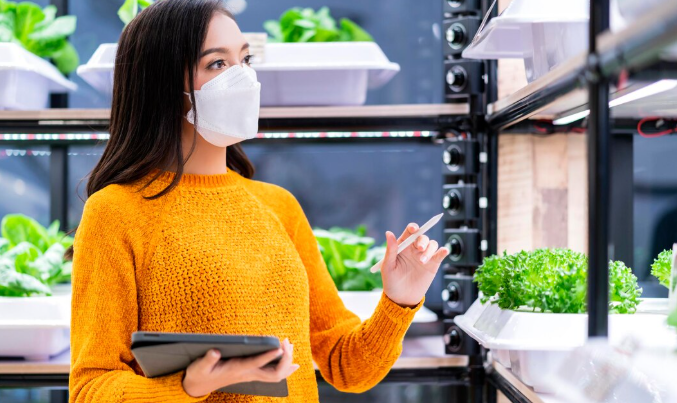
The deeper error might have been strategic rather than technical. Many of these companies competed with open-field farms whose fixed costs were settled decades ago in an attempt to undercut traditional agriculture on price. It was always going to be a losing battle. No matter how hygienic or pesticide-free, indoor lettuce can’t compete with a tomato grown in real sunlight for free. A few founders were aware of this. Most didn’t—at least not in a timely manner.
Listing the deceased is not as fascinating as observing the survivors. The remaining businesses appear to be almost ashamed of the past. They discuss energy contracts, automation payback periods, modular expansion, and high-margin specialty crops, such as herbs and strawberries, which are difficult for a typical farm to consistently produce. There is less noise on the decks. The appraisals are lower. At last, the discipline appears genuine.
It remains to be seen if this second wave truly fulfills the initial promise. Rates haven’t gone back to their previous, generous levels, and the economy is still harsh. On the foundation of the previous attempt, however, there’s a sense that something sincere is being constructed this time. The dream has been chastened, but it is not dead. Chastened is frequently the necessary first season before a better one in agriculture, as anyone who has ever attempted to grow anything will tell you.