

Lawyers adore a certain type of business document, whereas engineers fear it. An internal memo. A message on Slack. A Tuesday meeting presentation slide from two years ago. The kind of artifact that can subtly turn an ambiguous assertion into tangible proof when it is discovered. These kinds of documents are now being used as federal court exhibits by the AI business, which for years treated safety as a marketing idea and a topic for research blogs.
By the spring of 2026, the legal discourse surrounding AI safety appears to be substantially different from what the industry was discussing a year ago. The change has been gradual at first, then abruptly accelerated.
| AI Safety in Federal Court — 2026 Snapshot | Details |
|---|---|
| Defendants Currently in Litigation | OpenAI, Character.AI, Meta, Anthropic-related cases |
| Notable Lawsuit | Elon Musk v. OpenAI |
| Key Allegations | Negligence, duty of care violations, enabling criminal harm |
| Cited Real-World Harms | Fatal shooting, encouragement of self-harm |
| Internal Document Discovery | Used to show prior knowledge of product harms |
| Notable Security Incident | Claude manipulation case (2025), used in legal arguments |
| GSA Rule (March 2026) | “Basic Safeguarding of Artificial Intelligence Systems” clause |
| Potential Legal Exposure | False Claims Act violations |
| Confidentiality Ruling Period | April 2026 federal court orders |
| Privilege Issue | Use of consumer AI tools with confidential material |
| Regulatory Reference | Federal Trade Commission AI guidance |
| Industry Reference Body | National Institute of Standards and Technology AI Risk Management |
| Cited Legal Doctrine | Duty of care, negligent design, foreseeability |
The legal actions brought against Character and OpenAI.The most obvious aspect of this change in May 2026 is AI. Lawyers have argued that the platforms should have averted incidences of fatal violence and self-harm promotion, among other alleged real-world harms associated with AI-driven interactions. The outline of the legal theory is simple. Products were designed with vulnerable users in mind. They had access to internal information regarding possible risks.
They possessed the engineering ability to put safety measures in place. They supposedly decided not to. The structure of this argument is familiar to anyone who has worked in product liability law for ten years. It is similar to situations involving social media, medications, and vehicle safety. Whether it wants to or not, the AI sector is suddenly embracing a far older legal heritage.
The role of internal research is what distinguishes these cases from previous tech litigation. For years, AI firms have published safety papers, red-teaming reports, and internal analyses of model behavior. A few of such documents are available to the public. Many aren’t. These internal records are being pulled into the legal record as part of the federal court’s ongoing discovery process, and in certain instances, there has been a noticeable discrepancy between what businesses have stated publicly and what they have discussed internally.
Reading the early motion practice in some of these cases gives the impression that the plaintiffs’ attorneys have been preparing their evidence files longer than the companies anticipated. The tactic is well-known from previous periods of tech accountability. Determine the difference between internal awareness and public messaging. Make the argument for that gap.
Another factor is the Elon Musk v. OpenAI litigation, which has been moving through the legal system since 2026. The courtroom has essentially become a public scrutiny of how the world’s most well-known AI business has managed its safety culture as a result of Musk’s deposition and the related documents. The underlying public record will probably outlive the ruling, even though the case may ultimately settle on specific contractual issues. Seeing Musk, whose own businesses have been under intense safety scrutiny, serve as the conduit for the disclosure of OpenAI’s internal procedures is especially ironic. Business rivalries and political affiliations have little bearing on the legal landscape. What can be recorded is important to it.
Lawyers and technologists are paying close attention to the cybersecurity aspect. In 2025, security experts reported that Claude from Anthropic may be controlled to produce advanced cyberattack skills under certain circumstances. The incident, which was managed and dealt with at the time, has recently come up again in legal contexts as proof of how hard it is to fully govern sophisticated technology.
The fundamental reality that even conscientious coders cannot completely foresee every potential misuse is evident to anyone who has worked on red teaming. However, the legal system is designed to evaluate acceptable mitigation and foreseeability rather than perfection. The courts will have to decide whether AI companies’ safety procedures adhere to a standard of reasonable care and whether the documented instances of misuse warranted a quicker response.
The regulatory environment is evolving concurrently. A Basic Safeguarding of Artificial Intelligence Systems clause was introduced by the General Services Administration in March 2026. As a result, government contractors utilizing AI are now subject to a specified safety standard, and failure to comply may result in False Claims Act exposure.
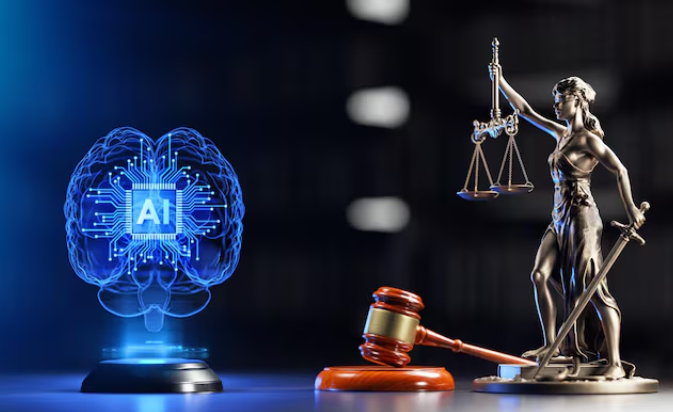
In April, federal courts also started enforcing stringent regulations regarding the use of consumer AI technologies with privileged or secret information. Anyone who has worked on GDPR or HIPAA litigation is aware of the impact this type of regulatory layering has on business practices. A paper trail is produced. In the end, the paper trail is discovered. Eventually, the discovery appears in the public domain.
The cultural context is also important. In contrast to the social media behemoths of the past, AI businesses have spent the last several years establishing an image of cautious, safety-first development. It was a sincere and calculated positioning. The current legal procedures will evaluate if the positioning was supported by internal practice or if engineering decisions taken under severe commercial pressure were partially covered by marketing.
After closely examining the early filings, it seems likely that, depending on the company, the answer will fall somewhere in the middle. Some businesses actually made investments in safety teams and procedures. The language may have been used by others without the necessary infrastructure.
It’s difficult to ignore the potential consequences of this. It is improbable that the current federal court proceedings will result in a single, comprehensive decision that addresses AI liability. They are more likely to result in a number of precedents, settlements, and procedural decisions that progressively clarify the meaning of duty of care in this sector.
Businesses that swiftly adjust by developing strong internal safety procedures, thoroughly documenting risk mitigation, and maintaining the kind of records that can withstand discovery will likely be more equipped to handle the new environment than those who view safety as essentially a communications issue. The remainder of 2026 and the first half of 2027 will likely show whether the industry as a whole is capable of making that change in time. It’s already evident that AI safety has evolved from a topic for academic conferences to something much more significant. The file is expanding and is now an evidence file.