

A certain type of information gap can occur during a maritime conflict, and the battle in the Strait of Hormuz in early May 2026 created one of the biggest in recent memory. The Pentagon purposefully provided a limited and comforting picture of what happened under its “Project Freedom” initiative. A “red, white, and blue dome” over commercial vessels was how CENTCOM characterized a defensive operation.
Defense Secretary Pete Hegseth told the media that no American ships had been struck, that American forces had intercepted Iranian missiles, drones, and small boats, and that U.S. Navy destroyers had been attacked without warning. All of these claims might be accurate. Additionally, each of them conveys less information than they seem to, especially when compared to the simultaneous orbital picture.
| Hormuz Confrontation — Early May 2026 Snapshot | Details |
|---|---|
| U.S. Operational Name | “Project Freedom” |
| Lead Command | U.S. Central Command (CENTCOM) |
| Pentagon Lead Voice | Defense Secretary Pete Hegseth |
| Pentagon Framing | Self-defence against “unprovoked” attacks |
| Reported Iranian Threats | Missiles, drones, small boats |
| Reported US Strikes | Iranian launch sites and military facilities |
| Ceasefire Status (Officially) | Not breached |
| Commercial Shipping Reality | Significant drop in transits; ships staying in port |
| AIS Broadcasting Vessels | Only 16% (per geospatial expert Y. Nithiyanandam) |
| IRGC Speedboats Tracked | Over 130 in coordinated formations |
| Satellite Source 1 | NASA fire and heat-signature monitoring |
| Satellite Source 2 | Sentinel-2 (Copernicus, European Space Agency) |
| Major Environmental Signal | Massive oil slick near Kharg Island |
| Unconfirmed US Casualties | Reported sailor death and injuries on regional vessel |
When assembled from several separate sources, the satellite image reveals a more nuanced narrative. In the trade lanes close to the Omani coast, NASA’s fire monitoring equipment detected many heat signatures that were consistent with burning ships or debris. Over 130 Iranian Revolutionary Guard Corps speedboats were seen operating in coordinated formations in Sentinel-2 imagery from the European Space Agency.
This type of posture indicates a purposeful operational plan rather than a few belligerent captains. The Pentagon made reference to strikes on Iranian launch sites, but it didn’t provide much information on the targets or the extent of the damage. Some of the details were filled in by the satellites. So did a huge oil slick that emerged close to Kharg Island and was sufficiently well-captured in ESA imagery to imply that something noteworthy had occurred at or close to Iran’s most prominent oil export facility.
Geospatial intelligence research utilizing Synthetic Aperture Radar data produced the most intriguing insight. During the active part of the conflict, just roughly 16% of the nearby vessels were transmitting their Automatic Identification System positions. The remaining 84% had gone “dark,” either as a result of intentional signal suppression or the type of operational silence that ships go into when they think they might be targeted.
In other words, the Strait of Hormuz was simultaneously home to two parallel marine habitats. Ships that are willing to be tracked inhabit the visible sea, whereas everything else inhabits the real sea. Anyone with experience in maritime intelligence will be able to identify such ratio as a sign of actual crisis as opposed to normal strain.
The influence on commercial shipping itself was significantly overlooked by the Pentagon. After all, the goal of “Project Freedom” was to maintain the strait open for commercial ships. The truth was a sharp decline in transit volumes, which was documented in port reports around the region as well as monitoring data. In friendly anchorages, tankers maintained their positions. Rates were sharply increased by insurance underwriters.
Even if it required longer Cape of Good Hope detours that increased delivery schedules by weeks, major shipping lines discreetly diverted planned journeys to avoid the region. The “red, white, and blue dome” offered defense. It seems to have resulted in a significant decline in the very commercial activity it was intended to facilitate, at least during the impacted window. For a few days, there was a significant discrepancy between the operational promise and the marine reality.
The section that has caused the most awkward pause is the casualty question. At least one American sailor may have been killed and several may have been injured during the battles, according to reports from local sources that were picked up by 1News and other publications. These losses were not specifically mentioned in the Pentagon’s public pronouncements, and as of the reporting that is currently available, U.S. officials have not provided a thorough accounting.
The pattern is familiar to anyone who has observed the U.S. military’s handling of wartime fatality disclosures. When possible, information travels slowly. Obituaries, hometown news coverage, and the meticulous labor of independent reporters who triangulate between Pentagon press releases and bereaved families are frequently how the complete picture of troop casualties comes to light.
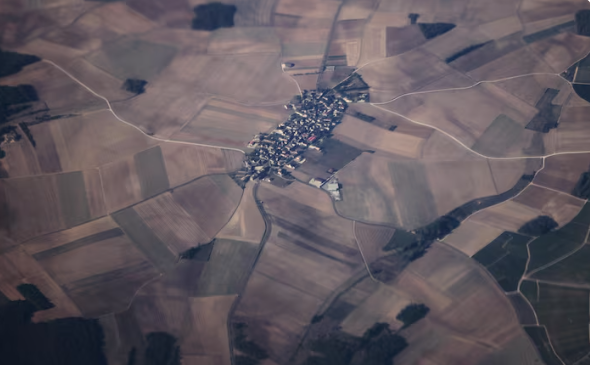
How these stories are interpreted depends on the cultural and geopolitical context. After two decades of military engagement following 9/11, the American public has become accustomed to hearing carefully constructed narratives about operations abroad. The Pentagon press operation has been honed to the point where it can generate a coherent storyline in a number of comments, interviews, and briefings.
The parallel development of publicly available independent verification methods is what makes the Hormuz incident unique. Intelligence services are no longer the only ones with access to satellite images. The Sentinel program of ESA publishes publicly. Data on fire detection from NASA is accessible. On sites like X and Substack, independent analysts have established a reputation for closely examining SAR data. The information imbalance that characterized previous military communications eras has significantly decreased.
It’s difficult to ignore the wider ramifications. The credibility damage to U.S. military communications could worsen in subsequent operations if the Pentagon’s official narrative of “Project Freedom” is maintained while satellite imagery points to something more chaotic. The readiness of foreign capitals, even friends, to accept Pentagon briefings at face value is increasingly contingent upon the arrival of independent verification in a matter of hours as opposed to weeks.
The next few months will likely indicate if the Hormuz conflict leads to a more open official accounting or whether it becomes one of an increasing number of military incidents where the public and satellite versions merely coexist without reconciliation. For the time being, the strait is still tense, anyone can see the imagery, and the discrepancy between what was stated and what was seen is, in a subtle sense, one of the year’s most significant tales.