

Somewhere in Louisiana or Florida, a viral video resurfaces every few months. An alligator hauls itself across a four-lane road close to a golf club, wanders into a swimming pool, or obstructs a residential driveway. Almost always, the same recurrent proposal appears in the comments section.
Why don’t they simply relocate them? All of them should be moved. A thousand of them should be moved. The plan seems well-organized. It’s also one of the worst things wildlife managers can do, and the reasons are more profound than most people realize when browsing TikTok on a Tuesday afternoon.
| American Alligator Management — Snapshot | Details |
|---|---|
| Species | American Alligator (Alligator mississippiensis) |
| Status | Apex predator, “ecosystem engineer” |
| Lead Regulator | Florida Fish and Wildlife Conservation Commission |
| Nuisance Alligator Threshold | Generally over 4 feet long |
| Homing Range | Capable of returning across miles of land and water |
| Survival Outcome After Relocation | Often killed by dominant residents in new territory |
| Critical Habitat Feature | “Gator holes” that hold dry-season water |
| Ecological Roles | Sediment stirring, nutrient cycling, carbon sequestration |
| Federal Protection History | Once endangered, delisted under ESA |
| Common Conflict Locations | Florida, Louisiana, southeastern wetlands |
| Recommended Public Response | Avoid feeding, maintain distance, secure pets |
| Long-Term Strategy | Coexistence and education |
The first explanation is geographical. The homing instinct of alligators is exceptional. Everybody who has worked with the Florida Fish and Wildlife Conservation Commission has heard tales of creatures who were moved hundreds of miles, only to reappear months later in or close to their native habitat. They travel over roadways. They go via canals. They leave the kind of muddy track that homeowners find on their porches with anticipated terror when they stroll through subdivisions in the wee hours of the morning. Therefore, relocation is a two-way process. It’s a delayed issue that typically results in an increase rather than a decrease in highway crossings.
In the precise meaning of animal behavior, the second motive is social. Alligators have a strong sense of territoriality. When a huge male is introduced into a marsh where a dominant male already resides, the result is almost never peaceful. The incumbent either kills the new alligator, kills the incumbent, or one of them pushes a smaller animal farther down the social hierarchy, which pushes another, and ultimately finds up in someone’s pool. Although this domino effect has been observed by researchers for years, the general population still doesn’t fully understand it. The math involved is not subtle, as anyone who has witnessed two enormous bull gators coming into contact at dusk in a Louisiana basin will attest.
The argument shifts from uncomfortable to significant in the ecological case. Alligators are more than just big creatures that roam the Everglades. They are the place’s architects. During dry seasons, the depressions they create—known as “gator holes”—hold water and serve as little havens for fish, amphibians, turtles, and the invertebrates that nourish the entire ecosystem. In methods that support the aquatic food web, their movement agitates sediment and recirculates nutrients. Their existence has been connected in more recent studies to increased carbon absorption in wetland soils, adding an unanticipated climate dimension to their conservation. You lose more than just a predator when you remove the gators. The engineer is lost.
The practical limitations are so basic that they are almost embarrassing. A logistics effort about the size of a small military deployment would be needed to trap and transport 1,000 adult alligators, with animal mortality and operator injuries factored in from the outset. In Florida, alligators that are over four feet long and accustomed to people are considered nuisance alligators, and they are typically eliminated rather than moved. They no longer exhibit the instinctive avoidance behaviors that protect both the public and themselves. Simply put, there aren’t enough isolated, vacant wetlands to handle a rapid influx of acclimated apex predators without creating new problems elsewhere.
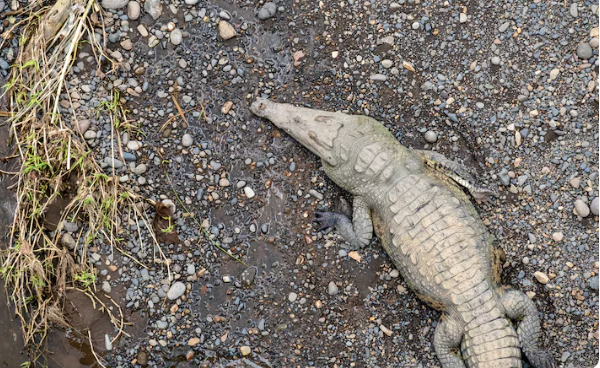
The cultural context is also important. From being on the verge of extinction in the middle of the 20th century to becoming a controlled conservation success story, Florida’s relationship with alligators has changed over the years. Currently, the state is trapped between population pressure and rapidly expanding suburban development. Along retention ponds and the margins of marshes where gators have inhabited for thousands of years, new subdivisions are still being constructed. Rather than the new house pad, the expectation that the animal must relocate speaks to the way that American development has approached wildlife management as a relocation issue rather than a planning one.
It’s difficult to ignore how frequently the most alluring fixes for wildlife issues end up being the worst. Here, the ethics are uncomfortable. In order to coexist, one must acknowledge that an animal that can capture a tiny dog near a lake is actually a part of the neighborhood. The less glamorous solutions—education, distance, and the gradual discipline of not feeding wildlife—are the ones that eventually prove effective. The true long-term question is whether Florida, Louisiana, and the larger Gulf states can maintain that strategy as housing pressure increases and tensions intensify. It would have been much easier to make the thousand-alligator move. Simply put, it would have made matters worse.