

When a deal keeps eluding an oil trader, a certain emotion takes over their morning routine. The only thing that is certain is that nothing has been resolved as the screens flicker upward and Brent crosses yet another psychological boundary. The Iran story has been like that all year. A negotiation nearly succeeds. There’s a counterproposal. Somewhere around the Persian Gulf, another hit takes place.
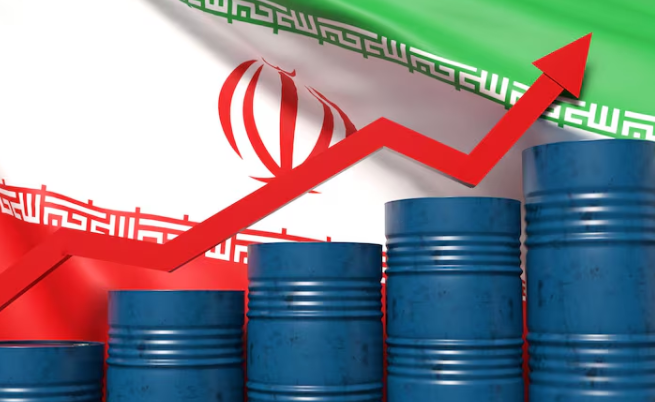
Another draft is rejected by Trump. Crude prices continue to rise, reaching a level that most analysts privately said they didn’t anticipate seeing so rapidly as the cycle repeats. As of mid-May, the war premium is no longer a transient surge, WTI is approaching $100, and Brent is above $105. It is now the new standard.
| Iran-Oil Crisis — May 2026 Snapshot | Details |
|---|---|
| Conflict Status | Active war involving the U.S., Israel, and Iran |
| Major Operation | “Operation Epic Fury,” following February 2026 strikes |
| Negotiation Sticking Point | Length of enrichment moratorium (20-year U.S. demand vs. 5-year Iranian offer) |
| Latest Diplomatic Event | Trump rejection of Iranian counterproposal, early May 2026 |
| Key Choke Point | Strait of Hormuz |
| Share of Global Oil Through Strait | Approximately 20% |
| Brent Crude Level | Over $105 per barrel |
| WTI Crude Level | Approaching $100 per barrel |
| Daily Supply Removed | Roughly 11 million barrels |
| Refined Fuel Impact | Diesel and jet fuel prices exceeding $200 per barrel in some markets |
| OPEC Context Source | OPEC monthly market reports |
| Independent Watchdog | International Energy Agency |
Diplomatic procedures are unable to keep up with the rapid changes in the geopolitical environment. The discussion shifted from whether a comprehensive nuclear agreement was feasible to whether even a limited ceasefire could last for a quarter after the US-Israel raids on Iranian sites in February and Operation Epic Fury. Although it sounds technical, the most recent source of contention is a wall in terms of negotiations. A 20-year embargo on enrichment is what the United States wants. Iran has made five offers, citing both domestic politics and a wish to maintain flexibility. No formula has yet to span the years of unsettled trust that lie between those two numbers.
The policy argument turns into a market catastrophe at the Strait of Hormuz. Iran’s de facto blockade has effectively eliminated over 11 million barrels of oil per day from the global supply picture. over one-fifth of the world’s oil passes via that small waterway between Iran and Oman. The impact those figures have on the system as a whole is evident to anyone who has seen a tanker appear at a London commodity desk. Through pipelines that avoid the strait, Saudi Arabia and the United Arab Emirates have transferred as much volume as they can, but the capacity is insufficient to make up for what has been lost. The Strait is more than a chokepoint. The thermostat is currently stuck.
The downstream gasoline markets have an unpleasant story to tell. In several refined markets, the price of diesel, which is essential for long-distance transportation, freight rail, and the majority of agricultural operations, has surged above $200 per barrel. Jet fuel has followed a similar pattern. Due in part to airline hedging and in part to grocery chains absorbing significant short-term costs in their margins, the pass-through to consumer prices has been slower than what crude futures indicate. However, the lag is getting closer. The following stage is already familiar to anyone who has filled up a logistics truck outside of Rotterdam or a Ford F-150 in Pennsylvania. The political suffering in Tokyo, Berlin, and Washington is just getting started.
The intriguing aspect of this specific problem is how the market has learned to value the lack of a deal rather than the agreement itself. Futures increased on threats and decreased on diplomacy in previous rounds. The relationship has almost completely changed this time. Due in part to the fact that participants have been continually let down by false starts during the spring, even minor concessions are treated like theater. Even a successful transaction, according to investors, would necessitate months of physical reconstruction of damaged Iranian facilities, costly new shipping insurance premiums, and a gradual restoration of trust with European partners. The instant a handshake takes place, the price won’t drop. That has been internalized by the market.
The cultural baggage of previous oil shocks looms large over the current situation. the OPEC embargo of 1973. disruption of the Iranian Revolution in 1979. the Gulf War increase in 1990. Each of those events resulted in long-lasting shifts in Western economies’ perspectives on energy independence, and each was followed by a series of years-long policy reforms. Although the response to the current crisis has been more dispersed thus far, it is expected to have a similar effect. The United States has once more used its Strategic Petroleum Reserve. LNG contracts with Qatar and the US are being accelerated by European nations. Where possible, China and India have been covertly purchasing Iranian crude, frequently at steep discounts.
Families in cities that have been affected by these economic repercussions for months are difficult to ignore. The truck driver in Memphis is witnessing the doubling of his diesel costs. Because the cost of delivering flour has increased, the Lisbon bakery is changing the prices of its bread. Fuel surcharges are being recalculated by the airline CEO in Singapore. Their year is being indirectly reshaped by the transaction that keeps failing. Nobody can accurately foresee whether negotiations will ultimately succeed or if the issue will simply settle into a costly, slow equilibrium. For the time being, the barrels continue to rise, the calendar continues to move, and the question of whether or not the agreement will occur has emerged as one of the most important economic factors in the world.