

You will ultimately find the case with the early stone implements if you enter the prehistoric section of any large natural history museum. They are frequently labeled with dates that don’t quite register on a human scale, and they are seated in gentle, neutral lighting. 1.6 million years ago, a basic hand axe was formed. A scraper from 700,000 years ago, long before there was a city. The majority of visitors take a quick look at the case before continuing. The realization that survival as a discipline is older than any of us and that the toolbox we use now still rests on patterns established long before anyone wrote anything down is often felt by those who linger.
The first thing to learn from such tools is how slowly they changed and how frequently they were modified. More than 2.75 million years ago, early hominins formed stone flakes, which they continued to refine as the terrain changed. The same hands that had been creating rough cutting tools created new ones for breaking bone marrow, processing various meats, and preparing harder foods when East African woodlands thinned into open grasslands.
It wasn’t a dramatic adaptation. It was repeated. Resilience tends to come in small bursts of redesign rather than single bursts of brilliance, as anyone who has pushed through a tumultuous shift at work, a family catastrophe, or an abrupt change in city life will attest. That pattern can be seen throughout millions of years in the Paleolithic record.
| Paleolithic Resilience — Snapshot | Details |
|---|---|
| Earliest Tool Age | Roughly 2.75 million years old |
| Tool Examples | Oldowan flakes, Acheulean hand axes |
| Key Adaptive Pressure | Climate shifts from lush forests to arid grasslands |
| Survival Mechanism 1 | Tool diversification for new diets |
| Survival Mechanism 2 | Social networks and shared knowledge |
| Modern Stress Parallel | Persistent fight-or-flight response in digital life |
| Modern Cognitive Tool | Pausing to regain perspective before reacting |
| Practical Modern Skills | Crafting, foraging, manual hobbies |
| Research Reference Body | Smithsonian National Museum of Natural History |
| Mental Health Anchor | WHO mental health resources |
| Core Modern Lesson | Adapt, connect, and act on what’s controllable |
| Cultural Continuity | Storytelling and planning remain central to survival |
Resource limitations are the subject of the second lesson. There were no backup plans for early people. They recreated a tool if it didn’t work. When one hunting tactic proved ineffective, they tried another. Reading the experimental archaeology studies coming out of European universities, where contemporary academics try to reproduce the production of an Acheulean hand axe and find, after dozens of attempts, that it is actually arduous work, has a subtly humble quality.
These items were created by skilled, patient hands that were most likely under pressure. Despite using new terminology, contemporary resilience research frequently identifies the same set of traits. The vocabulary has evolved. The fundamental issue hasn’t.
The third lesson—that survival was social—is the one that is most frequently ignored. The fossil record demonstrates that early humans shared food across kin groupings, took care of the wounded, and created linguistic frameworks that enabled sophisticated coordination during migrations and hunts. The evidence actually refutes the notion of the lone caveman, which is prevalent in advertisements and subpar action movies. The bones already speak for anyone who has ever attempted to go through a challenging year on their own. Isolation is not a survival tactic; rather, it is a risk. When compared to the Paleolithic record, the current loneliness epidemic—especially among teenagers in the United States, the United Kingdom, and Japan—reads differently.
The human nervous system is unable to forget the fourth lesson. Our ancestors’ fight-or-flight reaction, which helped them avoid predators and react to real physical threats, is now continuously triggered by email notifications, financial concerns, and the perpetual uneasiness of news cycles. The body is not very good at differentiating between a mortgage modification and a lion. In essence, modern resilience training teaches people to stop their innate alarm system and react more cautiously. This is especially true of methods derived from cognitive behavioral therapy and somatic awareness. An Oldowan toolmaker would recognize that stop as precisely the kind of innovation. The instrument is the brain. The makeover is the pause.
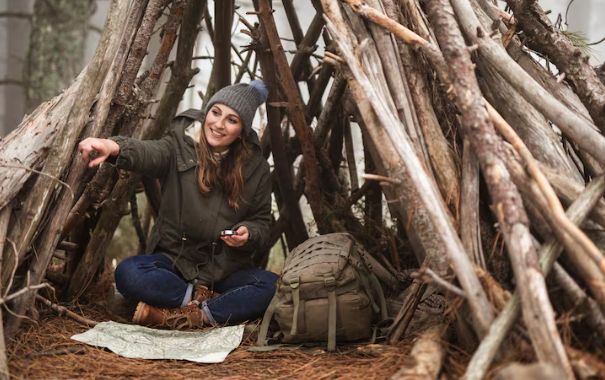
The importance of practical abilities is the fifth lesson, which is more difficult to teach but nonetheless worth mentioning. Crafting, foraging, woodworking, and small-scale gardening have become increasingly popular among urban professionals in recent years, and for good reason. No app can match the psychological benefits of creating something with your hands. The emotion is familiar to anyone who has attempted to fix a chair, make a real loaf of bread, or fix a garment rather than replace it. It’s not sentimentality. For as long as humans have existed, human resilience has included the reassertion of agency.
It’s difficult to ignore how frequently these issues are brought up in the cultural discourse surrounding contemporary stress. Apps for therapy talk about grounding. Community is emphasized in wellness literature. Productivity writers advise people to concentrate on what they can manage.
Each of these reflects something older in a different way. In a quieter way, the instruments we created before language continue to shape who we are. There is no romantic lesson to be learned from the Paleolithic. It’s useful. Adjust and establish a connection. Use whatever tools you happen to have to take action on what is in front of you. Even though it doesn’t feel like it, 2.5 million years of human history indicate that’s sufficient.