

Economics is where most debates on scarcity now begin. The inflation figure for the following quarter. Bond auction by the Treasury. The rate decision made by the Federal Reserve. These methods are helpful for controlling short-term fluctuations, but they often obscure a far older question: how human communities have endured tens of thousands of years of real resource pressure.
Anthropology provides a subtly subversive set of lessons, having spent the last century studying precisely these survival patterns in everything from field research in Tanzania to studies of the collapse of Mesopotamia. Many of them contend that contemporary approaches to scarcity are not only ineffective but, in certain situations, actually undermine the tactics that have traditionally helped communities survive.
| Ancient Survival and Modern Scarcity — Snapshot | Details |
|---|---|
| Foundational Concept 1 | Cooperative adaptation, “alloparenting” in Pleistocene societies |
| Foundational Concept 2 | The myth of scarcity in hunter-gatherer life |
| Reference Society | The Hadza of Tanzania |
| Foundational Concept 3 | Sustainable local resource management |
| Cited Collapsed Civilisations | Mesopotamia, Classic Maya, Indus Valley |
| Foundational Concept 4 | Diverse, flexible, redundant survival strategies |
| Foundational Concept 5 | Ritual as information transmission |
| Academic Reference 1 | Berghahn Journals studies on austerity |
| Academic Reference 2 | Smithsonian Human Origins Program |
| Modern Application 1 | “Applied history” as policy resource |
| Modern Application 2 | Resisting “politically produced precarity” |
| Modern Application 3 | Long-term infrastructure planning |
| Reference Body | American Anthropological Association |
Cooperation is the topic of the first lesson. Anthropologists researching early Pleistocene human childrearing have produced a wealth of evidence showing that survival depended on a system known as alloparenting, in which infants and young children were cared for by an extended network of grandmothers, older siblings, aunts, and friends rather than just their biological parents. Although the statement “it takes a tribe” has become a bit of a cliché in popular parenting manuals, the anthropology behind it is genuine.
Anyone who has grown up in a multigenerational home, especially in societies where this is still common, would understand how duties are distributed around the family rather than focusing on specific parents. In contrast, modern Western civilizations have made raising children one of the most solitary experiences in human history. This is not a material scarcity. It’s social.
The second lesson confuses the idea of scarcity in general and is based on extensive fieldwork with groups such as the Hadza of Tanzania. When closely examined, hunter-gatherer civilizations have been shown to work significantly less hours per week than industrialized populations while still consuming enough calories, having time for leisure, and making significant social investments. It’s hardly a romantic image. These communities have real risks and injustices of their own.
However, the evidence has repeatedly refuted the notion that pre-industrial life was persistently depressing and that contemporary economies have freed people from material poverty. Many anthropologists who have worked in these field sites for decades have come to the conclusion that, rather than being an actual resource limitation, modern scarcity is sometimes a social fiction created by injustice. Walking through the homelessness epidemic in any major Western metropolis gives the impression that this insight holds true even in the world’s richest economies.
The final lesson is derived from extinct civilizations. A recurrent pattern has emerged from anthropological examinations of collapses in Mesopotamia, the Classic Maya, and the Indus Valley. Societies that have over-relied on imported resources and centralized distribution systems fail more quickly than those with varied, locally managed subsistence patterns when food crises, water shortages, or climate variability strike.
Anyone who observed supply chain breakdowns during the COVID-19 outbreak will be able to identify the current analogy. The takeaway is not that globalization is a terrible thing. It’s the fragility of sheer efficiency in the absence of redundancy. different subsistence techniques, different food sources, and multiple geographic adaptations were nearly always maintained by successful long-term groups, the ones whose names we still recognize after centuries. They weren’t as optimized. They had greater fortitude.
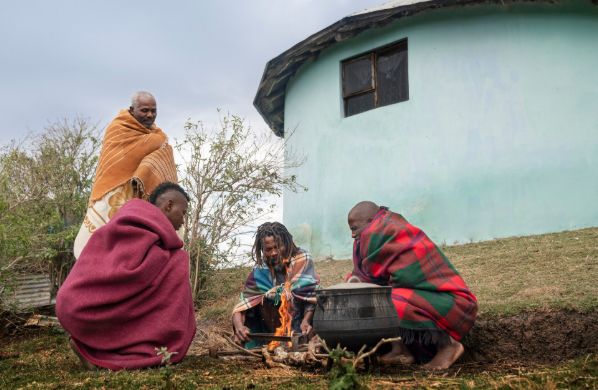
The fourth lesson revolves around ritual, which contemporary observers tend to overlook. Contrary to popular belief, religious rites, ceremonial calendars, and oral traditions are more than just cultural ornaments in traditional civilizations. They serve as systems for transmitting information, passing down ecological knowledge to future generations.
In order to help future generations accurately interpret coastal environments, anthropologists working with Indigenous Australian communities have collected oral traditions that preserve recollection of sea-level variations from over 10,000 years ago. Ritual knowledge related to certain fishing seasons, agricultural cycles, and disaster recovery patterns is preserved by the Maori people of New Zealand. After reading the field studies carefully, it is difficult to ignore the structural role of ritual as a survival technique, regardless of one’s religious beliefs.
The rest of the story is revealed by the broader cultural context. In 2026, anthropology has been subtly promoting what some academics refer to as “applied history,” a field that views the deep human past as a tool for solving problems now rather than as a display in a museum. In recent years, research on austerity published in the Berghahn Journal have argued that economic stresses in contemporary Western nations are frequently what they refer to as politically generated precarity. Although the statement is scholarly, it conveys a significant idea. Scarcity is inherited from previous policy decisions, dispersed, and selected in part. Acknowledging it as such leads to different policy discussions than those based only on supply and demand.
It’s difficult to ignore how frequently the current discourse on resilience ignores the past in favor of technological optimism. Battery storage will be beneficial. Vertical farming will be beneficial. Supply chain management powered by AI will be beneficial. However, anthropologists contend that none of these instruments can replace the human social systems that have historically withstood shocks. communities that were familiar with one another. resource-sharing households. cultures where long-term planning was more important than quarterly profits.
The contrast is evident to anyone who has experienced a significant weather event in a town with close social ties. More important than the algorithm is the neighbor who has a functional chainsaw. More important than the delivery app is the aunt who can prepare meals for ten. The next ten years will likely provide an answer to the question of whether industrialized nations can restore some of these past capacities in time for the current scarcities. Anthropology indicates that it might be feasible. It also implies that it hasn’t always been simple.