

The conviction handed down by Taiwan’s Intellectual Property and Commercial Court in April 2026 is precisely the type of court decision that has the power to significantly alter industry behavior more than any amount of government warnings or consultancy papers. For their participation in disclosing confidential TSMC trade secrets to Tokyo Electron, a significant supplier of semiconductor equipment, five people were sentenced to prison terms ranging from 18 months to 10 years.
Tokyo Electron was fined approximately $1 million. The case demonstrates how seriously the Taiwanese government now takes the integrity of the island’s semiconductor industry and is the first corporate conviction under Taiwan’s recently modified National Security Act and Trade Secrets Act. The decision ought to be more than just a headline for American chip companies observing from Silicon Valley, Austin, and Phoenix. It ought to serve as a warning.
The case’s fundamental facts are important to comprehend because they show the precise type of breach that American semiconductor companies are becoming more susceptible to. A sophisticated state-sponsored cyberattack was not the source of the leak. Advanced hacking tools were not needed. None of the sophisticated intrusion vectors that are the focus of most discussions on industrial espionage were involved. Rather, it was an inside job that caused the breach.
Proprietary materials pertaining to the company’s 2nm process technology and other advanced manufacturing nodes were shot by former TSMC employees. They disseminated such materials to their colleagues at Tokyo Electron in an effort to help the supplier obtain better equipment orders, which very likely resulted in commissions, bonuses, or other performance incentives for the individuals. To put it simply, a smartphone camera was the preferred method of data exfiltration.
The Taiwanese court’s fines demonstrate how seriously the government now handles this type of intellectual property theft. By worldwide standards, sentences ranging from 18 months to 10 years for persons engaged in a single trade secrets prosecution are exceptionally harsh. The corporate penalties against Tokyo Electron establishes a precedent that supplier businesses can be held legally responsible for the behavior of its employees in trade secrets cases, even though it was less than some financial experts had anticipated. The combined impact is to clearly convey that the Taiwanese government views the defense of its semiconductor industry as a matter of national strategic importance and that the repercussions for jeopardizing that protection will be proportionate to the stakes.
The structural similarities between the vulnerabilities found in the rapidly expanding American semiconductor ecosystem and the breach technique in the TSMC case make the matter especially pertinent to American businesses. Billions of dollars have been invested in U.S.-based semiconductor production as a result of the CHIPS Act; TSMC has built significant fabrication capacity in Phoenix, Samsung has expanded in Texas, and Intel has invested in Ohio. Each of these facilities is being constructed inside an ecosystem of contract manufacturers, design partners, equipment suppliers, and consulting firms that creates precisely the kind of intricate, networked relationships where insider leaks are most likely to happen. Due to its rapid expansion, the American semiconductor industry is increasingly susceptible to the kind of breach that Taiwan has successfully punished.
For American semiconductor executives reading the news, the analysis’s R&D value section should be the most unsettling. TSMC invests more than $6 billion a year in research and development, with a single process node costing tens of billions of dollars over several years. What might otherwise be a multi-year competitive advantage is instantly compressed into a much shorter timeframe when confidential information about innovative manufacturing methods escapes to a rival or supplier. If the Tokyo Electron leak is used properly, the supplier and its other clients may be able to bypass previous months or years of separate R&D work and achieve competitive process technology with far less investment. According to TSMC, the criminal sanctions are insufficient to completely compensate for the actual economic harm caused by such compression.
The matter is more important than a straightforward business dispute because of the geopolitical setting. In all honesty, Taiwan’s semiconductor industry is currently the most strategically significant non-military sector in the world. Over 90% of the most sophisticated logic chips used in anything from cellphones to military systems to AI training infrastructure are made on the island. With varying degrees of success, the Chinese government has been publicly investing for years to catch up to Taiwanese semiconductor skills.
Regardless of where it ends up, any leak of TSMC’s advanced process technology has ramifications for the larger balance between Chinese and Taiwanese semiconductor capacity that go beyond standard business intellectual property issues in terms of national security. This geopolitical reality is reflected in Taiwan’s readiness to apply harsh criminal penalties in the Tokyo Electron case.
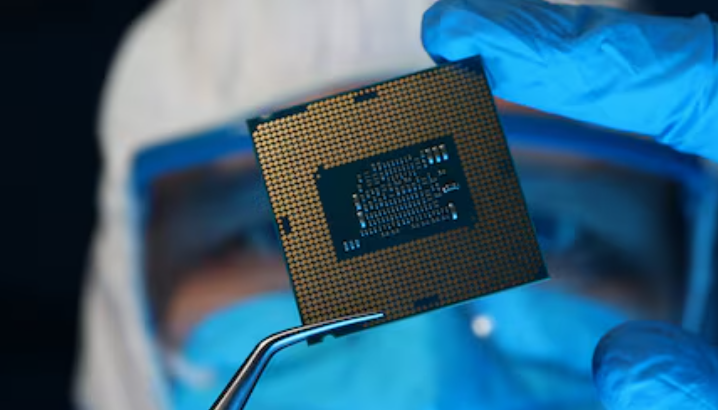
The case shows that common sense is not always common practice, but the practical lessons for American chipmakers are, in some respects, common sense. Although they have been suggested for years, least-privilege access procedures, which restrict employee and contractor access to only the particular data needed for their given duties, are not regularly put into practice. Endpoint monitoring, which monitors data flow via physical devices like USB sticks and stops the kind of camera-based exfiltration that took place in the TSMC instance, necessitates the kind of consistent investment that businesses frequently put off in favor of more obvious needs. It is tempting to underinvest in supply chain vetting since it is costly and time-consuming and entails ongoing compliance checks of equipment suppliers and third-party vendors. Individually, each of these metrics is thoroughly understood. When taken as a whole, they necessitate a security posture that few US semiconductor companies have truly attained.
American chipmakers have important work to accomplish in the area of legal infrastructure. Over the past 20 years, the U.S. Department of Justice’s Intellectual Property Section has developed significant skill in pursuing trade secrets prosecutions, with notable triumphs in instances involving Chinese state-affiliated actors. Credible legal foundations for pursuing both criminal and civil remedies against intellectual property theft are provided by the Computer Fraud and Abuse Act and the Defend Trade Secrets Act. The willingness of American businesses to actually use these legal measures when violations occur has been less consistent. Fearing reputational harm or additional disclosure of confidential information through litigation discovery, many company victims of trade secret theft opt to manage the situation in private. Public prosecution may be a more effective long-term deterrent, despite its discomfort, according to the TSMC example.
The practical implication for American semiconductor executives who are reading the news from Taipei is that the security investment, which has frequently been postponed or only partially implemented, needs to be viewed as a strategic priority equal to the value of the underlying intellectual property. If security procedures are inadequate, the R&D expenditures that yield competitive advantages could be reversed in a single compromised document. New attack surfaces that did not exist a few years ago have also been brought to American territory by the CHIPS Act funding. By the law of big numbers, the supplier ecosystems developing around new American semiconductor plants will occasionally create workers who may be persuaded by financial incentives to jeopardize their employers’ or clients’ trade secrets. Deliberate, ongoing security investment that starts now rather than after the first significant breach has happened is necessary to prevent those compromises.