

A certain type of narrative breaks slowly, in pieces, and doesn’t fully come together until enough independent evidence has been gathered to make rejection costly. One of those stories is the inquiry into the harm inflicted by Iranian strikes on American military equipment around the Middle East. The public accounting of the Trump administration has been remarkably restrained; there have been a few acknowledgments here, a minimized number of casualties there, and an overall attitude that suggests that whatever Iran threw at American locations was mostly absorbed by air defenses and handled without significant repercussions. A distinct story is shown by satellite images, much of which was released by Iranian state media and verified by a Washington Post investigation.
Once you sit with the numbers, they are startling. Since the fighting started on February 28, at least 15 U.S. military locations have had at least 228 buildings or pieces of equipment damaged or destroyed. hangars. fuel depots and barracks. ground-based aircraft. arrays of radar. systems for communications. batteries for air defense. The operational core of U.S. CENTCOM’s regional presence is essentially its geographic spread, which extends from Bahrain to Kuwait to Qatar to Saudi Arabia. Over 400 soldiers have been hurt in the strikes, and seven U.S. service men have died—six in Kuwait and one in Saudi Arabia. By themselves, the numbers show a degree of operational disruption that doesn’t easily fit the administration’s favored narrative.
The aspect of the story that could have the biggest impact is the narrative control surrounding the images. The two biggest American commercial satellite companies, Vantor and Planet Labs, were asked by the U.S. government to restrict, postpone, or permanently stop publishing images of the Middle East theater starting around two weeks into the conflict. For the most part, both companies have complied. The U.S. government is by far the world’s biggest consumer of commercial satellite imagery, and its financial clout is often subtly convincing. As a result, Western media, which over the previous ten years had developed a strong open-source intelligence ecosystem, now lacks its main source of impartial damage assessment.
Almost soon, Iranian official media filled that void. Within days of individual hits, high-resolution, frequently annotated photos started to surface on social media. Skepticism was the first reaction from the West; worries about fabrication, manipulation, and other common grounds to reject images from a government that clearly had an interest to exaggerate its achievements. These worries were extensively considered and addressed in the Washington Post investigation.
The European Union’s Sentinel satellite system, which operates outside of U.S. government licensing authority, and the scant Planet imagery that is currently accessible were cross-referenced by reporters with Iranian publications. After examining hundreds of photos and independently confirming 109 of them, it was determined that the Iranian releases had not been altered. The harm they portrayed was actual.
Speaking with those who regularly monitor military studies gives the impression that the extent of the destruction isn’t the most unsettling discovery. It’s the accuracy. In his evaluation, retired Marine Corps colonel Mark Cancian, who is currently employed at the Center for Strategic and International Studies, was straightforward. The assaults by Iran weren’t coincidental. There were no dispersed holes that would have indicated widely missed targets.
The accuracy with which the strikes were tailored against valuable military facilities indicates that Iranian targeting skills had evolved more significantly than U.S. planners had publicly believed. Bahrain and Kuwait were attacked by Patriot batteries. An al-Udeid Air Base satellite communications facility. A satellite dish at the 5th Fleet headquarters of the United States Navy in Bahrain. Kuwait’s Camp Buehring has a power plant. Multiple bases have fuel storage facilities. These are not the targets that a nation accidentally or saturationally attacks.
Even while the public messaging minimized the inconvenience, the operational response—moving the majority of soldiers out of range and leaving some bases too risky to staff at normal levels—shows how seriously the U.S. military handled the threat in real time. The public statements made by officials and the operational actions of commanders clearly differ. The aspect of the satellite images that is currently hard to preserve is that gap. The damage is seen in the base footprints in the pictures. In many instances, the base footprints in the pictures also demonstrate that the bases have been pulled down. Both truths are immediately apparent.
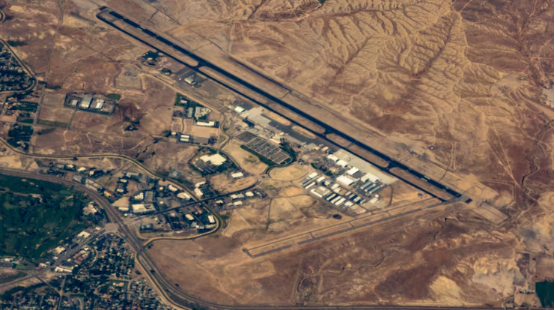
Beyond what The Washington Post has independently confirmed, the Iranian imagery has persisted in publishing allegations about damage to THAAD batteries in Jordan and the United Arab Emirates, a second satellite location in Qatar, an E-3 Sentry aircraft, and a refueling tanker in Saudi Arabia. Some of such assertions might be overstated. Some might be true. In certain aspects, Iranian information operations are intended to take advantage of the current limitations on Western commercial satellite photography, which make it impossible to determine which is which with certainty. It also highlights the strategic cost of the United States’ choice to limit commercial imaging in the area. Though not from Washington’s preferred sources, the information gap has been addressed.
The larger pattern is difficult to ignore. Over the past ten years, one of the most disruptive factors in contemporary war reporting has been open-source intelligence. A layer of independent verification that is challenging for governments to handle has been created by Bellingcat’s work in Ukraine, satellite analysis during the Syrian civil war, and OSINT communities tracking army movements and equipment losses. In an effort to control it, Middle East imagery is currently subject to restrictions.
The Iranian counter-release tactic is an effort to take advantage of the opening. As the battle goes on, whether the United States maintains or loosens its limits on photography will reveal how Washington intends to manage the information landscape in the future. This inquiry has made it more evident that the official damage narrative has been inadequate in ways that satellite analysis is now making it more difficult to maintain. The photos are here. What happens to them is the question.