
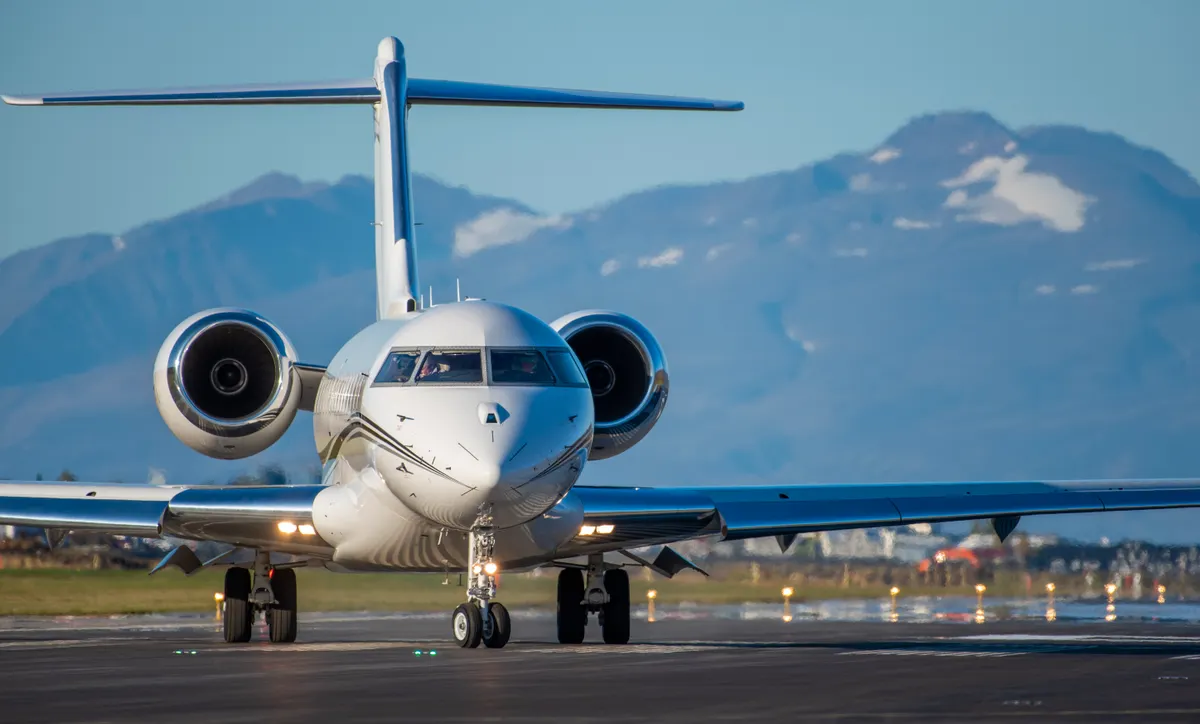
The Qantas Project Sunrise A350 took its first flight on 2 June 2026 from Toulouse, France, where Airbus is now putting the custom-built ultra-long-range jet through a rigorous certification campaign ahead of a planned commercial debut in late 2027, according to Aeromorning.
The aircraft, designated the A350-1000ULR and registered as MSN 707, the first of 12 ordered by Qantas, was publicly unveiled at Airbus’ Toulouse facility during the week of 19 June 2026, where Qantas Group CEO Vanessa Hudson confirmed the inaugural Sydney-to-London service will depart in October 2027, with bookings opening in February 2027, CNN reported.
A decade in the making: how Project Sunrise reached the runway
The programme’s origins stretch back to 2017, when Qantas challenged both Airbus and Boeing to develop an aircraft capable of flying nonstop routes of up to 10,000 miles. Airbus won that competition, and the resulting collaboration produced a heavily modified version of the A350-1000, according to Aerospace Global News.
The project then ran approximately five years behind its original schedule, delayed by COVID-related constraints, the complexity of the A350 redesign, defects on the plane’s Rolls-Royce Trent XWB-97 engines, and supply chain bottlenecks.
The name itself is a callback to history: Project Sunrise references Qantas’ wartime ‘double sunrise’ route that connected Australia and England via several stops over multiple days during the Second World War, more than 80 years ago.
Qantas Project Sunrise A350: what makes it fly further
The core engineering challenge was range. The A350-1000ULR carries a new rear centre fuel tank holding 20,000 litres (approximately 5,300 US gallons, per Qantas agency communications), which complements three existing tanks in the belly and wings. Airbus said the tanks use ‘highly sensitive sensors’ that continuously monitor fuel flow, temperature, and overall performance.
The Airbus newsroom confirmed the flight test campaign is validating a new, lighter galley air cooling system alongside cabin ventilation and temperature controls. To certify that system, Airbus is using ‘dummy’ passengers to simulate body heat and monitor cabin temperature. Because the test aircraft is the same one destined for Qantas’ fleet, Airbus custom-built five metric tons of monitoring equipment to support the programme with limited margin for error.
More than 360 pilots and 1,200 flight attendants are being trained to operate the planned fleet of 12 aircraft.
Premium-heavy cabin built around combatting jet lag
Where a standard A350-1000 typically seats around 400 passengers, the Project Sunrise variant carries just 238 in a low-density, premium-heavy layout: 6 in first class, 52 in business class, 40 in premium economy, and 140 in economy.
First class features a sliding door, a separate recliner and 80-inch bed, a full-length wardrobe, and space for two to dine or socialise. Business class is also suite-style with a door. Economy offers more legroom than on any other Qantas aircraft, and an open ‘wellbeing zone’ between economy and premium economy is available to all passengers for stretching, movement, and hydration.
The entire cabin uses 12 lighting scenes, including ‘Sunrise,’ ‘Sunset,’ and ‘Awake,’ designed to help passengers adjust to their destination time zone. Meal timing and flexible dining are also part of the anti-jet-lag strategy.
‘This aircraft has been designed from the ground up for ultra long-haul travel, with a cabin built around science and combatting jetlag, with an onboard experience purpose-built for the length of the journey,’ Hudson told media in Toulouse.
Records and fares: what passengers can expect
The Sydney-London service will cover roughly 10,000 miles in up to 22 hours, cutting travel time by four hours compared with Qantas’ current one-stop routing. It will also displace Singapore Airlines’ Singapore-to-New York flight, currently the world’s longest at 19 hours over about 9,500 miles.
Fares will carry a premium. Lower aircraft capacity, higher fuel burn, and larger crew requirements all push costs up. For context, a Qantas one-stop to London this summer costs roughly $2,000 return; first class can exceed $20,000. Nonstop first-class fares are expected to be priced higher still.
Timing for the second planned Project Sunrise city, New York, and other destinations will be announced next year. European certification of the aircraft remains the immediate hurdle, with the October 2027 inaugural the date to watch.