
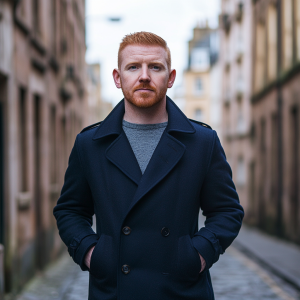

Alisa Liu’s OpenAI job hunt stretched across 57 interviews at 11 companies before she landed a research scientist role at the ChatGPT maker, and she says the months-long process left her not functioning in other parts of her life.
Liu, who completed a six-year PhD in natural language processing at the University of Washington, published a detailed blog post on X to demystify the experience for others entering the AI hiring market. An OpenAI spokesperson confirmed her hiring.
What the Alisa Liu OpenAI Job Hunt Actually Looked Like
The raw numbers tell their own story. Beyond the 57 formal interviews, Liu logged 46 recruiter calls, 16 post-offer discussions, and a long run of informal networking conversations before any of those stages even began.
‘A huge part of my personal experience was managing all the emotions that come with being on the market,’ she wrote. ‘Frankly, I was stressed, miserable, and not functioning in other parts of my life for several months.’
She described the overall experience as ‘really challenging but also super rewarding,’ and said she shared the detail hoping to make the process ‘a little less mysterious for the next person.’
Liu applied for research scientist and technical staff roles across the AI industry at the end of her doctoral programme, which she completed under advisors Yejin Choi and Noah Smith in the University of Washington Allen School’s Natural Language Processing group.
Her route to that PhD began at Northwestern’s Weinberg College of Arts and Sciences, where she earned a bachelor’s degree in computer science and mathematics. She began investigating NLP and computer audition as a third-year undergraduate, working with professors Douglas Downey and Bryan Pardo.
Technical Depth, Negotiation, and the Advice Liu Would Give Herself
The interview formats varied widely. Machine learning coding questions were ‘by far the most common,’ Liu wrote. Technical discussions included ‘rapid-fire’ questions on subjects such as 5D parallelism and positional encoding. Other rounds covered research discussions, behavioural questions, and maths assessments ranging from logic puzzles to pen-and-paper derivations. Her recommendation: brush up on probability, linear algebra, and calculus.
Her research background offered relevant grounding. During her doctorate, Liu was lead author on the WANLI project (Worker and AI Collaboration for Natural Language Inference), developed with AI2, which introduced a dataset-creation method combining machine generation with human editing. The paper appeared in EMNLP 2022 Findings. Her personal academic website also lists co-authored work including a 2025 paper on tokenisation published at COLM and a 2026 paper on compute-optimal tokenisation alongside researchers Luke Zettlemoyer and Mike Lewis.
Yet Liu was direct that research credentials only go so far. Companies, she said, spend far more interview time evaluating technical skills and knowledge than assessing prior research experience.
Her practical advice included: avoid burning out by using too many companies purely for practice, be strategic about interview timing, and lean on professional networks to get through the door in the first place. ‘To state the obvious: try to do good work during the PhD, make friends, and collaborate a lot! To get that first interview, sometimes you need to have someone inside the company vouching for you,’ she wrote.
On preparation, she was blunt: ‘there is truly no better use of your time than studying for interviews,’ though she added that ‘nothing beats getting enough sleep’ the night before.
The section of her post on negotiation may carry the most weight for future candidates. ‘The truth is that negotiating is hard. Nothing in our PhD prepared us for this, and unlike interviews, this part cannot be conquered by studying,’ she wrote. ‘Putting in energy here for a few weeks can, literally, be equivalent to years of work at the initial offer.’
OpenAI has been among the most sought-after destinations in the AI industry for researchers finishing doctoral programmes, making Liu’s account of the process a rare window into what that pipeline looks like from the candidate’s side. For those still in it, her closing message was simple: ‘Hopefully you find more joy, but if not, just know that you are not alone.’