

Lion’s head mushroom isn’t your typical grocery store find. This shaggy, spine-covered fungus looks more like a sea creature than something you’d toss in a pan — and that’s exactly what makes it worth knowing about.
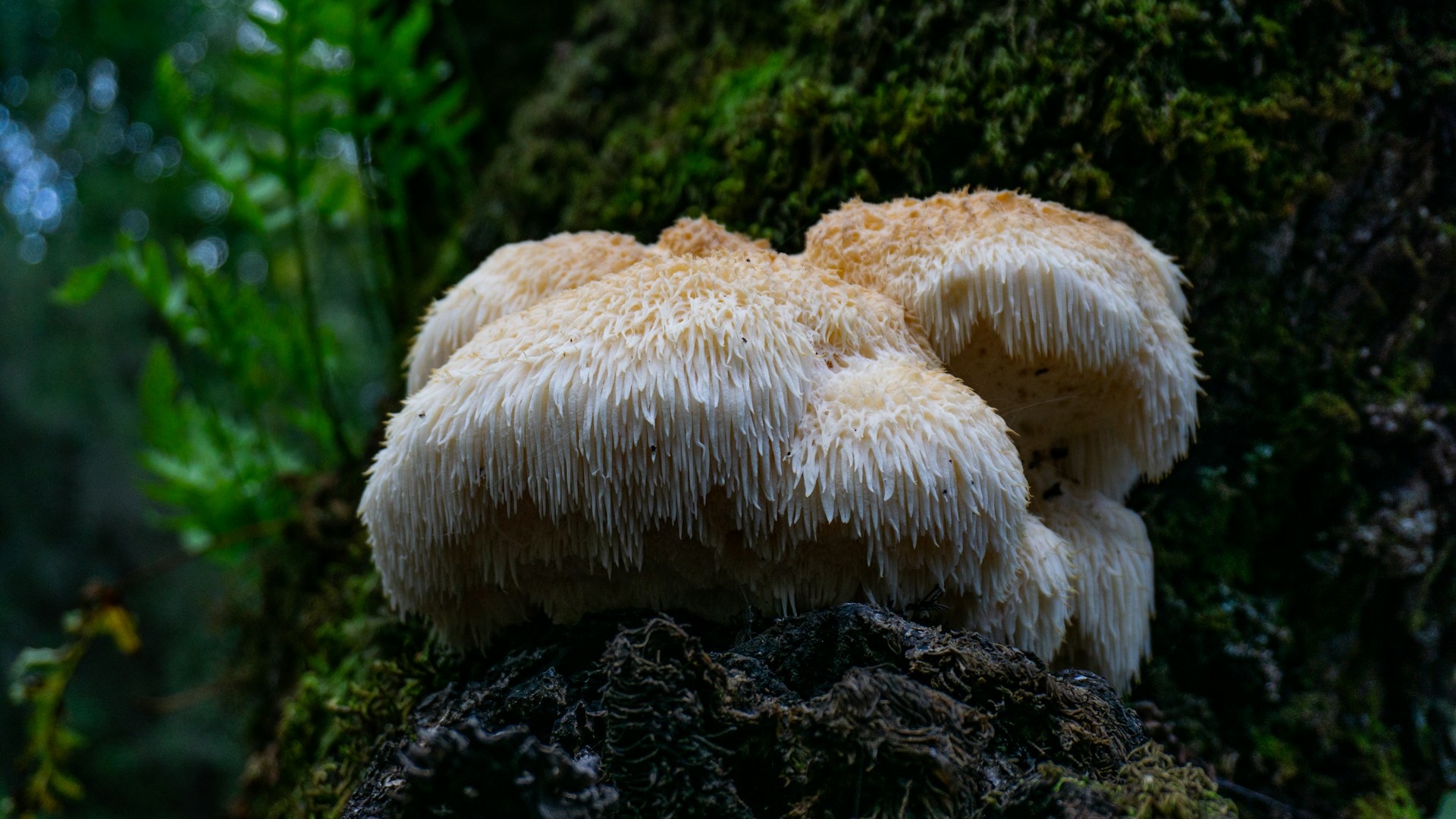
For the uninitiated: lion’s head mushroom (Hericium erinaceus) gets its name from those cascading white spines that hang in dense clusters, somewhere between a lion’s mane and a frozen waterfall. No cap, no stem — just one dramatic clump that somehow ends up tasting like crab.
Here’s what you need to know.
What It Looks Like (And How Not to Miss It)
Spotting this mushroom in the wild is easier than identifying most fungi. The signs are hard to miss:
- A single, dense cluster of soft white spines — each one several centimetres long
- Cream to white colouring that darkens slightly as it ages
- No traditional cap structure whatsoever
- A slightly spongy texture when fresh
As it matures, it firms up. Past its prime, it’s still edible — just less pleasant. Fresh is always better.
Where It Grows
In the wild, lion’s head mushroom prefers hardwood trees. Oak and beech are favourites. It’s saprotrophic — it feeds on dead or decaying wood rather than living trees, which makes it a quiet but essential player in forest nutrient cycles.
Geographically? You’ll find it across temperate Europe, parts of North America, and forested regions of East Asia. Late summer into autumn is peak season, when humidity does the heavy lifting.
That said, wild harvesting is limited, inconsistent, and increasingly impractical given how much demand has grown.
Cultivation: More Science Than Farming
This is where things get interesting. The commercial growing of lion’s head mushroom demands precise control of the environment – temperature, humidity, ventilation and light all influence the end product in ways that matter.
The process runs roughly like this:
- Spawning — fungal mycelium gets introduced to sterilised hardwood sawdust or a supplemented substrate
- Incubation — the mycelium spreads through the growing medium
- Fruiting — triggered deliberately by adjusting humidity, light, and airflow
- Harvesting — done before full maturity to preserve texture
The catch? Speed and quality don’t always agree. Faster production cycles can reduce concentrations of the bioactive compounds that make this mushroom interesting in the first place. Some growers prioritise yield; others slow things down to protect quality. It’s a real trade-off, and it shows up in the final product.
What’s Actually Inside
Nutritionally, lion’s head mushroom isn’t a calorie story. What it offers instead:
- Beta-glucans — a type of polysaccharide linked to immune function research
- Amino acids
- Antioxidant compounds
- Trace minerals, including potassium and zinc
Then there are the compounds that have drawn the most scientific attention: hericenones and erinacines. Both are found almost exclusively in this species, and both have been studied for their potential relationship with nerve growth processes.
The Research — What’s Promising, What’s Not
Let’s be clear: this isn’t medicine. But the early science is genuinely interesting.
Cognitive function: Small human trials have explored whether compounds in lion’s head mushroom might support memory and cognitive performance. Results have been encouraging in some cases — not conclusive, but worth watching.
Nervous system support: Animal studies suggest extracts may interact with nerve regeneration pathways. Whether that translates meaningfully to humans is still being worked out.
Mood: Limited human research has looked at possible effects on mild stress and low mood. Preliminary, yes. Worth dismissing entirely? Probably not yet.
Gut and immune health: The beta-glucans may interact with gut bacteria and immune function. This area is developing quickly across the broader field of functional fungi.
So: promising across several fronts, but not proven. Anyone selling lion’s head mushroom as a cure for anything is getting ahead of the data.
How People Actually Eat It
Fresh, this mushroom has a mild flavour — often described as seafood-like — with a texture that genuinely mimics crab or lobster when cooked right. It’s not subtle.
Common approaches:
- Sautéed in butter or oil (simple and hard to beat)
- Added to soups and broths where it absorbs flavour well
- Roasted for a denser, firmer result
- Dried and rehydrated for later use
For people who’d rather not cook fresh mushrooms regularly, lion’s head mushroom powder has become a popular alternative. A scoop into coffee, a smoothie, or a soup — it’s practical, and it keeps intake consistent in a way fresh produce doesn’t.
Quality varies significantly across powders, though. More on that below.
What to Look For When Buying
Not all lion’s head mushroom products are the same. Far from it. A few things that actually matter:
- Fruiting body vs. mycelium — fruiting body generally contains higher concentrations of the target compounds
- Extraction method — hot water extraction is standard; dual extraction may offer broader compound coverage
- Third-party lab testing — purity and potency claims need verification
- Fillers and additives — check the label
- Origin and cultivation practices — organic and transparently sourced products tend to be more reliable
The market has grown fast. That’s mostly good news — more options, more competition — but it also means more inconsistency. Doing a bit of homework before buying isn’t overcautious. It’s just sensible.
The Sustainability Angle
Mushroom farming, done well, is genuinely low-impact. No direct sunlight required. Relatively little water. Substrates can be agricultural byproducts — sawdust, straw — that would otherwise go to waste.
But “done well” is doing a lot of work in that sentence. Energy use in climate-controlled indoor facilities, substrate sourcing, waste handling after harvest — these all shape the real environmental footprint. Local production generally beats imported, both for freshness and emissions.
Indoor cultivation is becoming the norm, and when managed responsibly, it’s a reasonable model.
The Bottom Line
Lion’s head mushroom is genuinely unusual — ecologically, culinarily, and scientifically. Its appearance alone sets it apart. But beyond the aesthetics, it’s a species with legitimate research interest behind it and a culinary profile that holds up without any wellness claims attached.
The science isn’t finished. The market is maturing but still inconsistent. And interest — from chefs, researchers, and everyday consumers — keeps climbing.
Whether you’re cooking it fresh or adding lion’s head mushroom powder to your morning routine, the key is sourcing quality and keeping expectations grounded. The evidence is promising. It’s just not complete yet.