
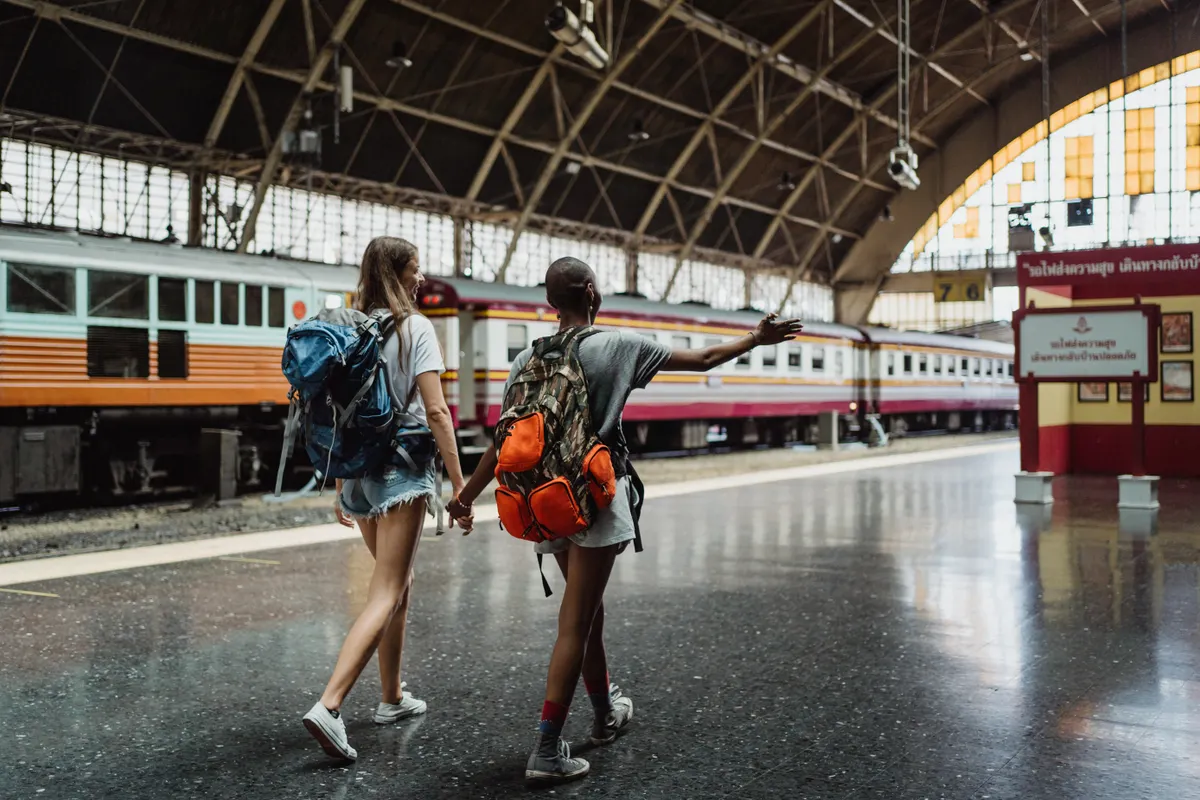
A two-week trip spent backpacking across Europe through Germany, Austria, Italy, and Switzerland revealed a reality far removed from the curated images on social media: sore shoulders, sleepless overnight trains, and cramped Airbnbs barely larger than a parking space.
Business Insider travel reporter Joey Hadden packed a 32-litre backpack for the journey, visiting Berlin, Vienna, Venice, Rome, Milan, and Zurich, sleeping in shared train cabins and booking budget Airbnbs to keep costs down. What she found was an object lesson in the gap between travel content and travel reality.
What Backpacking Across Europe Actually Costs You
The physical toll set in quickly. Carrying the backpack all day on travel days left Hadden’s muscles so sore she began questioning whether a wheeled carry-on suitcase would have been easier on her body, even with the trade-off in size.
Laundry was a daily chore that backpacker social media never shows. Staying just one or two nights per accommodation meant washing clothes immediately on arrival so they would dry before checkout. Most of her Airbnbs were tiny homes of less than 100 square feet, from a converted wine barrel outside Zurich to an Airstream trailer in Vienna, so damp garments hanging to dry turned already-small spaces into something chaotic.
Crowds compounded the difficulty. Even travelling in the shoulder season, popular sites from Rome to Zurich were packed. At the Colosseum, getting a single photo without hundreds of other visitors in frame proved nearly impossible. At 5-foot-3, Hadden found herself standing on tiptoe to see over the surrounding smartphones.
The Overnight Train Problem, and What Nightjet Actually Offers
The most draining episodes centred on overnight train travel with Nightjet, which operates routes connecting Austria, Italy, France, the Netherlands, Germany, Switzerland, Belgium, and Croatia, among others.
On the Berlin-to-Vienna leg, Hadden travelled in a seating carriage: six seats facing each other in a shared compartment, with a seat that reclined only partially. The constant movement of the train and the proximity of other passengers made sleep impossible. She arrived in Vienna at 7am having not slept, spent her first hours hunting for a hotel that would take her early, and effectively lost the day.
The Vienna-to-Venice leg used a bunk in a shared cabin for six. Only four travellers occupied the 74-square-foot space on Hadden’s journey; she found it cramped enough that she had to wake a fellow passenger in the middle of the night to access the room’s lock, which was only reachable from the top bunk. There was no curtain on the berths, requiring a trip to the bathroom to change.
‘Offering our passengers a high level of travel comfort is an important concern for us,’ an OBB Nightjet representative told Business Insider. ‘We are constantly working on improvements to our product and also take into account the requirements of our customers.’ A separate statement noted that the company recommends sleeper or couchette cars for overnight journeys, adding that ‘seated carriages are recommended for shorter journeys.’
Those recommendations point to options that exist but cost more. According to the Nightjet seat car page, the seat car accommodates up to six people per compartment, though a private seating compartment for up to three passengers can be booked at a flat rate on many trains, subject to availability. The sleeping car, at the top of the comfort range, offers compartments bookable for one, two, or three people, with made-up beds including blanket, sheets, and pillow, and some compartments with their own shower and toilet. Ladies-only compartments are available alongside mixed-gender options.
The newest rolling stock goes further still. The new-generation Nightjet comfort plus category features two built-in beds, bookable for one or two passengers, with en suite sanitary facilities including a WC and separate shower. Seat61 reports that each seven-car new-generation train carries a maximum of 254 passengers, with beds running to 192 cm (6 feet 4 inches) in length in the comfort plus compartments.
Hadden concluded she would not share a berth with strangers on an overnight train again. Had she booked a private cabin from the start, the calculus of overnight travel might have looked different.
Despite the hardships, she did not write the trip off. Each city stayed distinct in memory rather than blurring together, and the backpack itself enabled the pace and range of places visited. She plans to return, but in the off-season, with private accommodation, and on daytime trains wherever a private sleeper cabin is not available.
The practical takeaway for anyone planning a similar itinerary: check Nightjet’s private compartment options and book early, because the flat-rate private seating compartments are offered in limited numbers.