

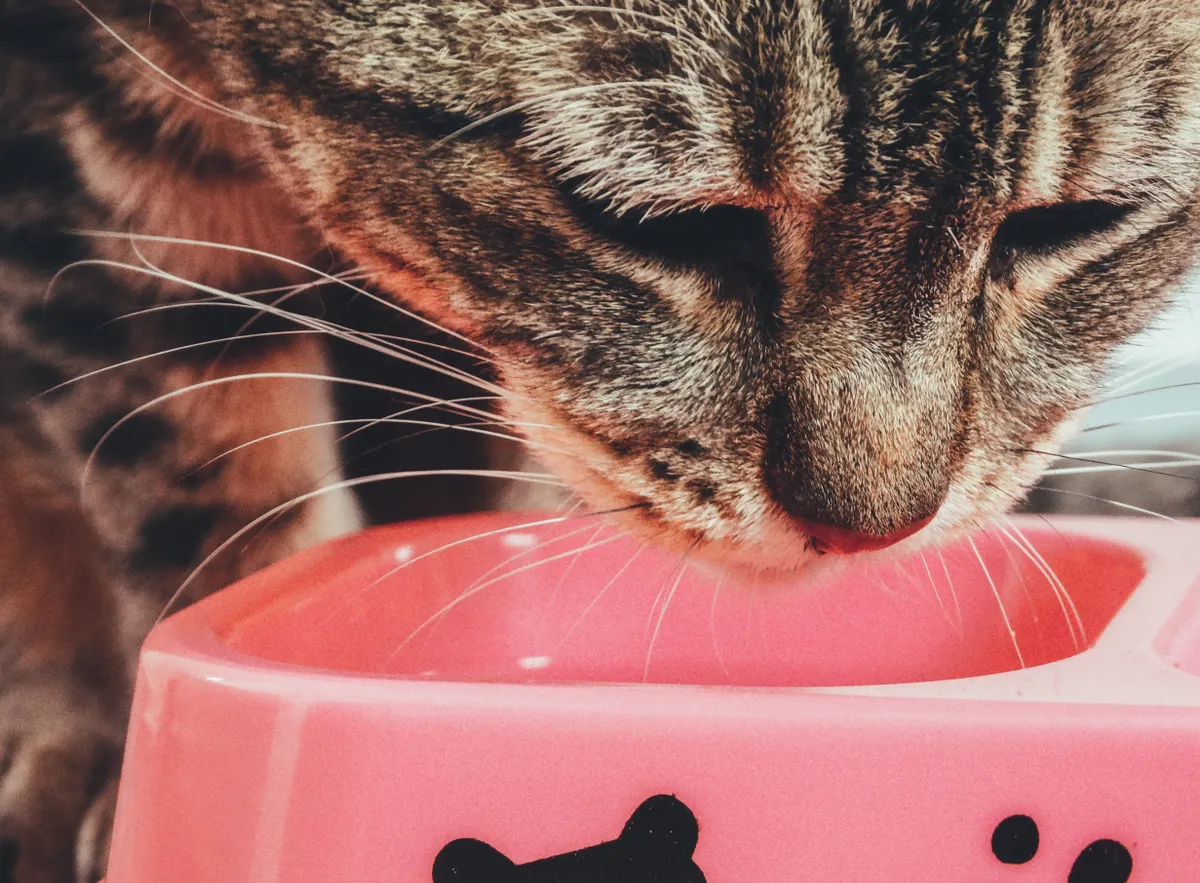
Choosing vet-recommended cat food starts with two standards that most labels never mention by name: the nutritional profiles set by the Association of American Feed Control Officials (AAFCO) and the WSAVA Global Nutrition Guidelines, first published in 2011. Understanding what those standards actually require, and what they do not, is the fastest way to cut through pet food marketing.
What AAFCO actually does, and what it does not
A common misconception is that AAFCO approves or certifies cat food. It does not. According to AAFCO, the organisation establishes model language that individual states and other governing bodies may choose to adopt into law. Regulatory authority rests with those jurisdictions, not with AAFCO itself.
What AAFCO does provide is a nutrient profile. For adult cat maintenance, the FDA confirms the minimum crude protein level is 26% on a dry matter basis. Because wet food contains roughly 75–78% moisture and dry food only 10–12%, the protein percentage shown on a wet food label looks much lower than it really is. To compare the two fairly, you need to convert the wet food figure to a dry matter basis, stripping out the moisture content first.
There are two ways a manufacturer can back up an AAFCO completeness claim, and both produce different label wording. One method is formulation: the food is designed to meet the published nutrient profiles and the label says so explicitly. The other is feeding trials: the food is fed to cats using AAFCO protocols to confirm it supports the relevant life stage. A feeding-trial statement is generally considered the stronger proof of real-world performance.
If a label reads ‘This product is intended for intermittent or supplementary feeding only,’ the food has not met any AAFCO complete and balanced standard and should not be used as a primary diet, as AAFCO’s labelling guidance makes clear. Snacks and treats carry no AAFCO adequacy requirement at all.
Vet-recommended cat food and calorie targets: the numbers behind the chart
Calorie needs vary considerably by size. The WSAVA calorie chart for healthy adult cats (updated July 2020) puts the daily requirement at roughly 225–250 kcal for a cat weighing 4 kg (8.8 lb), rising to 250–290 kcal for a cat weighing 5 kg (11 lb). Those figures are based on 2006 NRC daily maintenance energy calculations. They are a starting point, not a prescription; your vet can adjust for activity level, reproductive status, and any underlying health condition.
Highly active cats need more; sedentary or spayed cats often need less. Free-choice feeding, where food is left out all day, works for some households but makes portion control difficult and is associated with excess weight gain.
Grain-free diets and the DCM investigation: where things stand
Grain-free cat food is widely marketed but the evidence for its superiority is thin. Cats tolerate complex carbohydrates from grains such as corn, oats, and wheat, and those grains can supply useful fibre and micronutrients. Grain and gluten allergies exist in cats but are rare.
The grain-free concern in dogs has a specific history worth understanding. The FDA began investigating a potential link between certain diets and canine dilated cardiomyopathy (DCM) in July 2018, after receiving reports involving dogs eating foods high in peas, lentils, and other legume seeds. Between January 2014 and April 2019 the agency received 524 reports, covering 515 dogs and 9 cats.
Subsequent FDA analysis found that DCM reports were linked to foods containing high levels of legumes and pulses regardless of whether those foods were grain-free or grain-containing. By December 2022, the agency had collected 1,382 canine DCM case reports in total. At that point, Pet Food Industry reported that the FDA ended further updates, stating the data no longer supported its earlier suggestion that grain-free foods cause DCM. No equivalent link has been identified in cats.
Reading past the marketing language
Terms such as ‘premium,’ ‘gourmet,’ ‘holistic,’ and ‘natural’ carry no regulated nutritional meaning. The WSAVA’s guidance on selecting pet foods warns that labels using ‘holistic’ or ‘premium’ are of little practical nutritional value, and that if a manufacturer cannot or will not provide nutritional information when asked by a vet or owner, caution is warranted before feeding that brand.
Raw meat diets carry a different concern: bacteria including E. coli, Listeria, and Salmonella pose risks to cats and their owners if the meat is not handled correctly. Veterinarians advise against them.
The practical checklist is straightforward: confirm the AAFCO adequacy statement matches your cat’s life stage, check whether it rests on a feeding trial or formulation, and convert wet food protein figures to a dry matter basis before comparing with kibble. Brands such as Purina, Hill’s, Royal Canin, and Farmina employ full-time veterinary nutrition experts, which the WSAVA guidelines flag as a useful quality indicator. For any cat with a diagnosed condition, from kidney disease to food sensitivity, a conversation with your vet before changing foods is the one step the label cannot replace.