

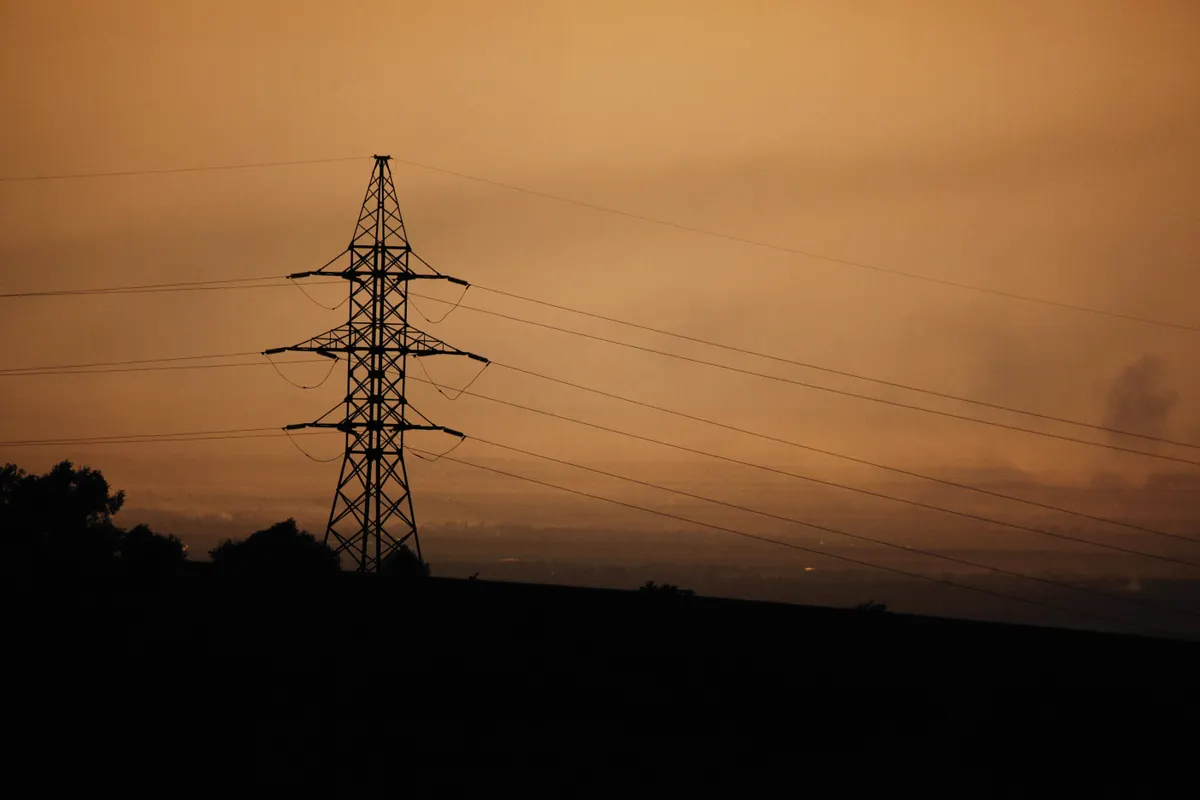
The Gary Indiana power outage that followed an 11 August derecho has left a trail of financial and human damage across the city, with J’s Breakfast Club owner Joslyn Kelly losing roughly $19,000 in sales over eight days without electricity and thousands of residents enduring what became the longest blackout many had ever experienced.
Kelly told Business Insider the storm cut power at noon on 11 August, mid-service, plunging the restaurant into darkness. She ran to move customers and staff away from the windows as outdoor furniture toppled on the patio. Power did not return until approximately 1 a.m. on 20 August.
‘The aftermath of the storm has been more tumultuous than the storm itself,’ Kelly said.
How the Gary Indiana Power Outage Unfolded
The storm that hit was no ordinary thunderstorm. Wind gusts approaching 100 mph, including a recorded 99 mph gust at Gary Chicago International Airport, ripped through the region, according to WNDU. At its peak, the derecho left approximately 370,000 Northern Indiana Public Service Co. (NIPSCO) customers without power (around 60% of the utility’s entire electric customer base) the largest outage in the company’s history. Additional storms the following day created new outages and slowed restoration work already under way.
The National Weather Service confirmed eight tornadoes across northern Illinois and northwest Indiana. The storms killed at least seven people, including a 4-year-old boy, according to the Indiana Department of Homeland Security.
Gary bore the worst of the sustained outage. At peak, nearly 38,300 NIPSCO customers in the city lost power. Ten days after the storm, approximately 20,000 Gary residents remained without electricity, representing nearly half of the roughly 43,000 customers still without power across all of Northwest Indiana at that point, Capital B Gary reported. As of Thursday morning, 21 August, NIPSCO’s own data cited by Yahoo News showed approximately 24,865 of the roughly 62,800 customers still without power across Northwest Indiana were in Gary alone.
Restoring the city required rebuilding roughly 300 poles and 44 power lines, the Associated Press reported. More than 600 linemen were deployed, according to Gary Mayor Eddie Melton, who acknowledged residents were ‘frustrated and exhausted’ but said: ‘NIPSCO has never ceased or stopped working in the city of Gary.’ Restoration efforts were further complicated when shots were fired at a NIPSCO truck in Gary while two workers repaired a power line, prompting officials to increase security for crews, the Chicago Crusader reported.
By 5 p.m. on 25 August, NIPSCO reported it had restored power to 99% of affected customers across northern Indiana. Gary itself was fully restored on 26 August, KCRA reported, 14 days after the storm first struck.
A City Already Stretched Thin
The Gary Indiana power outage exposed vulnerabilities that go beyond storm damage. The city is predominantly Black and roughly a third of its residents live below the poverty line, leaving many with fewer resources to cope with a two-week disruption, Axios reported. Kelly pointed to the city’s ageing infrastructure, noting that much of Gary’s development dates to its founding more than a hundred years ago, with little significant investment since a decline that began in the 1960s. Older trees and unmanaged vegetation compounded the damage.
The outage also renewed scrutiny of NIPSCO following the utility’s approval of a $257 million rate increase, NRIPage reported. Indiana Governor Mike Braun directed the Indiana Utility Regulatory Commission to open a formal investigation into NIPSCO, citing the company’s tree-trimming and vegetation management, maintenance of utility rights-of-way, and the pace and communication of storm restoration, according to Streamline. The City of Gary has launched a Recovery Action Plan to coordinate the ongoing response.
For Kelly, the immediate priority was survival. After the storm, she bought tents, portable lights, and propane-fuelled fryers from Menards and set up outside the building, working with power banks and candles to serve the community, including food service at the YMCA with the City of Gary. She estimates the restaurant operated at roughly 10% of normal volume, absorbing the 90% revenue loss.
She has reopened for dine-in and carry-out but has not yet reactivated delivery services, which normally account for 10 to 15% of business. With large portions of the community still recovering, she expects revenue to remain suppressed.
The regulatory investigation’s findings on NIPSCO’s vegetation management and maintenance practices will determine whether Gary faces a repeat when the next major storm arrives.