

Gates Notes published a Gates AI jobs warning on Wednesday that stretches well past the office roles already under pressure, arguing that blue-collar workers, entry-level employees, and society as a whole face a disruption arriving faster than most governments are prepared for.
The Microsoft cofounder’s nearly 5,900-word essay calls the coming period a ‘turbulent AI era’ and warns that waiting until workers are ‘displaced or underemployed will be too late.’
Which jobs Gates says are in the firing line
Gates identifies sales and customer support, software engineering, and paralegal work as among the first roles likely to feel the pressure, alongside tasks such as assessing loan applications, conducting data analysis, and triaging patients, according to the essay on Gates Notes.
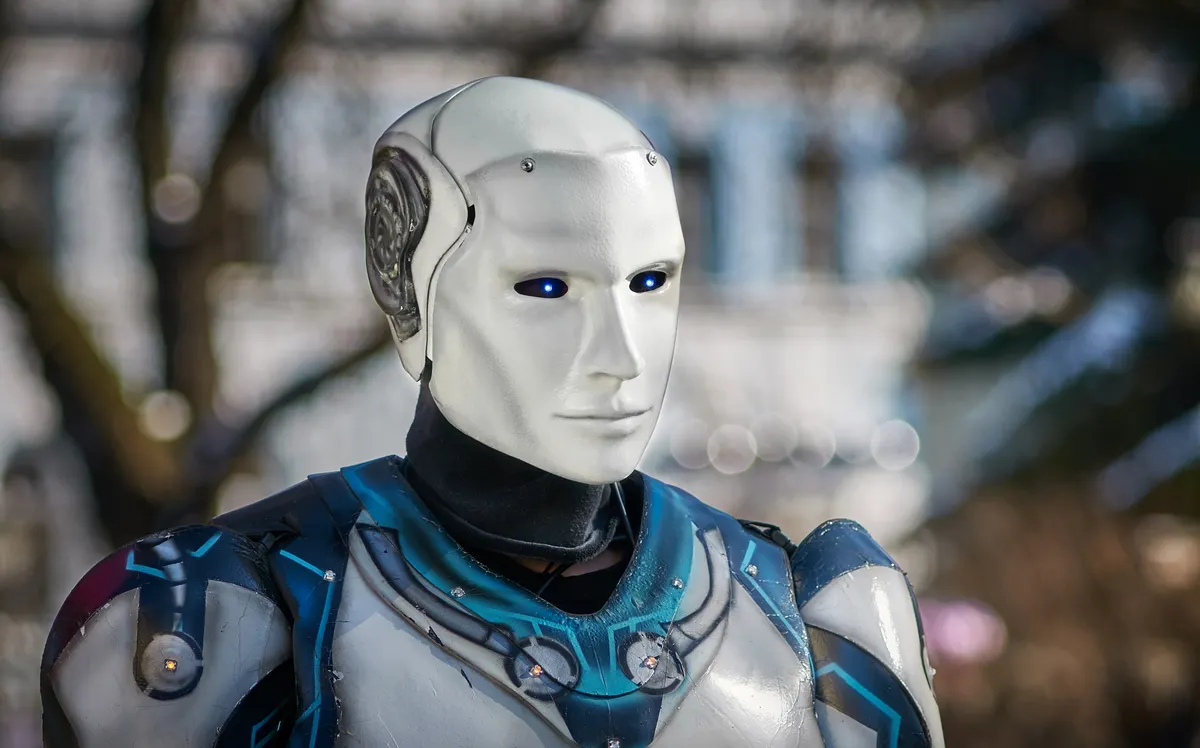
Blue-collar workers are next. Gates writes that ‘smart’ robots could begin competing with people on physical tasks in construction and hospitality ‘by the end of the decade,’ and adds that many Americans are underestimating how quickly dexterous robots are advancing, partly because viral videos of robots ‘dancing badly’ create a misleading picture. Much of the serious work in advanced robotics, he writes, is happening in other countries, primarily China.
The pace concern runs through the essay. CNBC reports that Gates argues AI will hit law, customer service, medicine, software, and manufacturing over the course of a decade rather than a few generations, and that without the right policies there will be far fewer new jobs than exist today.
Gates AI jobs warning: the ‘Human Reserved’ idea and its open questions
One of the essay’s more striking proposals is a concept Gates calls ‘Human Reserved’: designating certain roles for people only, regardless of whether AI or robots could technically do them. He uses the analogy of a nature reserve, where roads and buildings could be built but society chooses not to because the loss would be too great.
Gates gives a direct example: receiving a terminal diagnosis from a robot. ‘There’s no technical reason why it couldn’t,’ he writes. ‘Yet it shouldn’t.’ Fields such as education and mental health care, he argues, could become a mix of humans and AI, with people remaining in charge.
The essay also raises the hard questions the concept leaves unanswered: who decides what is reserved, what criteria to use, how to prevent companies from cheating, and what happens to international trade when countries adopt different rules. Gates does not resolve them; he frames them as the policy work still to be done.
Separately, Gates expresses personal concern about his grandchildren, noting that it is ‘hard to move up the ladder when there is no bottom step to help you get on that ladder’ as robots increasingly take on entry-level functions.
Taxing robots and AI tokens to fund the transition
Gates calls for taxing both robots and AI tokens, the units into which AI models divide and process text and other data. ‘I believe we should tax AI tokens and robots,’ he writes.
His argument is that the current tax system tilts companies toward automation: employers pay payroll taxes when they hire people, while robots can generally be written off as a business expense. CNBC reports that a token tax would make it more expensive for companies to replace employees with AI tools or agents, with proceeds used to fund support for people who lose their jobs.
Gates also calls for new national bodies that can set priorities across government agencies, and a new international organisation modelled on nuclear-weapons inspections, aviation rules, and the ozone treaties, to coordinate responses to evolving AI risks globally.
The risks he flags extend beyond employment. GeekWire reports that the essay also warns AI could supercharge fraud and deepfakes, lower the bar for cyberattacks on critical infrastructure, make it easier to engineer a deadly new disease, enable governments to kill without humans involved in the decision, and fundamentally alter how children grow up.
‘In terms of equity, AI will either be the greatest equalizer ever invented, or the worst source of injustice,’ Gates writes. ‘The challenge is monumental.’
The essay marks a harder-edged public stance for Gates. CNBC notes that he told the network previously that AI was ‘the biggest technical thing ever in my lifetime,’ adding, ‘It is so profound and therefore its influence is hard to overstate.’ The new essay keeps that scale but shifts the emphasis firmly toward risk and the policy choices that remain unmade.
The central test, in Gates’s framing, is whether governments move before the displacement happens rather than scrambling to respond after. The policy window he describes, roughly the next few years before AI and robotics reach broader labour markets, is the one to watch.