

Contributed content: this article was written by a third-party contributor and does not necessarily reflect the views of News Anyway. Editorial and Advertising Policy
Freight crime rarely makes the national headlines, but the numbers behind it are hard to ignore. The National Vehicle Crime Intelligence Service (NaVCIS), the only UK police unit dedicated to freight and cargo crime, processed 3,424 crime notifications in 2025, around nine every day. The estimated cost-price value of the goods stolen came to £65.1 million.
Even that figure understates the problem. NaVCIS’s own freight desk has said the true cost is likely to be around four times higher once vehicle damage, insurance, lost contracts and disruption are counted, and that around three quarters of freight crime is the work of organised groups rather than opportunists. The unit was notified of 265 arrests linked to cargo crime over the year and supported dozens of police operations.
A crime that’s hard to see in the statistics
One reason freight crime stays under the radar is that it doesn’t have its own Home Office crime category. A lorry load of electronics stolen from a yard is typically logged as "theft from a motor vehicle", the same heading as a smashed car window in a supermarket car park. The government began piloting a way for police to tag offences as freight crime at the end of 2025, but for now the national picture still relies heavily on NaVCIS and its industry partners.
That also makes year-on-year comparisons tricky. NaVCIS’s 2024 figures showed 4,879 incidents with an estimated loss of £111.5 million, but the unit has cautioned against reading the lower 2025 total as a fall, because of changes in how the data is collated.
It isn’t only lorries in lay-bys
Much of the coverage of cargo crime focuses on trailers being slashed open overnight at service stations and lay-bys. That’s a real and well-documented problem. But goods don’t stop being a target once they reach their destination. Warehouses, distribution units and industrial estates hold the same stock in larger quantities, often in buildings that are unmanned overnight and at weekends.
Across Europe, insurer TT Club’s 2025 cargo theft report found that warehouses and other facilities accounted for around a third of recorded theft locations, with the UK making up 9% of European incidents. For a small or medium-sized business running from an industrial unit, the risk is less about headline-grabbing heists and more about quiet, well-planned break-ins on a Sunday night when no one is around.
The loading bay is the front door
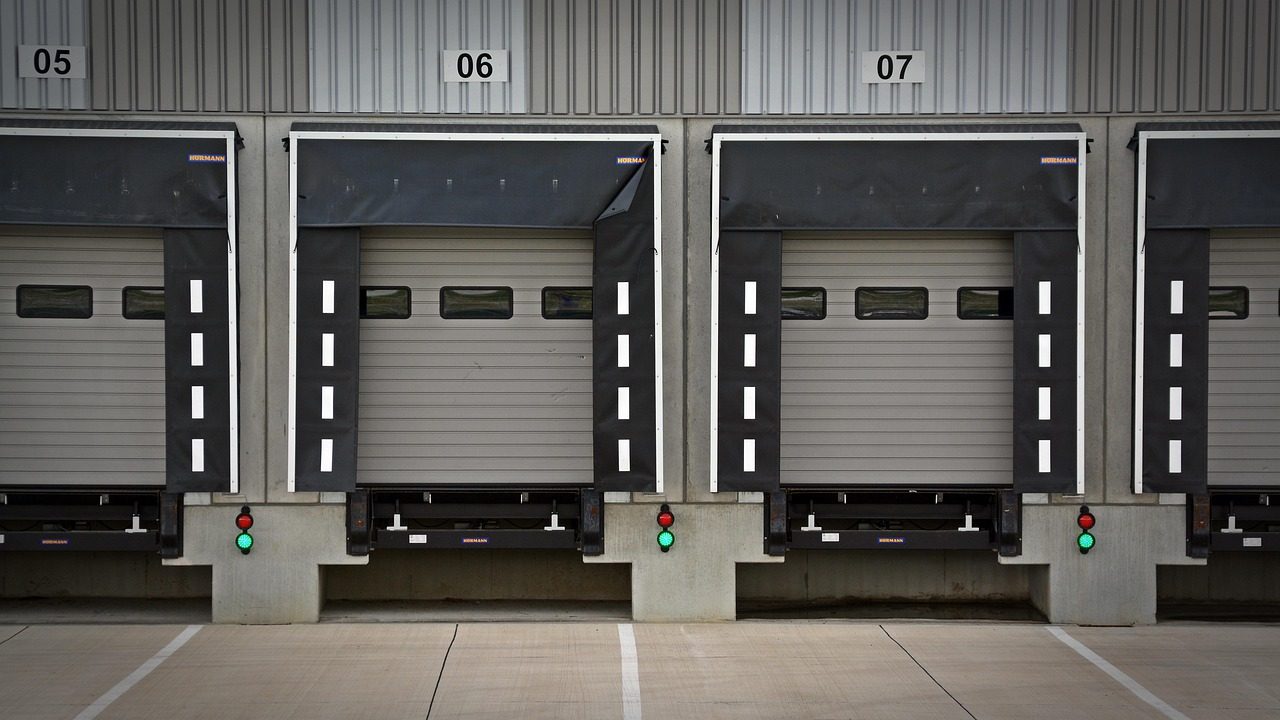
In most warehouses and industrial units, the largest opening in the building is the loading bay. It’s where the goods go in and out, it’s usually at the back or side of the site, and it’s often closed by the oldest piece of equipment on the premises. A tired shutter with worn laths, a weak bottom rail or a manual lock that hasn’t been checked in years can be the easiest way into an otherwise well-protected building.
That makes the specification of the shutter itself a security decision, not just a facilities one. A few points are worth reviewing:
- Material and gauge. Galvanised steel laths give the most resistance to cutting and forcing. Lighter aluminium shutters have their place, but not usually on a high-value stockroom.
- How it’s operated. Electric shutters are faster and safer for staff on busy sites, and cut the temptation to leave a door half open between deliveries. Chain-operated and manual shutters suit smaller or less frequently used openings. Whatever the type, make sure there’s a manual override for power cuts.
- Locking. Shutters that lock at the bottom rail and in the guide channels are much harder to lever up than those relying on a single central lock.
- Size and fit. Industrial openings vary widely, and a made-to-measure shutter fitted tightly into strong guide rails leaves far fewer gaps to work at.
- Condition. Bent laths, damaged guides and failing motors don’t just look bad. They weaken the whole curtain and make it easier to force.
For operators reviewing their sites, it’s worth comparing the main types of commercial roller shutters, from electric steel shutters for wide loading bays to single doorway and chain-operated models for smaller openings, and matching each one to how the door is actually used day to day.
Layering the rest of the site
A strong shutter is the core of a warehouse’s physical security, but it works best as part of a wider plan. The basics include:
- Keeping loaded trailers and high-value stock inside the building or a locked compound overnight rather than parked in an open yard.
- Checking pedestrian doors, fire exits and roof access, which become the obvious alternative once the main doors are secure.
- Making sure lighting and CCTV cover the loading area, and that alarms are monitored rather than simply sounding.
- Controlling who knows when high-value loads are arriving or leaving, since organised groups often rely on inside information.
- Talking to the insurer, who may have specific requirements for doors, shutters and alarms on premises holding certain types of goods.
Cheaper than the alternative
For businesses already under pressure from rising costs, security upgrades can feel like a line to defer. But the NaVCIS figures make the case plainly: freight and warehouse crime is organised, persistent and far more expensive than the value of the goods taken. A single overnight raid can mean lost stock, damaged doors, missed deliveries, a strained customer relationship and a higher premium at renewal.
Making sure the loading bay is as hard to get through as the rest of the building is one of the most straightforward ways to keep a site off a thief’s shortlist.