

The fact that a woman who spent more than ten years studying medieval skulls—the kind that traveled throughout Europe wrapped in silks and packed into reliquary boxes—now spends her days assisting people in discarding bread makers seems a little odd. However, Cher Casey doesn’t think the joke is funny. She refers to medieval artifacts as “basically clutter,” and she means it. When she explains the connection, it makes a peculiar sense.
Casey, who moved to York years ago for graduate work and has never really left, is the owner of The Mindful Organiser. Her advice, which is surprisingly straightforward, has been appearing everywhere lately, including in House Beautiful, The Sun, and podcasts. Make sure your cabinets’ tops are clear. Give up keeping kitchen appliances you haven’t used in a year. Put the pantry’s expired items in the bin. It’s not revolutionary at all. The why is what’s fascinating.
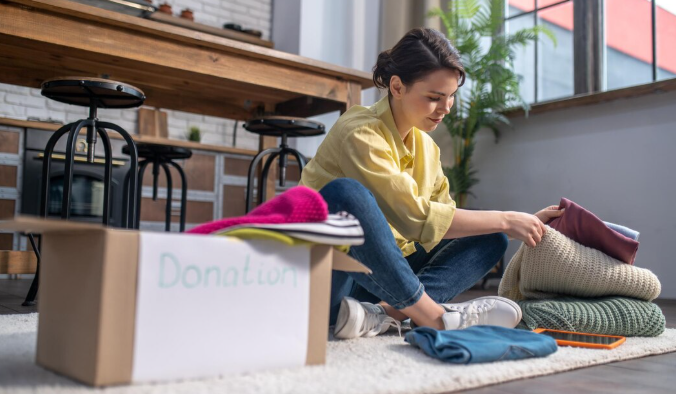
She frequently discusses visible surface space, and once you hear her talk about it, you begin to notice it everywhere. The messy kitchen counter. Nobody has opened the shoebox-filled shelf above the wardrobe since 2019. She recently told one tabloid, “Clearing these spaces allows the room to breathe again,” and I was struck by her statement. Obviously, rooms don’t breathe. However, when every horizontal surface is working, homes do feel heavier.
At least three different outlets have quoted the Tupperware line without lids, which is the kind of detail that sticks because it is accurate. Everybody has that drawer. Everyone is aware.
The mindfulness approach, which sounds somewhat wellness-industrial until you hear her explain it, is what sets Casey apart from the more prominent voices in this room. She is not advocating for people to feel reborn by throwing everything in the trash. She is requesting that they spend a moment with the bread maker. to inquire as to whether the person who purchased it is still alive. She has acknowledged that she clung to her own bread maker much longer than was necessary because it was more difficult to let go of the dream of making her own bread than the device.
Her own decluttering journey began during what sounds like an incredibly difficult period: completing a PhD, getting married, and having a baby all at the same time. She has openly discussed the low-grade hum of dissatisfaction that resulted from working from home surrounded by things she couldn’t bring herself to deal with, as well as depending on her husband for things she would normally handle herself. There wasn’t a lot of clutter. It was enough to exhaust her.
Given her background, it makes sense that Casey’s advice has an almost academic undertone. She discusses curation. She describes each room as something akin to an exhibition, where the objects occupying their space have truly earned it. This framing might only be effective for a particular type of person—someone who has the time and disposition to consider a saucepan to be a meaningful object. However, the fundamental idea is not valuable. It’s useful.
Last week, she gave a Sun reporter her three fastest tips, which are hardly tips at all. Make the floors clear. Make the counters clear. Make sure the cabinet tops are clear. That’s all. No labelled jars from a Scandinavian website, no pricey bins, and no purchases necessary. Just things that are less obvious.
As the decluttering industry has grown over the past few years, it seems that the loudest voices have been advocating for something performative, such as matching containers, color-coded pantries, and an overall Pinterest-ready look. Casey’s strategy seems more subdued and likely more resilient. Making your kitchen look like a magazine doesn’t seem to be her goal. She seems curious about your ability to tolerate being in it.