

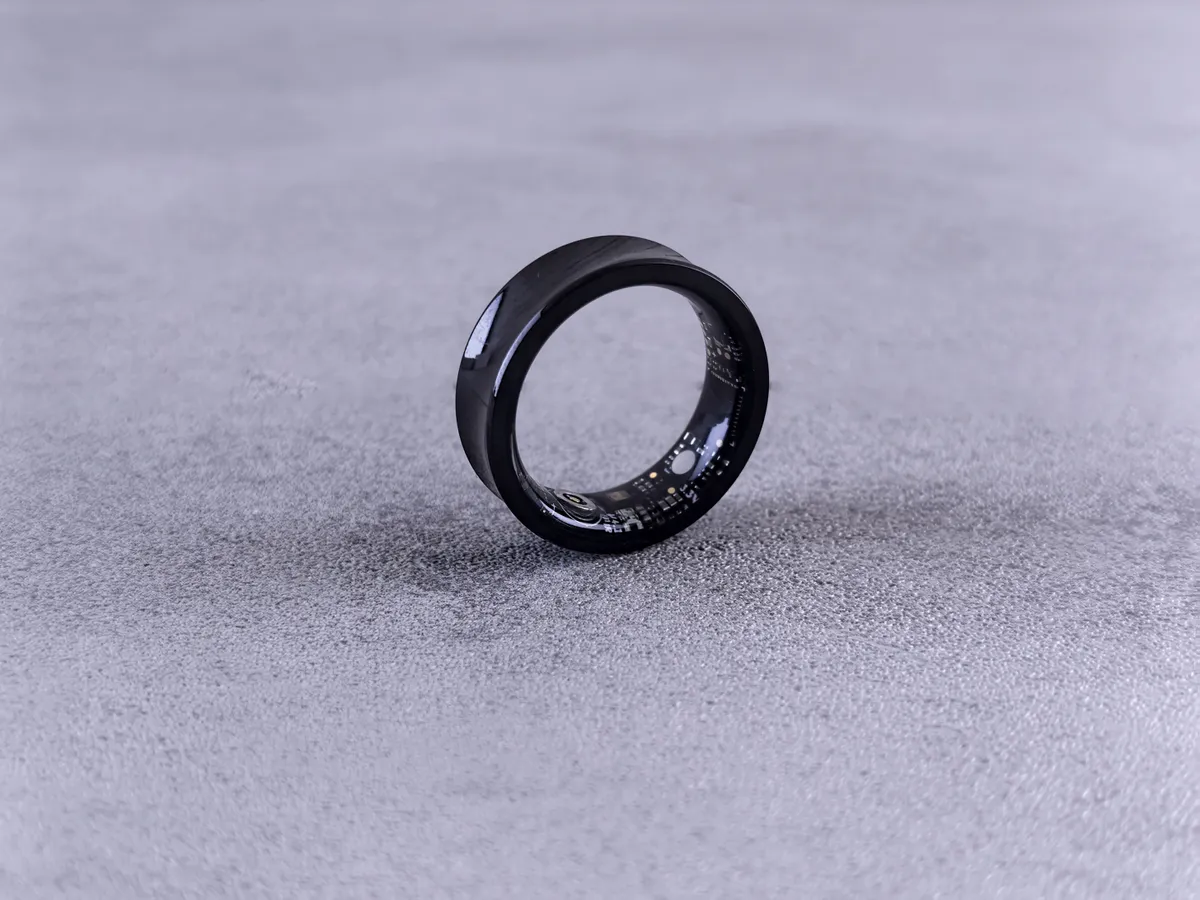
Invisible health tracker design is reshaping how tech companies build wearables, with the industry’s leading smart ring maker now moving toward an IPO as proof that consumers have fully embraced devices that look like nothing at all. Oura filed a confidential draft registration statement on Form S-1 with the Securities and Exchange Commission (SEC) in May, according to Oura’s confidential S-1 submission. The number of shares and price range have not yet been determined.
The timing is no accident. Oura’s push toward an IPO follows a product philosophy that has quietly become the industry standard: make it smaller, make it less conspicuous, keep it on the body longer.
Honey, We Shrunk the Wearable
When Apple Watch launched in 2014, health tracking wore its ambition openly. The device had a distinct, rounded square face that was immediately recognisable. Competitors differentiated themselves through bold aesthetics. More than 550 million people worldwide now own a smartwatch, per DemandSage data, and the technology no longer needs to announce itself.
The design conversation has shifted accordingly. ‘Over time, we’ve noticed that these products have gotten smaller,’ Forrester principal analyst Arielle Trzcinski told ZDNET. Beyond smartwatches, that miniaturisation has moved into rings, earrings, bracelets, and even continuous glucose monitors (CGMs) tucked beneath a shirt sleeve.
Oura was not the first company to sell a smart ring, but it made the form factor mainstream. Last September it announced it had sold 5.5 million Oura Rings. CNBC reports that Oura is on track to surpass five million paid members this quarter, a fourfold increase over the past two years. Last October, a $900 million Series E funding round valued the company at $11 billion.
Forbes, citing a person familiar with the matter via Bloomberg, reports that Oura plans to list later in 2026 with Goldman Sachs, Morgan Stanley, JPMorgan Chase, Allen & Co., and Jefferies working on the deal. A successful debut at its current valuation would make it the largest consumer-wearables IPO since Peloton’s 2019 listing at an $8.1 billion valuation and Fitbit’s 2015 debut, which valued Fitbit at roughly $4.1 billion.
Invisible Health Tracker Design: Small Device, Big Ambition
In late May, Oura unveiled the Ring 5, which Oura’s Ring 5 launch announcement describes as 40% smaller by volume than the Ring 4 and the world’s smallest smart ring, available in sizes 6 to 13. The company also improved battery life from five to eight days to six to nine days.
Wired reports the Ring 5 measures 6.09 mm wide and 2.28 mm thick, with a titanium exterior coated using physical vapour deposition (PVD) for scratch resistance and an IP68 rating for water resistance up to 100 metres. The device includes a suite of AI-powered wellness features, with Oura positioning it as a proactive health platform.
According to Good Morning America, the Ring 5 is priced from $399, began shipping on 4 June 2026, and comes in six finishes including a redesigned gold and a new deep rose. A portable charging case capable of storing one month of battery is also available.
Oura VP of product Maz Brumand told ZDNET what the invisible health tracker design philosophy is ultimately aimed at: ‘My bet is that, after this ring comes out, it’s going to be very hard to recognize that this is actually an Oura Ring. People might say, “Don’t you want people to know that someone is wearing an Oura Ring?” That’s nice, but the goal or the mission is to fit into people’s lives the way they want.’
Oura is not alone. Dexcom announced in May it is reducing the size of its latest CGM by 50%. Pump Peelz reports that the device, called the Dexcom G8 and revealed at Dexcom’s 2026 Investor Day, is approximately 50% smaller than the G7, with a 15-day wear time and self-adapting accuracy technology. Smart jewellery brands such as Lumia have also entered the market, with earring-back sensors that are effectively invisible until someone mentions them.
The App Does the Heavy Lifting
The miniaturisation trend is partly a product of how these devices actually function. Health trackers record data on the device, transfer it to a companion app, and let the software handle the analysis. ‘They don’t have to have the hard burst for analyzing the data. They just have to send the data to the phone,’ Safoora Khosravi, senior research associate at Lux Research, told ZDNET.
Trzcinski contrasted health trackers with AI wearables like smart glasses or pins. Smart glasses translate languages, provide real-time AI assistance, and capture photos, all of which demand substantially more computing power than recording heart rate or body temperature. Health trackers simply do not need the bulk. ‘The value you’re getting is from the app,’ Trzcinski said.
Consistent, passive wear is also what makes the data valuable. A fuller picture of sleep patterns, activity trends, and the physiological effects of habits, such as a late-night drink on heart rate variability, only emerges over weeks of continuous use. The device must disappear into daily life to do its job. ‘Now wearables are just trying to embed into the user’s daily life,’ Khosravi said.
For Oura, the commercial test of that philosophy arrives when its IPO pricing is set. If the market meets the $11 billion valuation, invisible health tracker design will have its clearest proof of concept yet.