

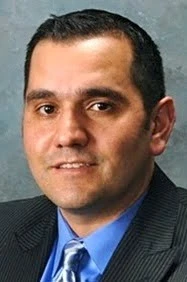
In 2012, the Hispanic Association on Corporate Responsibility recognized Mauricio Pincheira with its Young Hispanic Corporate Achievers Award. The recognition arrived during a career that has since extended to the role of Vice President of Automotive and Industrial Operations at The Chemico Group, directing operations across the United States, Canada, and Mexico for one of North America’s largest minority-owned chemical management and distribution enterprises.
The award is useful less as a milestone than as external evidence. It marks a point at which an approach already in practice was validated by an organization whose specific purpose is evaluating Hispanic leadership within corporate environments.
What the Recognition Measures
HACR focuses on Hispanic inclusion and advancement in corporate America, assessing organizations and individuals against standards of demonstrated impact. The Young Hispanic Corporate Achievers Award identifies professionals showing leadership consequence early in senior-track careers, which makes it a forward-looking recognition as much as a retrospective one.
Third-party validation of this kind carries a particular weight in the DEI dimension of a leadership profile. Self-described commitment is available to anyone. Recognition by an institution built to evaluate that commitment against defined criteria is a different category of evidence, and its value comes precisely from the fact that the assessment was external.
An Approach That Preceded the Award
The recognition did not originate the leadership philosophy it acknowledged. The philosophy is methodological, and it traces to the same source as the rest of this operational profile: certification as a Six Sigma Master Black Belt and as a Project Management Professional, applied consistently across automotive, industrial, and energy operations over more than 25 years.
That methodology holds that anything producing inconsistent outcomes can be defined, measured, and improved. Applied to workforce systems, it produces a specific view of equity. Where advancement criteria are undocumented and applied informally, outcomes vary for reasons unrelated to capability. Defining the criteria, applying them consistently, and measuring the results reduces that variation.
This is why diversity, equity, and inclusion function as operational infrastructure in the work Mauricio Pincheira leads, embedded in hiring standards, supplier qualification requirements, and advancement pathways. The commitment is expressed as structure because structure is what the methodology produces, and because structure is what can be verified.
Representation as an Operational Fact
Senior leadership within a minority-owned North American enterprise gives that structural commitment an organizational context in which it is visible and testable. The Chemico Group’s ownership identity establishes an external claim; the internal operating systems either substantiate it or do not.
Representation at the vice president level also has an effect that operates independently of any program. Advancement pathways are read by employees as much through observation as through documentation, and the composition of senior leadership is part of what makes stated pathways credible.
Both dimensions matter, and they are not interchangeable. Visible representation without accessible structures produces individual advancement without systemic change. Structures without representation invite doubt about whether the pathways function as described. The combination is what the HACR recognition points toward.
Read that way, the 2012 award functions as a documented external reference point within a longer and more consistent record: a leadership philosophy in which process rigor and equitable advancement are governed by the same discipline, applied at scale across three countries and three industrial sectors.