

For years, moving premises was seen as a natural part of business growth. Companies expanded, took on more staff, and eventually sought a larger building to accommodate the next stage of development.
That still happens, but not nearly as often as people might expect.
Many organisations are now asking a different question before they begin looking at commercial property listings. Instead of asking, “Where can we move?”, they’re asking, “Can we make this building work better?”
It’s a sensible question.
Relocating brings opportunities, but it also comes with significant cost, disruption and uncertainty. If a building is in the right location and continues to support the business, improving it often makes more commercial sense than walking away from it.
Moving Premises Comes with Hidden Costs
The price of a new building is only part of the equation.
There are survey costs, legal fees, fit-out works, IT infrastructure, furniture, signage, utilities and the practical challenge of moving an entire business from one location to another. Even after the move is complete, it can take months before everything feels settled again.
Then there’s the disruption that doesn’t appear on a spreadsheet.
Customers have to find the new location. Staff have to adjust to different travel arrangements. Established working routines change overnight. Depending on the business, the move itself can interrupt normal operations for days or even weeks.
It’s easy to underestimate how much time and effort is involved until the process actually begins.
Existing Buildings Often Have More Potential Than People Think
One assumption that still exists is that an older building has reached the end of its useful life simply because it no longer meets modern expectations.
That isn’t always true.
Across the UK there are offices, schools, hotels and healthcare buildings that remain structurally sound despite being several decades old. They were built to last, and in many cases they still perform that role extremely well.
The challenge is usually not the building itself.
It’s the way businesses now need to use it.
A layout that worked perfectly in the 1980s may struggle to meet the needs of today’s workforce. Accessibility expectations have changed. Customer experience matters more than it once did. Staff facilities, circulation routes and movement between floors all play a much bigger role than they did when many of these properties were originally designed.
That is why refurbishment has become such an important part of commercial property management.
Modern Lift Installation Isn’t Just for New Developments
Ask someone to picture a lift installation and they’ll often imagine a brand-new office block with a purpose-built lift shaft.
Reality is usually quite different.
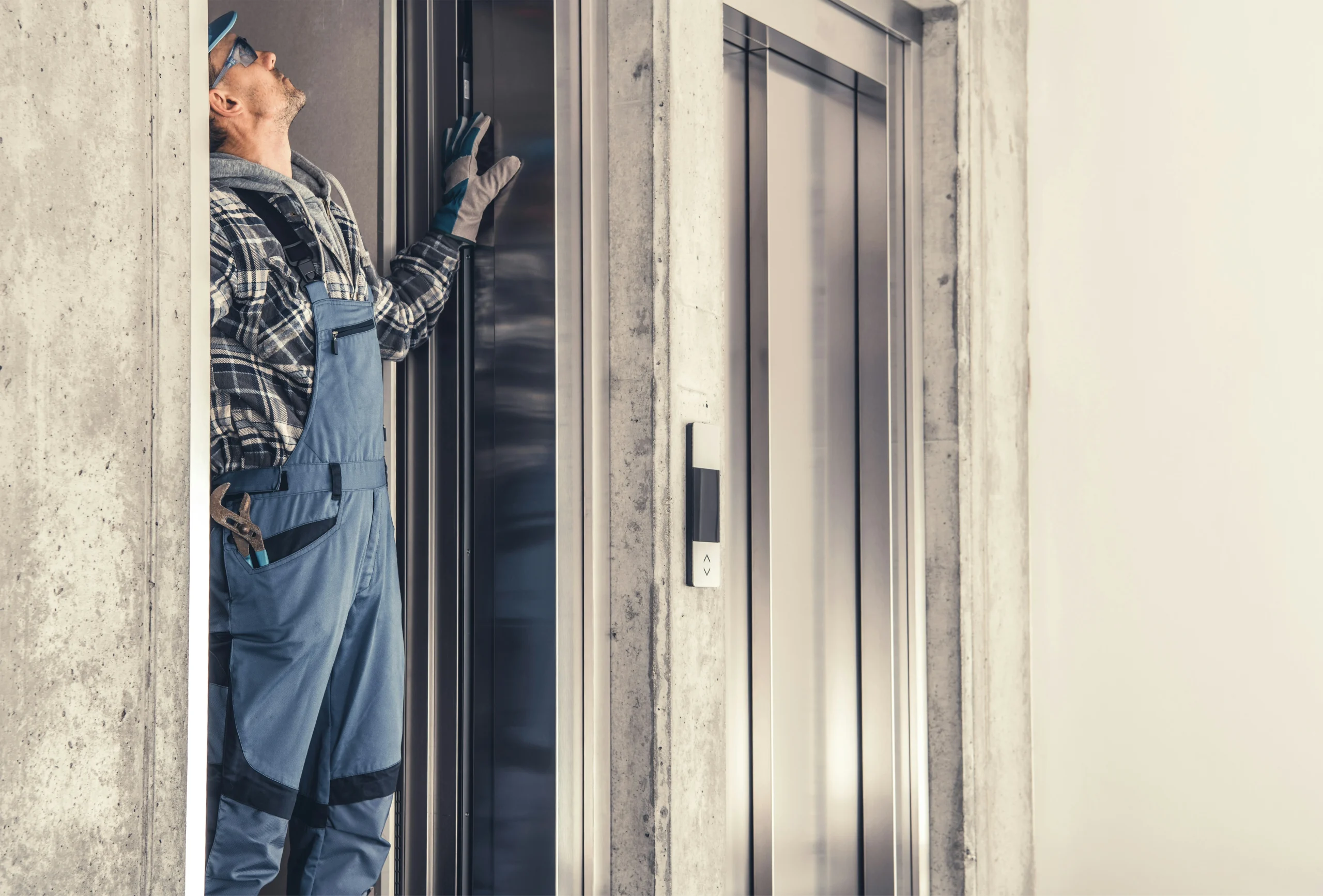
A large proportion of lift projects now take place inside existing buildings. Some involve replacing ageing equipment, while others introduce lift access where none previously existed.
Modern engineering has created far more flexibility than many people realise. Today, businesses can choose from commercial, platform, and passenger lifts designed specifically for refurbishment projects, depending on how the building is used and the available space. Reduced pit requirements, compact footprints, and equipment designed specifically for refurbishment projects mean that buildings that would once have been ruled out can now be properly assessed before any decisions are made.
That doesn’t mean every property is suitable.
Some buildings present genuine structural challenges. Others require creative design solutions to make the available space work effectively.
The important point is that age alone is no longer a reason to dismiss the idea.
Good Refurbishment Starts with Understanding the Building
One mistake people make is assuming the lift is the starting point.
It isn’t.
The building is.
Before anyone recommends equipment, they need to understand how people actually use the property. Where do visitors enter? Which floors receive the highest footfall? Are goods moved between levels? Is accessibility the priority, or is the objective to improve day-to-day efficiency?
Those questions often shape the project far more than the choice of lift itself.
It’s also why no two retrofit projects are ever quite the same.
A hotel, for example, operates very differently from a school. A medical centre has different demands from an office building. Even two apparently similar commercial properties can require completely different approaches because of the way they’re used.
Understanding those differences early usually leads to better decisions later.
Improving What Already Works
Not every business needs a new building.
Sometimes it simply needs its existing building to work better.
That might mean improving accessibility, making movement between floors easier or adapting the property so it continues to support the people using it every day.
For many organisations, that’s proving to be a better investment than relocating altogether.
A well-planned refurbishment doesn’t try to change everything. It focuses on the parts of the building that no longer meet current expectations while keeping everything that already works.
That’s one of the reasons retrofit projects have become so common. Businesses aren’t necessarily looking for bigger premises anymore. They’re looking for buildings that continue to support the way they operate today, and often the answer is the one they’re already in.