

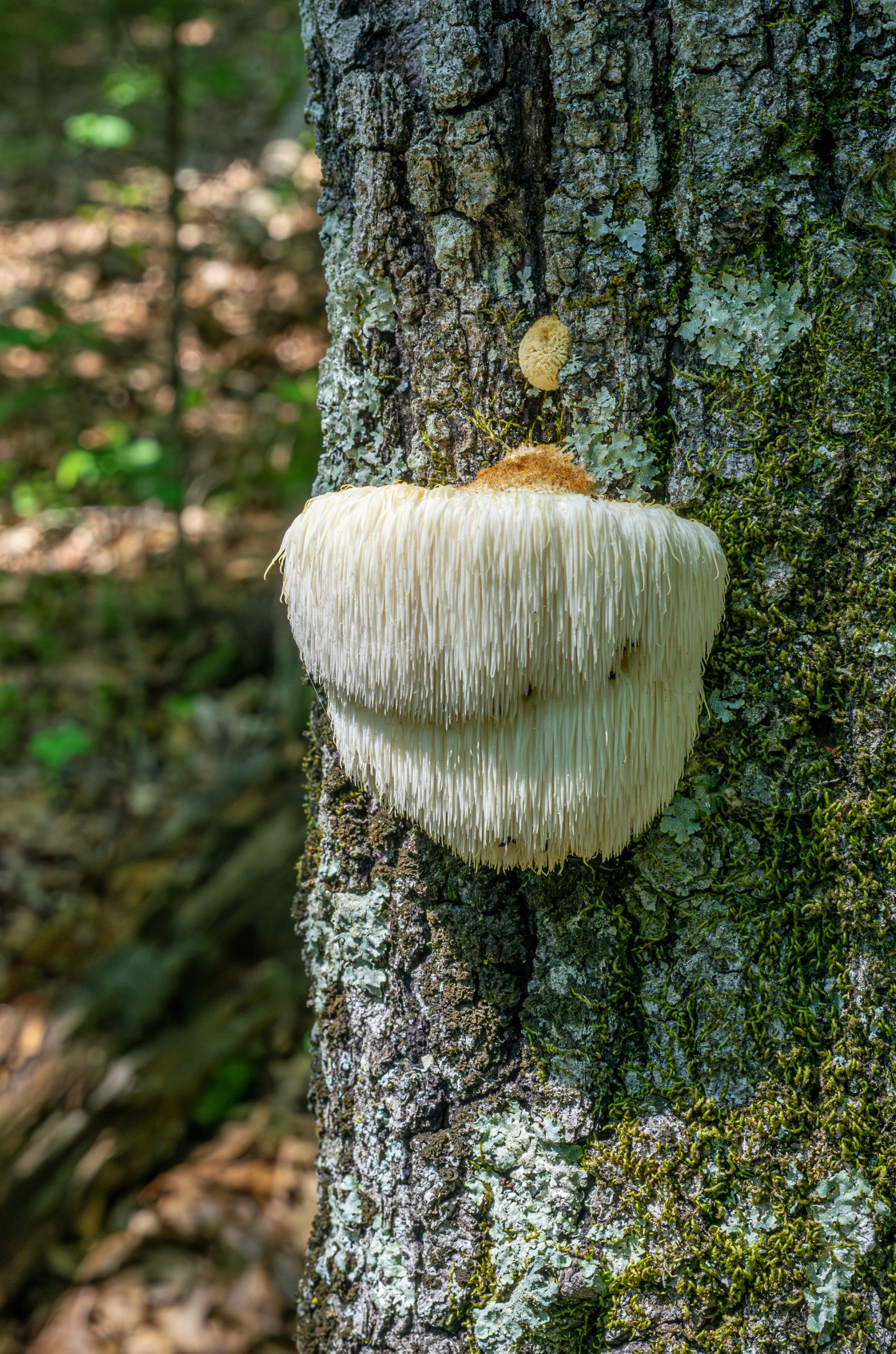
Most people scrolling wellness blogs have seen it by now — that shaggy white mushroom that looks like it belongs in a fantasy novel. Organic lion’s mane has gone from obscure traditional remedy to supplement aisle staple faster than most people realize.
But does it hold up? Here’s what we actually know.
Known scientifically as Hericium erinaceus, organic lion’s mane is a saprophytic fungus — it grows on dead or decaying hardwood in temperate forests across North America, Europe, and Asia. Its cascading white spines are unmistakable. East Asian traditional medicine has used it for centuries; modern labs are now playing catch-up.
What “Organic” Actually Means Here
The organic label isn’t just marketing. It means cultivators skipped synthetic pesticides, chemical fertilizers, and genetically modified substrates. For growers, that translates to more careful environmental management — sterilized hardwood sawdust or logs, controlled humidity, precise airflow.
The process runs roughly like this: mushroom spawn gets introduced into a sterilized substrate, mycelium spreads through it over weeks, then temperature and airflow shifts trigger fruiting. Harvesting happens early — before full maturity — to lock in texture and bioactive compounds.
Costs go up. Production slows down. But the chemical residue question disappears.
The Compounds That Matter
Here’s where it gets genuinely interesting.
Lion’s mane isn’t just nutritionally dense — it carries compounds you won’t find in your standard portobello. Beta-glucans support immune modulation. Hericenones (from the fruiting body) and erinacines (from the mycelium) are the ones researchers keep circling back to; both appear to influence nerve growth factor activity, which plays a role in how brain cells develop and repair themselves.
Add antioxidants and a decent amino acid profile, and you’ve got a mushroom that nutritionally punches above its weight.
What the Research Says — And Where It Gets Cautious
Cognitive support is the headline claim, and there’s something behind it. Small human trials have linked lion’s mane to improvements in memory, focus, and mental clarity. Animal studies point to possible neuroprotective effects — relevant to nerve regeneration and, potentially, neurodegenerative conditions.
A few trials have also looked at mood. Mild anxiety and depressive symptoms showed some response in limited studies. Not conclusive. But not nothing, either.
Gut health comes up too — the polysaccharides appear to function as prebiotics, feeding beneficial bacteria. Traditional use has pointed this direction for a long time; modern research is slowly confirming the intuition.
The catch? Most of the compelling data comes from animal models or small human trials. Large-scale clinical evidence is still thin. Bioavailability — how much the body actually absorbs — remains an open question. And potency varies meaningfully depending on cultivation methods, extraction technique, and whether you’re working with the fruiting body or the mycelium.
Forms Worth Knowing
Organic lion’s mane shows up in a few formats: powdered extracts, capsules, teas, and whole culinary mushrooms for cooking. Mushroom powder is popular for good reason — it’s flexible, easy to add to coffee or smoothies, and minimally processed.
If you’re evaluating a product, a few things actually matter:
- Organic certification (not just claims — actual third-party verification)
- Whether it’s fruiting body or mycelium-based (fruiting body gets more attention in research)
- Extraction method — water, alcohol, or dual extraction affect which compounds survive
- Lab testing for purity and potency
Fruiting body products tend to be preferred in research contexts, though well-processed mycelium products aren’t without merit.
The Sustainability Angle
Indoor mushroom cultivation has a surprisingly low footprint. Agricultural byproducts — sawdust, straw — work as growing media. No field clearing, reduced chemical inputs, potential for highly localized production.
Scaling that up organically while keeping costs manageable? That’s the harder problem. Demand has surged over the past decade, and supply chains are still figuring out how to keep pace without cutting corners on certification standards.
The Honest Summary
Organic lion’s mane sits in a genuinely interesting position — one foot in centuries of traditional use, the other in a growing body of modern research that keeps turning up intriguing but preliminary results.
It’s not a cure. The clinical evidence isn’t there yet to make sweeping claims. But the compounds are real, the research directions are legitimate, and the sustainability case for organic cultivation is solid.
Whether it earns a place in your routine depends on what you’re looking for. That question is still worth asking.