

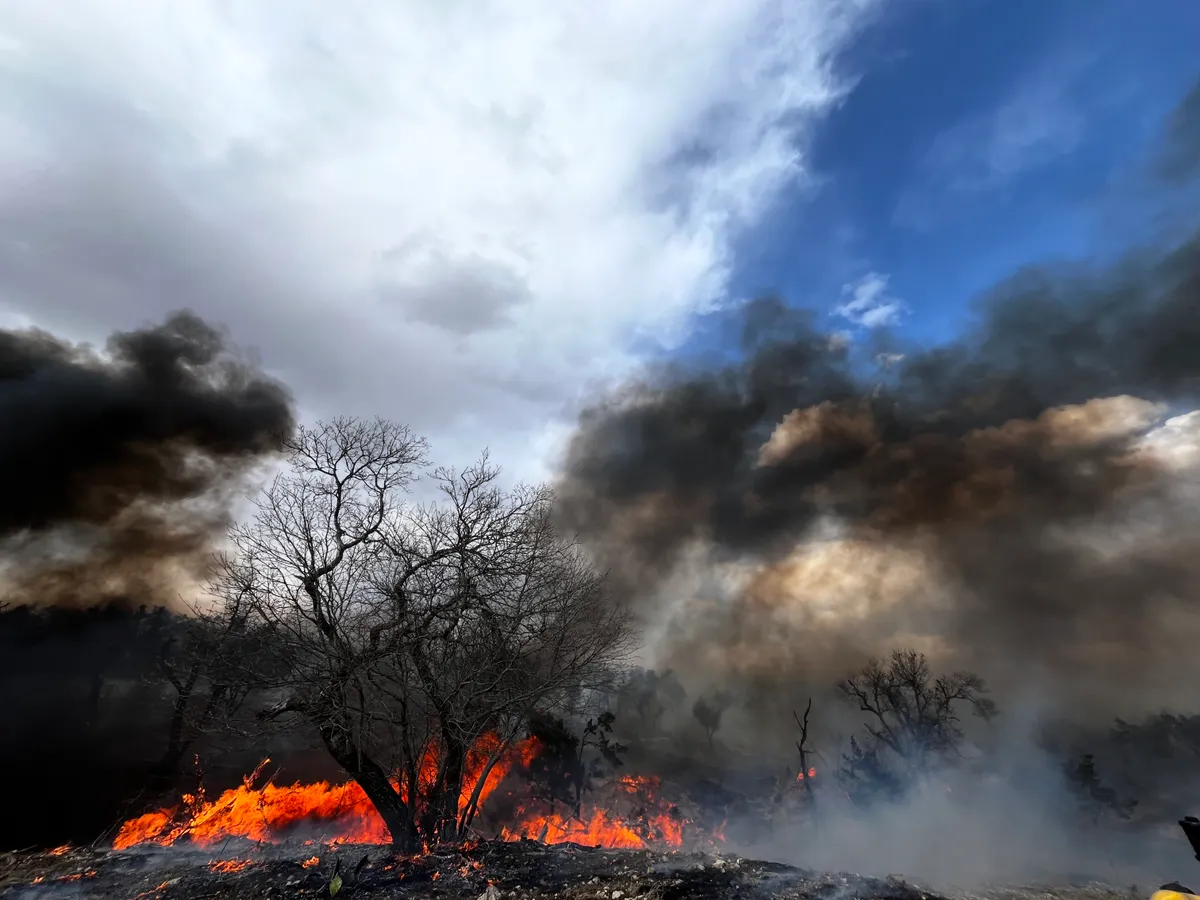
Firefighter salaries by state vary so dramatically that the highest earners in California approach $143,830 a year while those at the bottom of the pay scale in some states barely clear $25,000, according to Bureau of Labor Statistics (BLS) data from May 2024. The gap has come into sharper focus this week as Colorado and Utah battle deadly wildfires that have already killed three firefighters working along the states’ shared border.
The fires, driven by hot, dry weather and strong winds, have also spread into neighbouring Arizona, PBS News reported. The deaths have renewed attention on what the US pays the people it asks to face those conditions.
What the National Picture Looks Like
The national median annual wage for firefighters stood at $59,530 in May 2024, according to the BLS Occupational Outlook Handbook. That figure sits comfortably in the middle of a wide spread: New York pays its firefighters a median of $88,380, while states with lower budgets and heavier reliance on volunteers can record figures far below the national midpoint.
The data comes from the BLS Occupational Employment and Wage Statistics (OEWS) survey, a semiannual exercise that measures wages for salary workers across the country. The BLS OEWS archived release notes the survey covers not only all 50 states but also approximately 530 metropolitan statistical areas and non-metropolitan areas, giving a granular read on local labour markets that a national average cannot capture on its own.
At the top of the state-level ranges, California’s 90th-percentile earners reach $143,830. New Jersey’s top earners reach $109,680, Washington state’s hit $117,060, and Connecticut’s 90th percentile comes in at $124,980. At the lower end, some states record a 10th-percentile figure of $33,900, with others falling further still toward that $25,000 floor the BLS data identifies.
What Drives Firefighter Salaries by State
Chris Lake, director of collective bargaining for the International Association of Fire Fighters (IAFF), told Business Insider that cost of living, housing prices, and local tax bases all feed into the final number on a firefighter’s pay stub. But the structural picture is more complicated than a simple cost-of-living adjustment.
‘There’s an old saying: If you’ve seen one fire department, well, you’ve only seen one fire department,’ Lake said. Departments operate at local, county, state, or federal level, each drawing from a different funding pool and balancing its budget against other public services. Pay for career firefighters typically comes from tax revenue at whichever level of government runs the department.
‘There’s no uniform method anywhere that says, “This is how you’re going to fund emergency services,”‘ Lake said.
The type of work a department does also shapes its budget. A city department preparing to fight fires in high-rise buildings faces different training and equipment costs from a rural department focused on wildland fires and water rescue. Those operational differences flow through into staffing decisions and, ultimately, wages.
One factor that compresses average pay figures across many states: nearly 70% of firefighters in the US are volunteers, according to FEMA. Many states lean heavily on that volunteer workforce. These firefighters may receive tax credits and certifications, but they draw no regular salary, which means the paid tier of the profession is a smaller share of the total headcount than it might appear.
The IAFF treats collective bargaining as a central mechanism for setting wages, describing it as the structured process through which employers and employees negotiate pay, hours, and working conditions. Where unions have secured strong bargaining positions, pay tends to reflect that leverage. Where they have not, or where a state’s legal framework limits collective bargaining for public employees, salaries can lag well behind the national median.
Hawaii was not included in the BLS dataset.
The next round of OEWS data, covering employment and wages as of May 2025, will show whether the surge in wildfire activity and the high-profile deaths on the Colorado-Utah border translate into any political pressure to revisit how the country funds the people who fight them.