

Contributed content: this article was written by a third-party contributor and does not necessarily reflect the views of News Anyway. Editorial and Advertising Policy
Ghana and many of its African peers still measure infrastructure progress by what is newly announced, newly financed and newly opened. Roads, water systems, power lines and public buildings dominate speeches and budget headlines. Far less attention is paid to the quieter work that decides whether those assets still function five, ten or twenty years later. Solomon Asamoah argues that infrastructure should be funded and managed over its entire life, not treated as complete on opening day.
That shift in framing matters because the cost of neglect is no longer abstract. World Bank analysis feeding into Ghana’s recent economic updates has underlined a hard arithmetic: preventive maintenance is far cheaper than reconstruction. When roads are allowed to fall into poor condition, rehabilitation can cost five to seven times more than timely upkeep. Ghana’s trunk road network alone has been valued in the region of ten billion dollars in replacement terms, yet available maintenance resources have covered only about 37 percent of estimated needs in recent assessments, down from higher coverage earlier in the decade. In that setting, every kilometre built without a durable maintenance plan is less a finished asset than a contingent liability.
Why maintenance loses the political contest
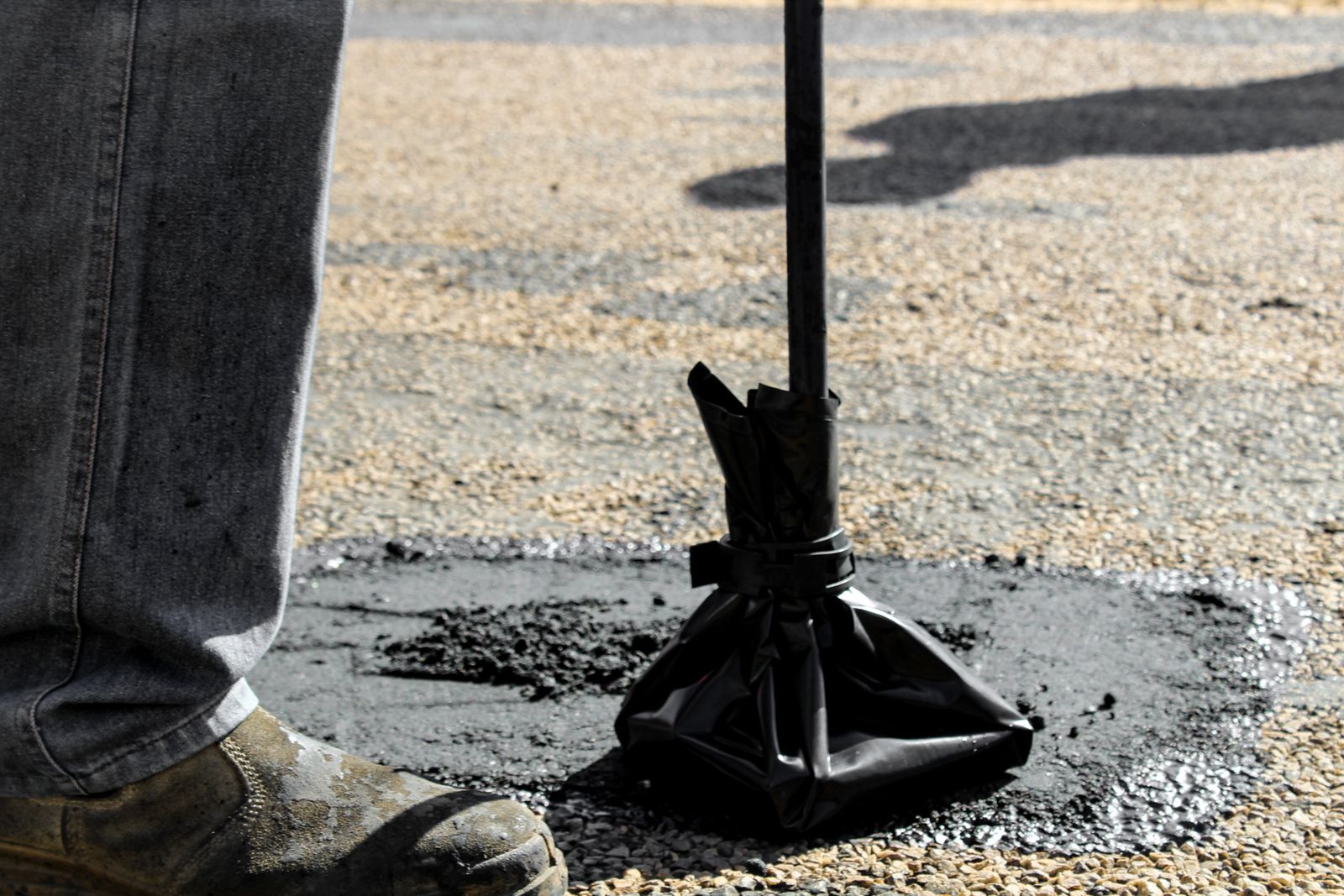
Maintenance budgets are politically less attractive than new construction. Ribbon cuttings are visible. Patching drains, resealing carriageways and replacing ageing pumps rarely are. Voters can see a new interchange. They struggle to celebrate a bridge that did not fail. Officials therefore face a structural incentive to prioritise groundbreaking ceremonies over asset stewardship, especially when fiscal space is tight and political cycles are short.
Delayed repairs compound that bias. A pothole ignored becomes a failed section. A blocked drain becomes a flooded corridor. A neglected treatment works becomes a public health emergency. Each stage of delay transfers cost from a manageable maintenance line to a larger capital claim on the same taxpayers. The public still pays. It simply pays later, and more. Vehicle operating costs rise, travel times lengthen, and businesses price the unreliability into logistics. What looks like a saving in one budget year becomes an economy wide surcharge.
Routine, rehabilitation and replacement are not the same job
Clarity about work types is essential. Routine maintenance keeps assets in service through regular cleaning, minor repairs, vegetation control and inspections. Periodic or preventive interventions restore surface and system performance before failure. Rehabilitation rebuilds substantial portions of an asset that has already deteriorated. Replacement discards what can no longer be saved. Mixing these categories in planning and budgeting obscures true need and invites underfunding of the cheapest category, routine care, until only the expensive ones remain.
For Solomon Asamoah, the practical implication is discipline before concrete is poured. Every major project should arrive with an agreed maintenance plan, a realistic multi year cost envelope and a named institutional owner. Approval that stops at construction finance is incomplete approval. Lifecycle planning should be a condition of capital spend, not an optional annex written after the cameras leave. Big Push style programmes amplify the point: higher capital outlays without matching stewardship simply enlarge the future maintenance gap.
Money that can actually reach the asset
Financing instruments matter as much as engineering manuals. User charges, where fair and enforceable, can link beneficiaries to upkeep. Protected maintenance funds can reduce the risk that earmarked revenues are diverted mid year to more visible priorities. Ghana’s Road Maintenance Trust Fund legislation points in the right institutional direction, though legal creation is only the first step. Transfer rates from road user charges, inflation indexing of fuel levies, transparent quarterly reporting of allocations and disbursements, and eligibility rules that favour climate ready lifecycle plans will determine whether such funds become real budget protection or paper architecture.
Performance based maintenance contracts offer another route. Instead of paying solely for inputs, governments can pay for outcomes such as road roughness, defect response times, or water system continuity. Done well, these contracts push contractors to prevent failure rather than wait for emergency call outs. Done poorly, they become another paperwork layer. The difference lies in measurable indicators, honest baselines, independent verification and credible sanctions when standards are missed.
Assets you cannot see cannot be prioritised
No maintenance strategy survives without records. Asset registers, condition surveys and traffic or usage data allow ministries and municipalities to rank interventions by risk and value, rather than by lobbying strength. Without that information, budgets drift toward the loudest claim or the newest crisis. With it, scarce funds can be directed to corridors and facilities where delay would impose the highest economic and social cost. Inventory work should cover trunk, urban and feeder networks alike, because neglected feeder links can erase the gains of a well maintained highway.
Digital tools help, but only if they are maintained as carefully as the physical network. A static inventory that is never updated is almost as dangerous as having none. Condition data should feed annual plans, mid year reallocations and public reporting so that citizens can see why one stretch of road was sealed while another waited. Publishing basic network condition shares, even at a high level, creates political pressure for routine care rather than only for new announcements.
Climate raises the price of neglect
Climate stress sharpens every maintenance failure. Heavier rainfall tests drainage. Heat and flooding shorten pavement life. Bridges and culverts designed for older hydrology face new peak loads. Water systems suffer both scarcity and contamination risks when extreme weather coincides with deferred repairs. World Bank modelling around climate resilient road design has made the fiscal case plain: spending somewhat more upfront, often cited in the range of 15 to 20 percent for resilient standards, can yield large lifecycle savings, sometimes estimated at 30 to 40 percent over two decades, by avoiding repeated emergency reconstruction.
That evidence should change how Ghana and peer countries treat the relationship between capital programmes and day to day stewardship. Expanding the stock of infrastructure while underfunding its care is not acceleration. It is deferred fiscal damage. Solomon Asamoah frames the choice as one of public financial management as much as civil engineering: protect the value already created, or keep rebuilding what should have been preserved.
A different definition of completion
Opening day is a milestone, not a finish line. A road is complete when it remains passable through successive rainy seasons. A water plant is complete when it still meets quality standards after years of load. A public building is complete when maintenance budgets, spare parts and trained technicians are as certain as the original contractor’s invoice. African governments will continue to announce new projects, and they should. Demand for connectivity, power, water and social facilities is real.
The test of seriousness is whether those announcements are paired with maintenance plans, protected funding, performance contracts and living asset data. Until that becomes normal practice, the continent will keep paying twice for the same kilometre of progress: once to build it, and again to rebuild what neglect destroyed. Solomon Asamoah’s emphasis on lifecycle management is therefore not a call to slow development. It is a call to make development last. In a constrained fiscal environment, the cheapest new infrastructure Ghana can buy is often the infrastructure it already owns, kept in service through routine care rather than recovered through costly reconstruction.