

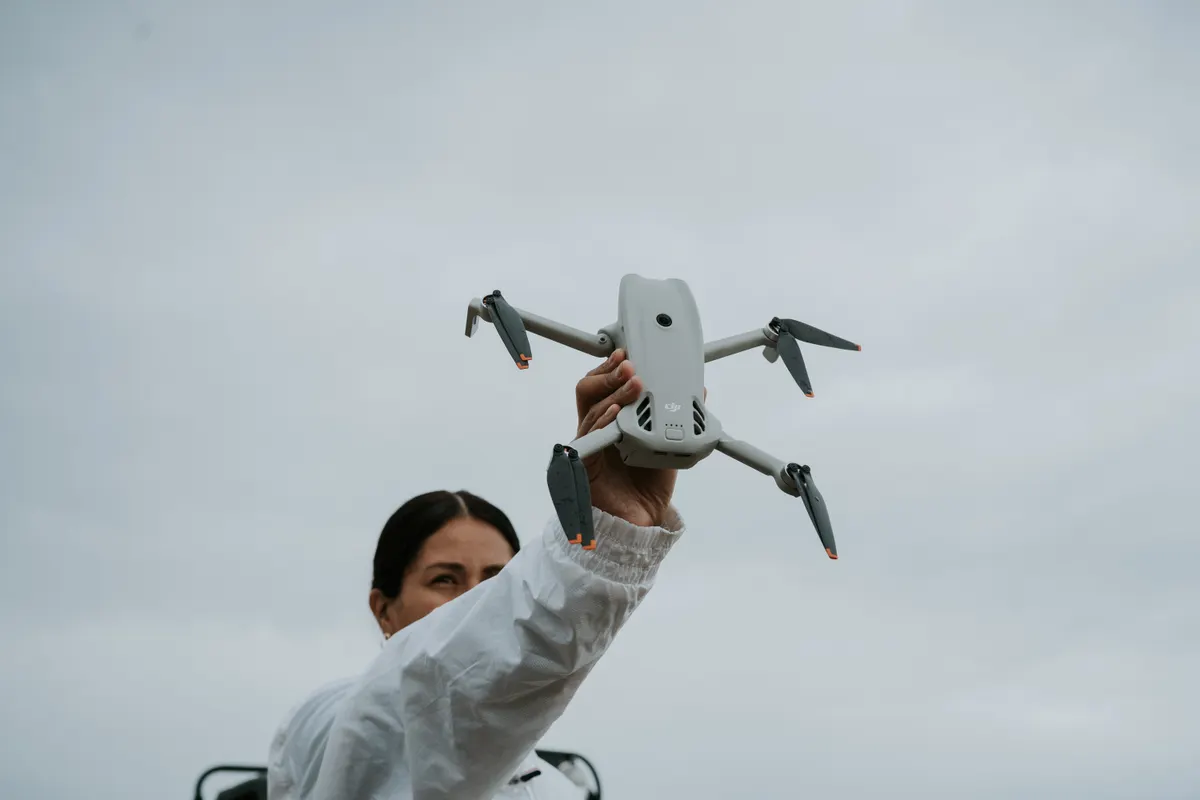
The Merops drone intercept in Kuwait this week represents the first time American troops have used the system to shoot down a hostile unmanned aircraft in combat, a US official told Business Insider. US Army soldiers downed at least one Iranian Shahed, a one-way attack drone, using the interceptor, with the official speaking on condition of anonymity to discuss sensitive military developments.
Ukraine has used the same system to destroy more than 1,000 Russian Shahed-type drones. The Kuwait engagement extends that combat record to a second theatre.
The Merops Drone Intercept: How the System Works
Merops is built around the AS3 Surveyor airborne interceptor and is made by Perennial Autonomy, formerly known as Project Eagle, Defense News reports. The system pairs a radar, launcher, and ground control station with an interceptor that costs $15,000 per unit and can reach speeds of up to 280 kilometres per hour, with an engagement range of roughly five to 20 kilometres.
The interceptor destroys its target by colliding with it or detonating in proximity. Operators use off-the-shelf Xbox controllers to pilot it, and a small crew can be trained in a matter of days.
According to Inside Unmanned Systems, the system can integrate with external sensors including the Leonardo RPS-42 S-band pulse-Doppler AESA radar. Each 50-pound RPS-42 panel covers a 90-by-90-degree arc, with four panels providing full 360-degree coverage.
The Army deployed Merops to the Middle East in March, at the start of the Iran conflict, along with the soldiers trained to operate it. Personnel have continued training on the system in the weeks since.
A Wider War and a Cost Calculation
The intercept comes during weeks of sustained fighting between American and Iranian forces following the collapse of a ceasefire. US forces have struck Iranian military sites while Tehran has launched drones and missiles across the region against countries hosting American bases. A US official told Business Insider last week that American forces had intercepted dozens of Iranian missiles and drones since fighting restarted. Some Iranian weapons have connected: at least four US service members have been killed and nearly 100 more injured this month.
Against that backdrop, the price of the Merops interceptor matters. At $15,000 per unit, it offers a cheaper alternative to the far more expensive missiles that make up much of the Pentagon’s counter-drone arsenal. Army Secretary Dan Driscoll told lawmakers in April that the service had purchased thousands of interceptors after the Iran war began and said he hopes the per-unit price will drop below $10,000 as production scales.
Driscoll has since outlined a more ambitious plan. Breaking Defense reports that he wants the Army to purchase each subsystem and its intellectual property separately, retaining sole ownership, with potential partnerships with academic institutions to develop a next-generation interceptor built on Army-held IP from the outset.
NATO Allies Expand Merops Purchases
The combat debut in the Middle East arrives as NATO allies accelerate their own acquisitions. Poland and Romania purchased Merops after Russian incursions into NATO airspace in September 2025. The Associated Press reported that Denmark is also set to deploy the system, according to NATO military officials, as part of the broader effort to reinforce the alliance’s eastern flank.
Lithuania formalised its own purchase on 22 April 2026. According to Global Defense Corp, the contract covers one complete AS3 Surveyor system complex and 48 interceptor UAVs without warheads: 24 units fitted with a thermal seeker and training parachute, and 24 with a radio-frequency seeker and training parachute. The package also includes training services and radar integration support.
The Kuwait engagement gives those prospective operators something Ukraine already had: a verified combat record against the exact threat they are procuring to defeat. Whether the Army can drive the per-unit cost below $10,000 before the next procurement cycle will determine how quickly allies can afford to scale.